Axiom Space has secured another mission with NASA. Photo courtesy SpaceX.

Editor's note: This story has been updated to include information about Axiom's recent funding.

Axiom Space, a Houston-based space infrastructure company that’s developing the first commercial space station, has forged a deal with NASA to carry out the fifth civilian-staffed mission to the International Space Station.

Axiom Mission 5 is scheduled to launch in January 2027, at the earliest, from NASA’s Kennedy Space Center in Florida. The crew of non-government astronauts is expected to spend up to 14 days docked at the International Space Station (ISS). Various science and research activities will take place during the mission.

The crew for the upcoming mission hasn’t been announced. Previous Axiom missions were commanded by retired NASA astronauts Michael López-Alegría, the company’s chief astronaut, and Peggy Whitson, the company’s vice president of human spaceflight.

“All four previous [Axiom] missions have expanded the global community of space explorers, diversifying scientific investigations in microgravity, and providing significant insight that is benefiting the development of our next-generation space station, Axiom Station,” Jonathan Cirtain, president and CEO of Axiom, said in a news release.

As part of Axiom’s new contract with NASA, Voyager Technologies will provide payload services for Axiom’s fifth mission. Voyager, a defense, national security, and space technology company, recently announced a four-year, $24.5 million contract with NASA’s Johnson Space Center in Houston to provide mission management services for the ISS.

Axiom also announced today, Feb. 12, that it has secured $350 million in a financing round led by Type One Ventures and Qatar Investment Authority.

The company shared in a news release that the funding will support the continued development of its commercial space station, known as Axiom Station, and the production of its Axiom Extravehicular Mobility Unit (AxEMU) under its NASA spacesuit contract.

NASA awarded Axiom a contract in January 2020 to create Axiom Station. The project is currently underway.

"Axiom Space isn’t just building hardware, it’s building the backbone of humanity’s next era in orbit," Tarek Waked, Founding General Partner at Type One Ventures, said in a news release. "Their rare combination of execution, government trust, and global partnerships positions them as the clear successor-architect for life after the ISS. This is how the United States continues to lead in space.”

Axiom Space chief astronaut Michael López-Alegría (left) trains with Axiom’s new “Project Astronaut,” Emiliano Ventura. Photo courtesy of Axiom Space.

Axiom Space launches semiconductor and astronaut training initiatives

space projects

Axiom Space, a Houston-based commercial spaceflight and space infrastructure company, has launched initiatives in two very different spheres — semiconductors and astronaut training.

On the semiconductor front, Axiom has signed a memorandum of understanding with Japanese chemical company Resonac Corp. to collaborate on semiconductor R&D and manufacturing projects carried out in space. Among Resonac’s products are materials used in chip manufacturing.

Axiom said the deal “paves the way toward leveraging microgravity to advance next-generation chip technologies and accelerate the in-space manufacturing market.”

Under the agreement, Axiom and Resonac will explore the potential production of semiconductor materials and chip packaging in microgravity and low-Earth-orbit environments.

“The unique environment of space offers immense potential for advancing semiconductor materials, especially in crystal growth,” Masato Fukushima, Resonac’s chief technology officer, said in a news release.

The deal will also extend Resonac’s work with Axiom on the development of molding compounds that can reduce “soft errors” when semiconductor devices are exposed to space radiation.

“Our collaboration with Resonac underscores how Axiom Space is enabling global corporations from around the world to leverage space to drive manufacturing innovation across critical technology sectors such as semiconductors,” Axiom astronaut Koichi Wakata, the company’s chief technology officer, said.

In the astronaut training arena, Axiom has tapped Portuguese physiologist Emiliano Ventura as its first “Project Astronaut.” Ventura will apply his expertise in human performance to a pilot program aimed at testing six-month astronaut training protocols.

“His goal is to participate in a future mission and explore, with scientific depth and curiosity, how the human body adapts to microgravity, contributing fresh insights to the current body of research in space physiology,” Axiom said.

Ventura has helped several Axiom crewmembers with physiological needs before and after missions aboard the International Space Station.

Axiom said Ventura’s pilot program will study astronauts’ physiological responses to microgravity during spaceflight. The program eventually will benefit Axiom astronauts heading to the world’s first commercial space station, which is being built by Axiom.

Michael López-Alegria, Axiom’s chief astronaut, said he and the company’s two other astronauts will train with Ventura. The Project Astronaut initiative “strengthens our commitment to enabling safe, effective, and inspiring commercial space missions while supporting scientific objectives worldwide.” López-Alegria said.
Ad Placement 300x100
Ad Placement 300x600

CultureMap Emails are Awesome

Rice University lands $14M state grant to open Center for Space Technologies

on a mission

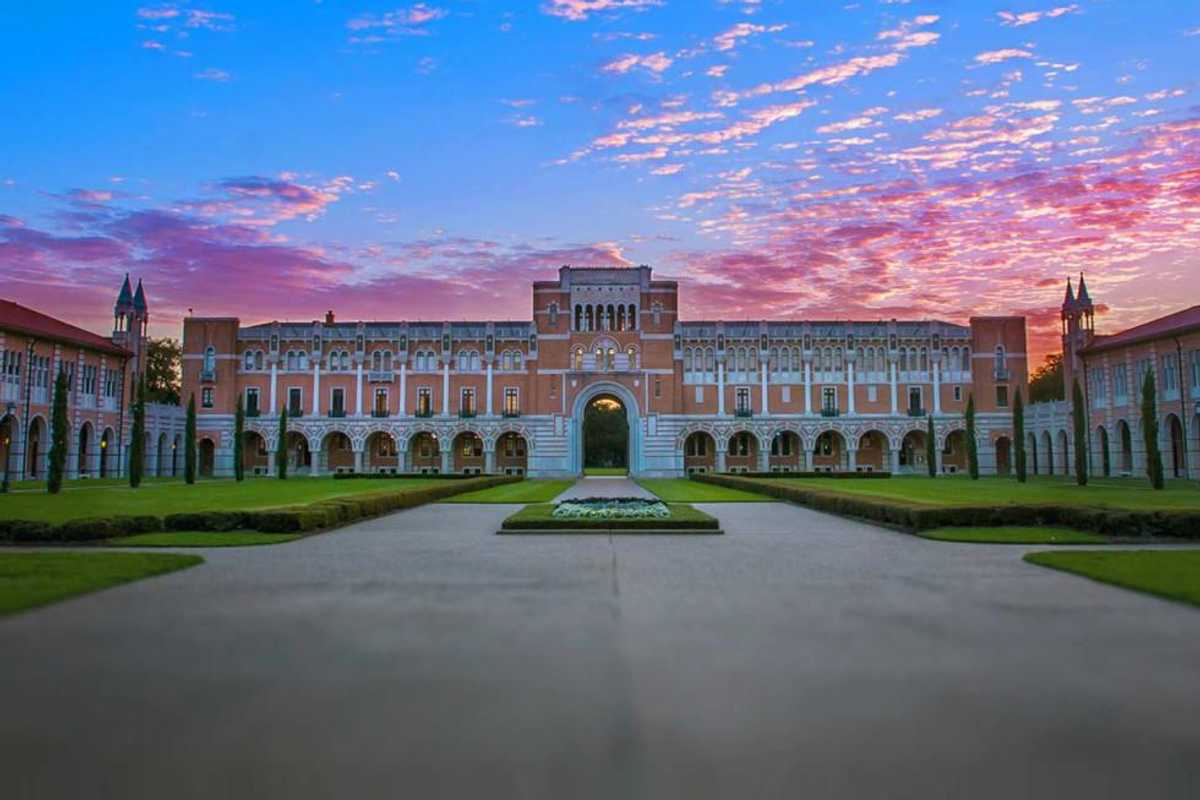
Rice University’s Space Institute soon will be home to the newly created Center for Space Technologies.

On Feb. 17, the Texas Space Commission approved a nearly $14.2 million grant for the Rice project. The Center for Space Technologies will target:

  • Research and development
  • Technology transfer and innovation
  • Statewide partnerships
  • Workforce development training
  • Space-focused education programs

The goal of the new center “is to fulfill an articulated need for research, workforce development, and industry collaboration,” said Kemah communications and marketing executive Gwen Griffin, chair of the commission.

State Rep. Greg Bonnen, a Friendswood Republican, authored the bill that set up the Texas Space Commission.

Since being authorized in 2023, the commission has funded 24 projects, with Rice and Houston-area companies accounting for nearly $75 million in grants to back space-related initiatives.

The grant to Rice brings the TSC's total investment to $150 million, fully committing the entire state appropriation from the Texas Legislature in 2023.

Other local companies that have received grants over the years include Aegis Aerospace, Axiom Space, Intuitive Machines, Starlab Space and Venus Aerospace.

The commission also awarded $7 million to Blue Origin earlier this month. See a list of the 24 awards here.

Waymo self-driving robotaxis have officially launched in Houston

Waymo has arrived

Waymo will begin dispatching its robotaxis in four more cities in Texas and Florida, expanding the territory covered by its fleet of self-driving cars to 10 major U.S. metropolitan markets.

The move into Dallas, Houston, San Antonio and Orlando, Florida, announced Tuesday, February 24, widens Waymo's early lead in autonomous driving while rival services from Tesla and the Amazon-owned Zoox are still testing their vehicles in only a few U.S. cities.

In contrast, Waymo's robotaxis already provide more than 400,000 weekly trips in the six metropolitan areas where they have been transporting passengers: Phoenix, the San Francisco Bay Area, Los Angeles, Miami, Atlanta, and Austin, Texas.

Waymo operates its ride-hailing service through its own app in all the U.S. cities except Atlanta and Austin, where its robotaxis can only be summoned through Uber's ride-hailing service.

The expansion into four more markets marks a significant step toward Waymo's goal to surpass 1 million weekly paid trips by the end of 2026. Without identifying where its robotaxis will be available next, Waymo is targeting a list of eight other cities that include Las Vegas, Washington, Detroit and Boston while signaling its first overseas availability is likely to be London.

To help pay for more robotaxis, Waymo recently raised $16 billion as part of the financial infusion that puts the value of the company at $126 billion. The valuation fueled speculation that Waymo may eventually be spun off from its corporate parent Alphabet, where it began as a secret project within Google in 2009.

Although Waymo is opening up in four more cities, its robotaxis initially will only be made available to a limited number of people with its ride-hailing app in Dallas, Houston, San Antonio and Orlando before the service will be available to all comers in those markets.

Tech giant Apple doubles down on Houston with new production facility

coming soon

Tech giant Apple announced that it will double the size of its Houston manufacturing footprint as it brings production of its Mac mini to the U.S. for the first time.

The company plans to begin production of its compact desktop computer at a new factory at Apple’s Houston manufacturing site later this year. The move is expected to create thousands of jobs in the Houston area, according to Apple.

Last year, the Cupertino, California-based company announced it would open a 250,000-square-foot factory to produce servers for its data centers in the Houston area. The facility was originally slated to open in 2026, but Apple reports it began production ahead of schedule in 2025.

The addition of the Mac mini operations at the site will bring the footprint to about 500,000 square feet, the Houston Chronicle reports. The New York Times previously reported that Taiwanese electronics manufacturer Foxconn would be involved in the Houston factory.

Apple also announced plans to open a 20,000-square-foot Advanced Manufacturing Center in Houston later this year. The project is currently under construction and will "provide hands-on training in advanced manufacturing techniques to students, supplier employees, and American businesses of all sizes," according to the announcement. Apple opened a similar Apple Manufacturing Academy in Detroit last year.

Apple doubles down on Houston with new production facility, training center Photo courtesy Apple.

“Apple is deeply committed to the future of American manufacturing, and we’re proud to significantly expand our footprint in Houston with the production of Mac mini starting later this year,” Tim Cook, Apple’s CEO, said in the news release. “We began shipping advanced AI servers from Houston ahead of schedule, and we’re excited to accelerate that work even further.”

Apple's Houston expansion is part of a $600 billion commitment the company made to the U.S. in 2025.