
Ocean Infinity will begin a new search for MH370. Ocean Infinity/Facebook

Malaysia’s government has given final approval for a Texas-based marine robotics company to renew the search for Malaysia Airlines Flight 370, which is believed to have crashed in the southern Indian Ocean more than a decade ago.

Cabinet ministers agreed to terms and conditions for a “no-find, no-fee” contract with Texas-based Ocean Infinity to resume the seabed search operation at a new 5,800-square-mile site in the ocean, Transport Minister Anthony Loke said in a statement Wednesday. Ocean Infinity will be paid $70 million only if wreckage is discovered.

The Boeing 777 plane vanished from radar shortly after taking off on March 8, 2014, carrying 239 people, mostly Chinese nationals, on a flight from Malaysia’s capital, Kuala Lumpur, to Beijing. Satellite data showed the plane turned from its flight path and headed south to the far-southern Indian Ocean, where it is believed to have crashed.

An expensive multinational search failed to turn up any clues to its location, although debris washed ashore on the east African coast and Indian Ocean islands. A private search in 2018 by Ocean Infinity also found nothing.

The final approval for a new search came three months after Malaysia gave the nod in principle to plans for a fresh search.

Ocean Infinity CEO Oliver Punkett earlier this year reportedly said the company had improved its technology since 2018. He has said the firm is working with many experts to analyze data and had narrowed the search area to the most likely site.

Loke said his ministry will ink a contract with Ocean Infinity soon but didn’t provide details on the terms. The firm has reportedly sent a search vessel to the site and indicated that January-April is the best period for the search.

“The government is committed to continuing the search operation and providing closure for the families of the passengers of flight MH370,” he said in a statement.
Ad Placement 300x100
Ad Placement 300x600

CultureMap Emails are Awesome

Texas officially bids to make Houston home of U.S. Space Academy

space race

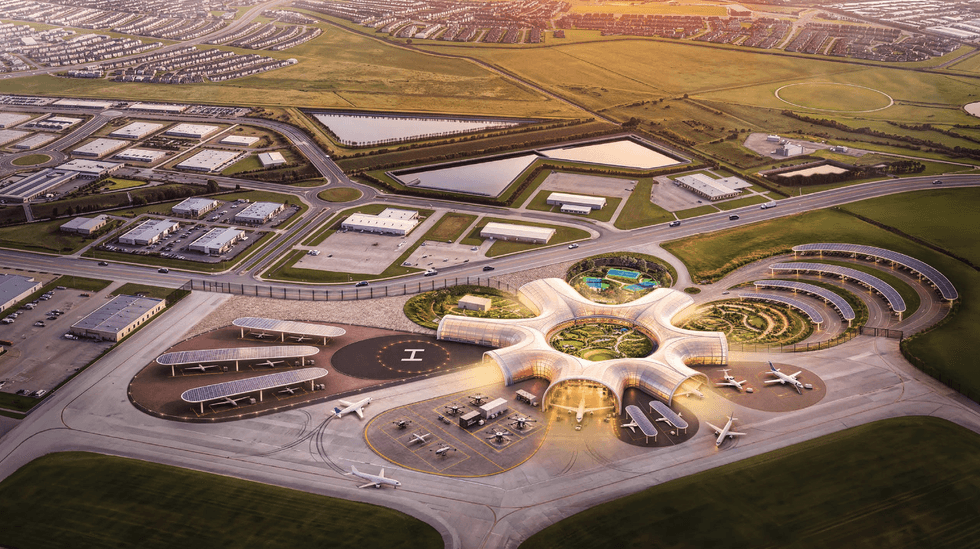
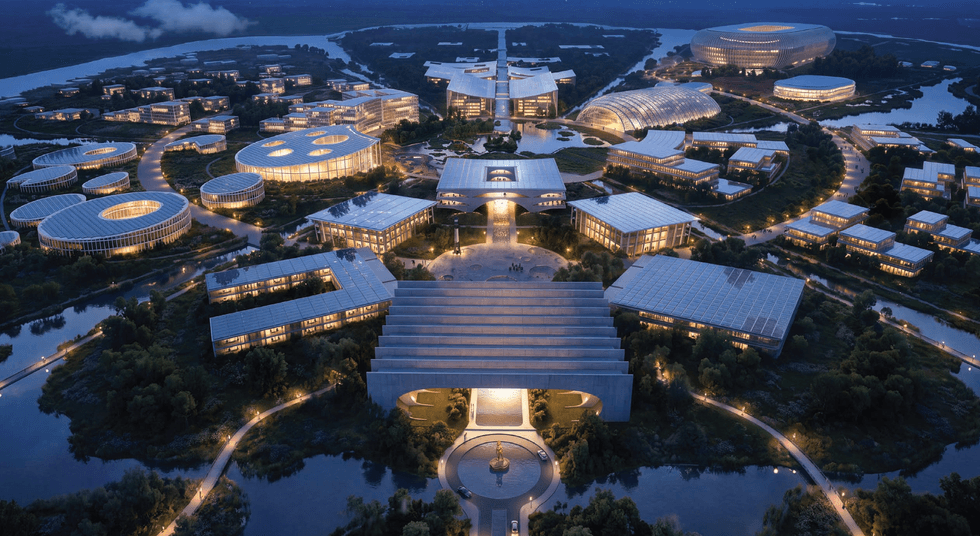
Texas has officially submitted its proposal to have Houston be the home of the United States Space Academy (USSA).

“Texas has long been home to critical training missions for our nation’s military and for advancing human spaceflight,” Gov. Greg Abbott said in a news release. “Our universities, research institutions, and commercial space industry give the United States an extraordinary foundation for educating its next generation of space leaders.”

The Texas Space Commission (TSC) confirmed Texas filed an official response to NASA’s Request for Information (RFI) for the new academy. NASA’s plans include groundbreaking on the USSA in 2027, with enrollment planned for the inaugural class of 300 students in 2028 and a goal of transitioning to a permanent campus by 2031.

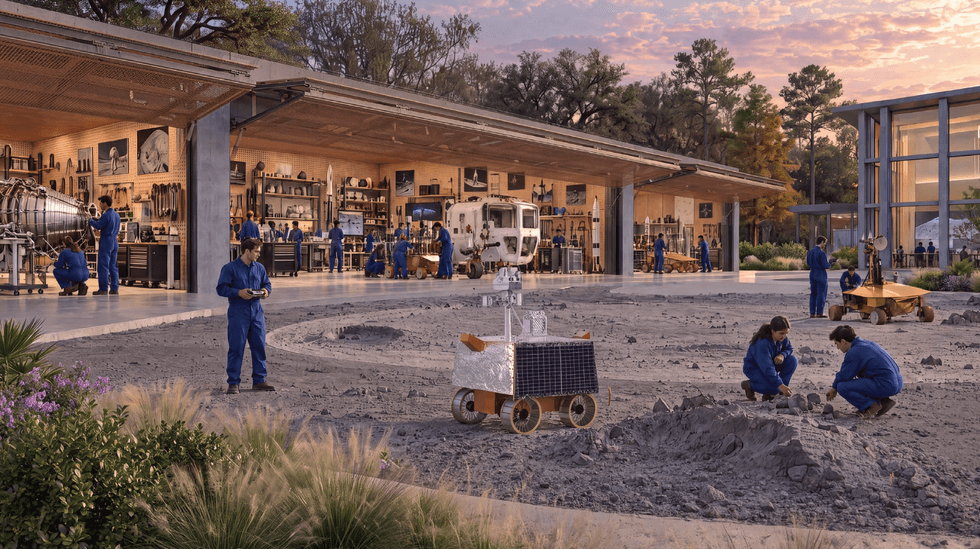
For students, the learning model could “link classroom and laboratory instruction with supervised research and team projects in spacecraft engineering, robotics, and mission operations,” according to the release. The academy will help students prepare for careers in national security space, civil and commercial careers, and also teach them to apply what they’ve learned to real-world mission trials.

Currently, Houston hosts America’s Mission Control and astronaut corps at NASA’s Johnson Space Center. In addition to JSC, Houston also hosts major aerospace startups, such as Axiom Space, Venus Aerospace and Intuitive Machines, as well as the Houston Spaceport at Ellington Airport and the new Texas A&M University Space Institute.

Texas boasts aerospace, aviation and civilian-defense industries that employ 160,000 workers across 2,200 establishments, according to the Texas Economic Development & Tourism Office. In the Houston area alone, there are 500 companies in the aerospace and aviation space. Academically, the state also has universities that are innovating in aerospace, energy, tech and beyond, including Rice University, the University of Houston, the Texas A&M system and the University of Texas system.

In August, President Trump signed an executive order to create the Presidential Commission on the United States Space Academy, which will guide the establishment of the NASA-led federal effort. The following month, Abbot appointed the seven-member team to help bring the USSA to Texas, which is being led by State Rep. Greg Bonnen from Friendswood. The squad also includes Houston ties in former NASA astronaut and current senior vice president of Houston-based Intuitive Machines Jack Fischer, another former NASA astronaut and current director of the Texas A&M Space Institute Nancy Curry-Gregg (a UH graduate), and associate director of the Texas A&M Space Institute Robert Ambrose.

“Houston makes the most sense as the location for this incredible learning ecosystem to teach and train our next generation of spacefaring Americans,” Bonnen added in a news release. “Texas offers NASA the opportunity to educate students where human spaceflight is practiced every day. Nowhere else in the world can a student walk from their classroom to Mission Control or the Astronaut Corps Office, much less any of the many companies building hardware for payloads. NASA and the White House have an amazing proposal from Texas to consider.”

The state legislature will convene in January regarding the efforts of the Texas Space Commission.

“I fully support establishing the proposed United States Space Academy in the Lone Star State to prepare future generations for interstellar travel through rigorous education, world-class training, and commitment to public service, “ Governor-elect Gina Hinojosa added in a statement. “ As I am preparing to take office, my commitment is to carry this effort forward by implementing the well-developed proposal led by State Rep. Greg Bonnen with support from the Texas Space Commission to advance the Academy’s mission.”'

View a video of the plans proposed by the TSC here.

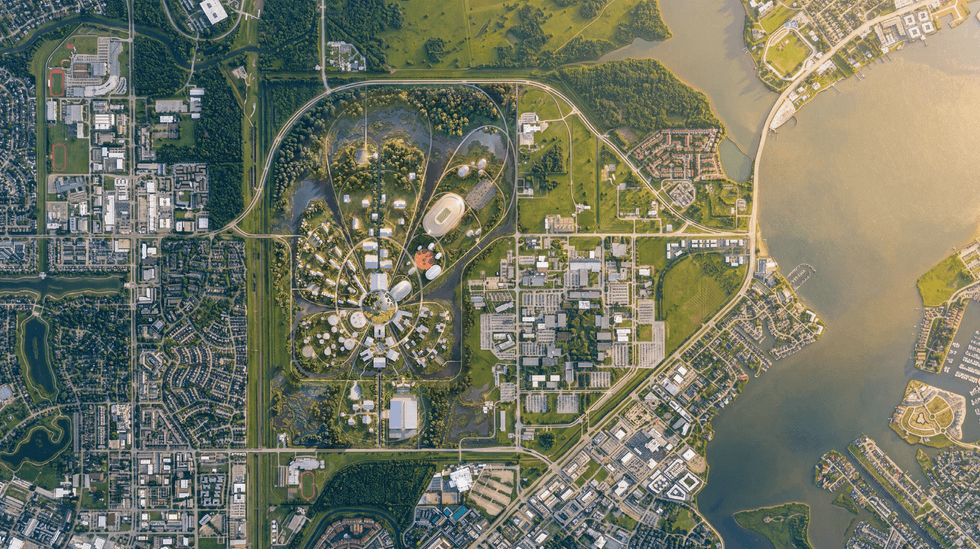
Renderings courtesy Texas Space Commission

Meta selects UTHealth for AI-powered medicine partnership

medical innovation

UTHealth Houston is one of five universities partnering with Meta to utilize AI models on various medical research capacities. Meta announced the partnership late last month.

“Through our collaboration with Meta, we aim to bring next-generation open-weight AI models into healthcare to accelerate scientific discovery and improve lives,” Xiaoqian Jiang, associate vice president for medical AI, chair of the Department of Health Data Science and Artificial Intelligence at McWilliams School of Biomedical Informatics at UTHealth Houston, said in a Meta news blog.

“Our goal is to make the benefits of AI more widely accessible, advancing research and care with rigorous privacy protection,” he added.

The partnership also comes with $250,000 for research funding from Meta. The other four universities in the partnership include Caltech, Ohio State University, Louisiana State University and Indiana University.

As the debate over widespread implementation of AI rages, one area where it has proved useful is in medical research. AI can be extremely useful in summarizing data from recent findings; analyzing large sets of patient or genetic information; and accelerating hypothetical models. With rigorous oversight and careful curation, AI models can significantly speed up medical research.

That’s where Meta's open-weight models like Muse Glimmer and Muse Spark come in. Jiang will be using Muse Glimmer for drug discovery and bioinformatics research, relying on Glimmer’s autonomous, multi-step agentic workflow paradigms to evaluate efficiency and accuracy across healthcare systems.

A major problem in modern healthcare is that patient data is often spread across multiple systems in different formats. Glimmer can streamline this, with Jiang focusing particularly on glioblastoma patients.

Glioblastoma is an aggressive form of brain tumor that has roughly a 10 percent survival rate over five years. Because it expands microscopically through the brain in fast-growing branches, tumors can spread quickly and require whole teams to treat. Analyzing data across providers and testing facilities in a rapid, concise way is essential to research and can be made far easier with AI modeling.

Projects from other selected universities focus on using AI for disease detection, improving surgical outcomes and making healthcare more accessible. Read about them here.

MD Anderson receives $10M gift to launch pancreatic cancer program

med funding

The University of Texas MD Anderson Cancer Center will be getting a significant boost in the fight against pancreatic cancer thanks to a recent gift from longtime supporters Zelma and William Reid. The medical system announced this month that a $10 million donation would help it establish a new Pancreatic Cancer High-Risk Interception Program.

“Philanthropic investments like this create opportunities to accelerate discoveries and pursue bold approaches to some of the most challenging cancers we face,” said Dr. Jeffrey E. Lee, president ad interim of UT MD Anderson, said in a news release. “We are deeply grateful to Zelma and Bill Reid for their generosity and enduring commitment. Their support will help advance innovative research aimed at intercepting pancreatic cancer earlier, when we have the greatest opportunity to improve outcomes for patients.”

Pancreatic cancer is one of the most deadly types of cancer. Despite being relatively rare, it ranks third in total deaths from cancer in the United States. Less than 10 percent of patients diagnosed with pancreatic cancer are still alive five years later.

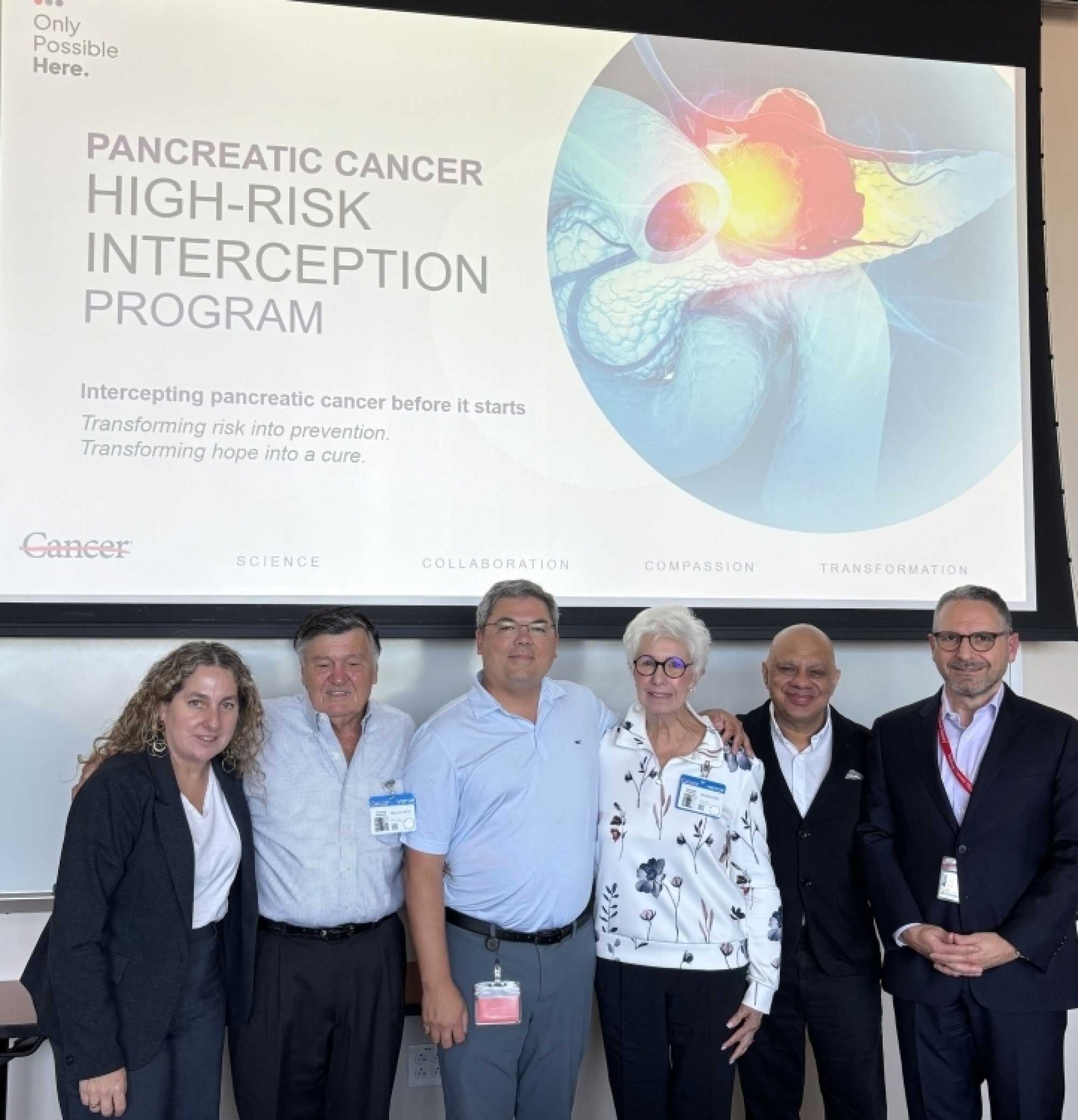
Dr. Florencia McAllister, William Reid, Dr. Michael P. Kim, Zelma Reid, Dr. Manoop S. Bhutani, and Dr. Matthew H.G. Katz. Photo courtesy MD Anderson

The problem is often detection. The pancreas is located deep in the upper abdomen among many other organs, which can make spotting tumors difficult. Some blood tests can indicate pancreatic cancer, but it is usually not diagnosed until it spreads.

The new Pancreatic Cancer High-Risk Interception Program hopes to assemble new diagnostic techniques and patient screening tools to increase early detection. MD Anderson’s Dr. Michael P. Kim, associate professor of surgical oncology; Dr. Manoop S. Bhutani, professor of gastroenterology and hepatology; and Dr. Florencia McAllister, professor of gastrointestinal medical oncology and genetics, will lead the new program.

The team will rely on advanced imaging, molecular diagnostics, AI-driven assessment, and DNA testing to both create an at-risk patient population profile and hopefully help detect the cancer in its earliest stages. For instance, some of these tools will be able to monitor pancreatic cysts without invasive surgery.

“The ultimate goal is to intercept pancreatic cancer development or to initiate treatment earlier in the disease process, when patients have the best chance for successful outcomes,” Kim added in the release. “This gift will allow us to expand our research efforts, strengthen collaborations across disciplines and accelerate promising strategies to identify and intercept pancreatic cancer before it becomes life-threatening. We are incredibly thankful to the Reids for making this work possible.”