


Houston is one of only five WeWork Labs markets that can expect access to 3D printers as a part of a pilot program with two companies. Courtesy of WeWork

WeWork has teamed up with two leading 3D printing companies to bring their technology into five WeWork Labs markets — including Houston's downtown location. The other locations tapped for the pilot program are London, San Francisco, New York, and Seattle.

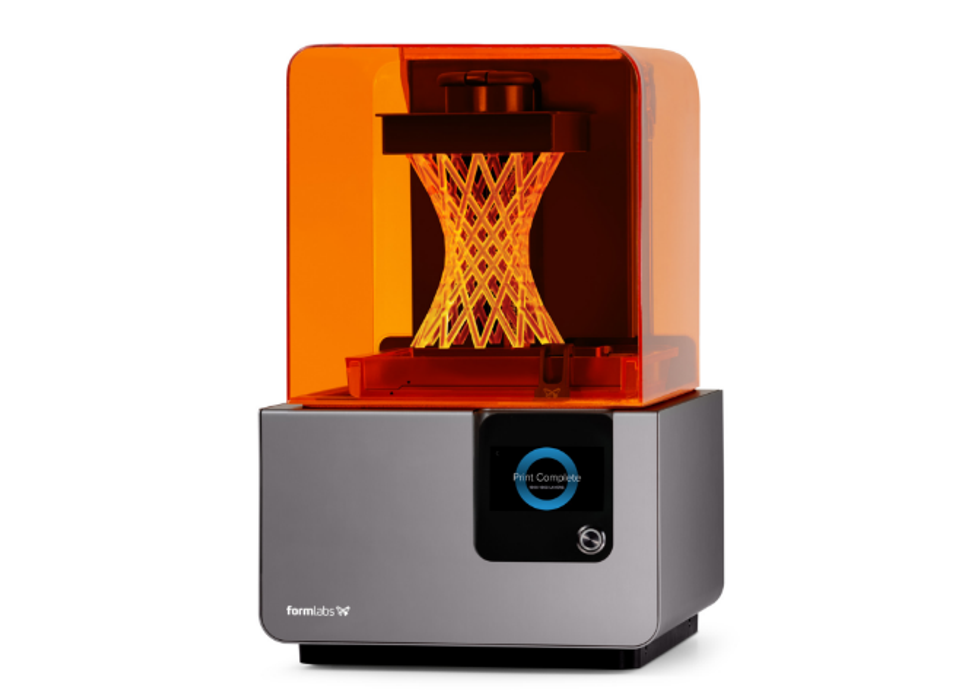
Massachusetts-based Formlabs' Form 2 printer has over 20 different material resins WeWork Labs members can use to prototype and print products using desktop stereolithography.

"Formlabs was founded eight years ago on the basis of empowering anyone to make anything," says Max Lobovsky, CEO and co-founder of Formlabs in a release. "Today, our customers have printed more than 40 million parts, they vary from early stage entrepreneurs changing the status quo and developing new applications to Fortune 500s experimenting with new business models or production methods."

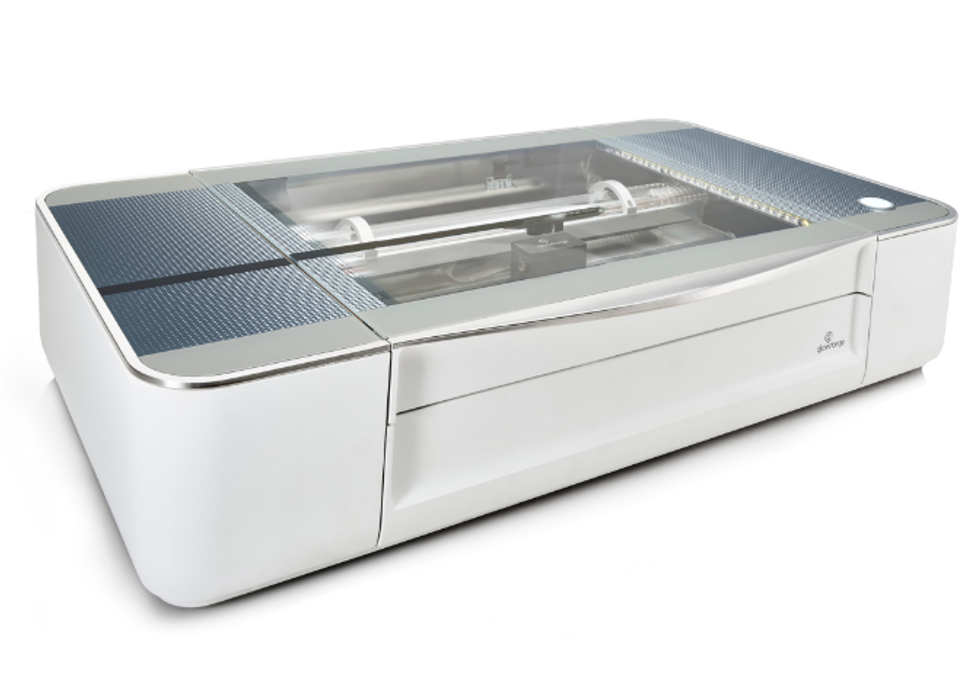
The other company involved in the program is Seattle-based Glowforge, which created a 3D laser printer. Glowforge Plus uses subtractive laser technology to cut and sculpt projects from materials like wood, leather, acrylic, stone — and even stickers. The company, which was founded in 2014, has had over three million prints on its devices — everything from jewelry and clothing to machinery.

"We are thrilled to partner with WeWork Labs to provide their community of entrepreneurs and startups alike access to the tools that will help them create corporate giveaways, new product prototypes, and full production runs — everything to take their dreams from idea to creation," says Dan Shapiro, CEO of Glowforge, in the release.

The printers will be revealed at various launch events celebrating the National Week of Making, which begins June 21 and goes through June 27. Houston's launch event will be on June 28, but the specifics have not yet been finalized.

"We see WeWork Labs as a platform for creators, innovators and makers alike, and believe partnering with Glowforge and Formlabs will give our members even more of an opportunity to take their ideas, and bring them to life," says Katie Perkins, creative director at WeWork Labs, in the release. "We are incredibly excited to welcome two leading brands and their products into our community, giving creators access to the tools they need and inspiring new creators to be makers themselves."

Houston's WeWork Labs program launched in March in the WeWork Jones Building at 708 Main St. and includes a partnership with local digital startup resource, Alice. The WeWork Labs program started a little over a year ago and is already in over 30 markets worldwide.

"As the fourth largest city, Houston is in a unique position to launch high-impact startups," says Houston Labs Manager Carlos Estrada, in a previous release. "We see WeWork Labs in Houston as a tremendous platform for innovation, as our founder-focused approach to supporting early-stage startups will nurture and accelerate the work of entrepreneurs to scale their solutions to today's biggest challenges."

Form 2
Courtesy of WeWork
Using 20 types of resin materials, Formlabs' Form 2 can create parts or prototypes.

Ad Placement 300x100
Ad Placement 300x600

CultureMap Emails are Awesome

Aegis Aerospace appoints Houston space leader as new president

moving up

Houston-based Aegis Aerospace's current chief strategy officer, Matt Ondler, will take on the additional role of president on Jan. 1. Ondler will succeed Bill Hollister, who is retiring.

“Matt's vision, experience, and understanding of our evolving markets position us to build on our foundation and pursue new frontiers,” Stephanie Murphy, CEO of Aegis Aerospace, said in a news release.

Hollister guided Aegis Aerospace through expansion and innovation in his three years as president, and will continue to serve in the role of chief technology officer (CTO) for six months and focus on the company's technical and intellectual property frameworks.

"Bill has played an instrumental role in shaping the success and growth of our company, and his contributions leave an indelible mark on both our culture and our achievements," Murphy said in a news release.

Ondler has a background in space hardware development and strategic leadership in government and commercial sectors. Ondler founded subsea robots and software company Houston Mechatronics, Inc., now known as Nauticus Robotics, and also served as president, CTO and CSO during a five-year tenure at Axiom Space. He held various roles in his 25 years at NASA and was also named to the Texas Aerospace Research and Space Economy Consortium Executive Committee last year.

"I am confident that with Matt at the helm as president and Bill supporting us as CTO, we will continue to build on our strong foundation and further elevate our impact in the space industry," Murphy said in a news release. "Matt's vision, experience, and understanding of our evolving markets position us to build on our foundation and pursue new frontiers."

Rice University launches new center to study roots of Alzheimer’s and Parkinson’s

neuro research

Rice University launched its new Amyloid Mechanism and Disease Center last month, which aims to uncover the molecular origins of Alzheimer’s, Parkinson’s and other amyloid-related diseases.

The center will bring together Rice faculty in chemistry, biophysics, cell biology and biochemistry to study how protein aggregates called amyloids form, spread and harm brain cells. It will serve as the neuroscience branch of the Rice Brain Institute, which was also recently established.

The team will work to ultimately increase its understanding of amyloid processes and will collaborate with the Texas Medical Center to turn lab discoveries into real progress for patients. It will hold its launch event on Jan. 21, 2026, and hopes to eventually be a launchpad for future external research funding.

The new hub will be led by Pernilla Wittung-Stafshed, a Rice biophysicist and the Charles W. Duncan Jr.-Welch Chair in Chemistry.

“To make a real difference, we have to go all the way and find a cure,” Wittung-Stafshede said in a news release. “At Rice, with the Amyloid Mechanism and Disease Center as a catalyst, we have the people and ideas to open new doors toward solutions.”

Wittung-Stafshede, who was recruited to Rice through a Cancer Prevention and Research Institute of Texas grant this summer, has led pioneering work on how metal-binding proteins impact neurodegenerative disorders, including Alzheimer’s and Parkinson’s diseases. Her most recent study, published in Advanced Science, suggests a new way of understanding how amyloids may harm cells and consume the brain’s energy molecule, ATP.

According to Alzheimer’s Disease International, neurodegenerative disease cases could reach around 78 million by 2030 and 139 million by 2050. Wittung-Stafshede’s father died of dementia several years ago.

“This is close to my heart,” Wittung-Stafshede added in the news release. “Neurodegenerative diseases such as dementia, Alzheimer’s and Parkinson’s are on the rise as people live longer, and age is the largest risk factor. It affects everyone.”

This Houston airport saw sharp passenger decline in 2025, study shows

Travel Talk

A new global airport travel study has revealed passenger traffic at Houston's William P. Hobby Airport (HOU) sharply decreased from 2024 to 2025.

The analysis from travel magazine LocalsInsider examined recently released data from the Bureau of Transportation Statistics (BTS), the U.S. International Trade Association, and a nationwide survey to determine the following American traveler habits: The most popular U.S. and international destinations, emerging hotspots, and destinations on the decline. The study covered passenger travel trends from January through July 2025.

In the report's ranking of the 40 U.S. airports with the sharpest declines in passenger traffic, HOU ranked 13th on the list.

About 4.26 million arrivals were reported at HOU from January through July 2024, compared to about 3.96 million during the same seven-month period in 2025. According to the data, that's a significant 7.1 percent drop in passenger traffic year-over-year, or a loss of 300,974 passengers.

"As travelers chase new hotspots, some destinations are seeing reduced passenger traffic whether due to rising costs, shifting airline schedules, or evolving traveler preferences, some destinations are seeing a decrease in visitors," the report's author wrote.

It appears most major Texas airports had drops in passenger traffic from 2024 to 2025. Dallas Love Field Airport (DAL) saw the worst in the state, with a dramatic 7.4 percent dip in arrivals. DAL also ranked 11th on the list of U.S. airports with the steepest declines in passenger traffic.

More than 5.13 million arrivals were reported at DAL from January through July 2024, compared to over 4.75 million during the same seven-month period in 2025.

This is how passenger traffic has fallen at other major Texas airports from 2024 to 2025:

Austin-Bergstrom International Airport (AUS):

  • 6,107,597 – Passenger arrivals from January to July 2024
  • 5,828,396 – Passenger arrivals from January to July 2025
  • -4.6 percent – Year-over-year passenger change
Dallas/Fort Worth International Airport (DFW):
  • 23,830,017 – Passenger arrivals from January to July 2024
  • 23,251,302 – Passenger arrivals from January to July 2025
  • -2.4 percent – Year-over-year passenger change

San Antonio International Airport (SAT):

  • 2,937,870 – Passenger arrivals from January to July 2024
  • 2,836,774 – Passenger arrivals from January to July 2025
  • -3.4 percent – Year-over-year passenger change
El Paso International Airport (ELP):
  • 1,094,431 – Passenger arrivals from January to July 2024
  • 1,076,845 – Passenger arrivals from January to July 2025
  • -1.6 percent – Year-over-year passenger change
---

This story originally appeared on CultureMap.com.