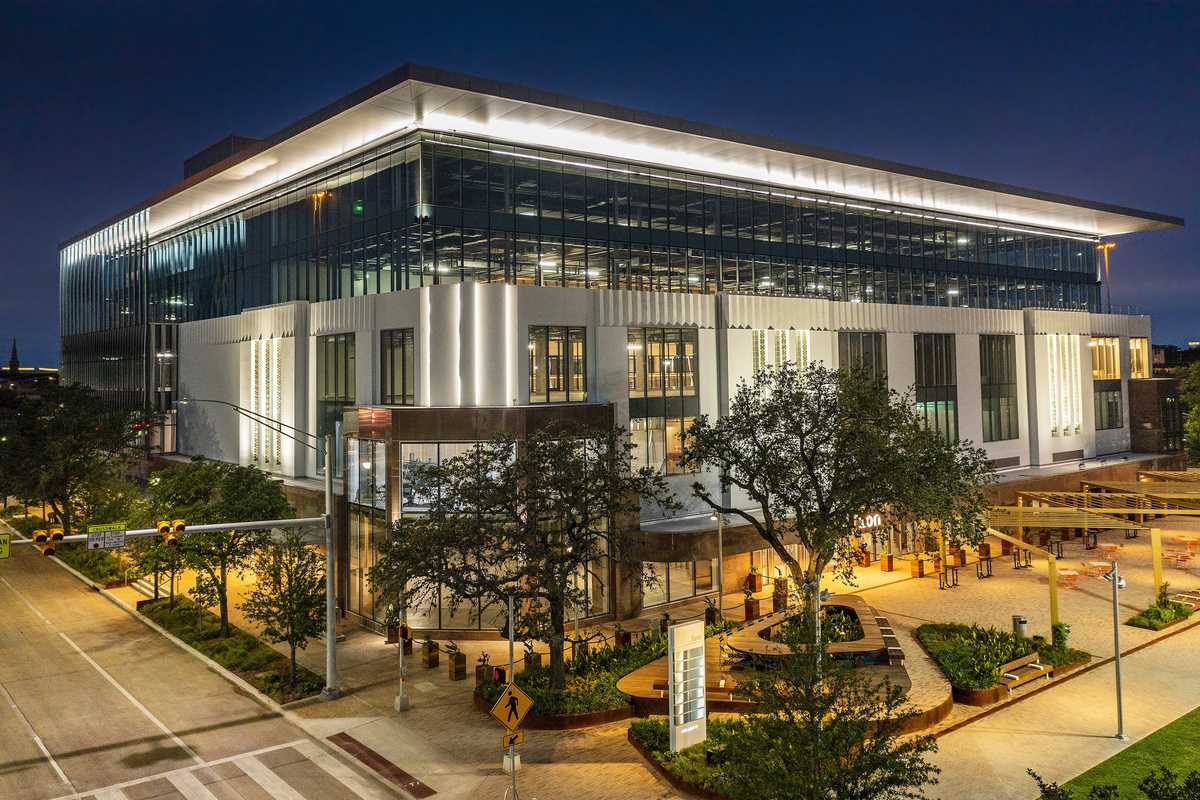
Nexalin develops non-invasive devices that help reset networks in the brain associated with symptoms of anxiety and insomnia. Photo via Getty Images.

A Houston-based company is taking a medicine-free approach to target brain neurologically associated with mental illness.

Nexalin Technology’s patented, FDA-cleared frequency-based waveform targets key centers of the midbrain to support the normalization of neurochemicals through a process known as Transcranial Alternating Current Stimulation (tACS). Delivered via a non-invasive device, the treatment gently stimulates the hypothalamus and midbrain, helping to “reset networks associated with symptoms” of anxiety and insomnia. Early clinical evidence suggests this approach can promote healthier brain function and improved sleep.

Through its recently appointed scientific advisory board (SAB), Nexalin also aims to target Alzheimer’s disease with a clinical development pipeline supported by published data and internal data from studies involving its proprietary DIFS technology. Nexalin’s Gen-2 SYNC and Gen-3 Halo headset delivers the DIFS, which is a waveform that can penetrate deep brain structures implicated in cognitive decline and mental illness.

The board includes experts in neurology, neuroimaging and neurodegenerative diseases with Dr. Mingxiong Huang, Dr. David Owens, and Dr. Abe Scheer coming on board. Nexalin plans to initiate new Alzheimer’s-focused clinical studies in the Q3 2025 by incorporating cognitive testing, imaging biomarkers, and guided metrics to assess treatment efficacy and neural activation.

“I am excited to work alongside Nexalin’s leadership and fellow SAB members to help guide the next generation of non-invasive neuromodulation therapies,” Huang said in a news release. “The intersection of neuroimaging, brain stimulation, and clinical science holds enormous potential for treating neurodegenerative disease.”

Recently, Nexalin’s proprietary neurostimulation device moved forward with a clinical trial that evaluated its treatment of anxiety disorders and chronic insomnia in Brazil. The first of Nexalin’s Gen-2 15-milliamp neurostimulation devices was shipped to São Paulo, Brazil, and the study will be conducted at the Instituto de Psiquiatria University Hospital (IPq-HCFMUSP). The shipments aim to support the launch of a Phase II clinical trial in adult patients suffering from anxiety and insomnia. The Nexalin Gen-2 15-milliamp neurostimulation device has also been approved in China, Brazil and Oman. Its Gen 1 device first received FDA clearance in 2003, according to the company's website.

The company also enrolled the first patients in its clinical trial at the University of California, San Diego, in collaboration with the VA San Diego Healthcare System for its Nexalin HALO, which looks to treat mild traumatic brain injury and post-traumatic stress disorder in military personnel and the civilian population.

Nexalin previously raised $5 million through a

public stock offering.

Ad Placement 300x100
Ad Placement 300x600

CultureMap Emails are Awesome

7+ can't-miss Houston business and innovation events in June 2026

where to be

Editor's note: The FIFA World Cup comes to Houston this month, joined by major energy conferences and a lineup of fan-favorite, recurring events. Here’s what not to miss and how to register. Please note: this article may be updated to add more events.


June 1-4 — CLEANPOWER 2026 Conference and Exhibition

CLEANPOWER unites policymakers, experts, and corporate leaders to solve the challenges that none can solve alone. This must-attend, four-day conference is packed with cutting-edge discussions about wind, solar, storage, and transmission; dealmaking; networking; and fun.

This event begins June 1 at the George R. Brown Convention Center. Register here.

June 2 — Humans of Healthcare

Houston Methodist Center for Innovation will present its quarterly speaker series, Humans of Healthcare. The series will feature a panel of experts who will share about their career paths and discuss the nuances of the health care industry. This month's session will focus on today’s nursing landscape, the industry’s expectations of nurses and what career paths are possible in the field.

The event is Tuesday, June 2, from 5-6:30 p.m. at the Ion. Register here.

June 9 — Greentown Go Make Kickoff

Head to the Ion to celebrate the Greentown Go Make 2026 cohort. The open-innovation program with Shell Catalysts & Technologies and Technip Energies focuses on catalytic solutions for industrial decarbonization and the energy transition. Hear pitches from the founders and network with a select group of startups while enjoying food and drink.

This event is Tuesday, June 9, from 5:30-8 p.m. Register here.

June 9-10 — Texas Brain Economy Summit

The Center for Houston’s Future and UTMB are bringing the Texas Brain Economy Summit back to Houston this summer to continue to position the region as a global leader in brain health. Expect to hear from leaders of global institutions, including the World Economic Forum, U.S. Chamber of Commerce, McKinsey Health Institute, Global Brain Economy Initiative, Davos Alzheimer’s Collaborative, Business Collaborative for Brain Health (UsAgainstAlzheimer’s), Rice University, Memorial Hermann, MD Anderson and many others. Read InnovationMap's full preview of the event here.

This event begins Tuesday, June 9. Purchase tickets here.

June 10 — MIT Future of Healthcare Technology Forum

The MIT Club of South Texas will host an in-person forum to explore how innovation, government and policy are changing the healthcare industry. The event will feature MIT alumni and Houston healthcare leaders, including Dr. Tim Boone, dean of the Texas A&M School of Engineering Medicine; Cynthia Reinhart-King, chair of bioengineering at Rice University; Dr. Tony Lin, CEO and chairman emeritus of Kelsey-Seybold Clinic; and others.

This event is Wednesday, June 10, from 5:15-8:30 p.m. at the TAMU EnMed Building. Register here.

June 11 — Goals & Gigawatts: Houston Energy & Climate Week The Power of & Kickoff Party

Come watch the Mexico City FIFA opening match while celebrating energy and innovation at the Goals & Gigawatts Kickoff Party. The event will feature food, drinks, and a showcase on Houston Energy & Climate Week. Learn what to expect and how to get involved in HECW before closing the night with a DJ and karaoke.

This event is Thursday, June 11, from 1:30-6:30 p.m. Find more information here.

June 16-17 — Energy Projects Conference & Expo

The Energy Projects Conference & Expo (EPC Show) is the largest event in North America for professionals working at the heart of major energy projects. The essential event for engineering, construction, commissioning, operations and maintenance across multiple energy sectors brings together five leading conferences under one roof. Conference subjects span LNG exporting, hydrogen and ammonia, midstream, petrochem and refining, and sustainable aviation fuels.

This event begins June 16 at George R. Brown Convention Center. Register here.

June 25 – NASA Tech Talk

Every fourth Thursday of the month, NASA experts, including longtime engineer Montgomery Goforth, present on technology development challenges NASA’s Johnson Space Center and the larger aerospace community are facing, and how they can be leveraged by Houston’s innovation community. Stick around after for drinks and networking at Second Draught.

This event is Thursday, June 25, from 6-7 p.m. at the Ion. Register here.

Houston researchers report promising first in-human trial for implantable cancer therapy

cancer breakthrough

When it comes to cancer remedies, the treatment can be as challenging for the body as its cause. But what if immunotherapy could be localized? That’s precisely what a Houston team may soon make a reality.

Rice University researchers, in partnership with MD Anderson Cancer Center, recently published their findings from the first in-human trial of an implantable cancer-fighting treatment in the journal Clinical Cancer Research. The paper details testing of AVB-001, encapsulated cells engineered to release interleukin-2 (IL-2)—a naturally occurring signaling protein that boosts immunity—in the peritoneal cavities of 14 patients. The goal is to avoid the toxicity usually experienced with less targeted treatments, as well as find a solution to IL-2s’ abbreviated half-lives.

“Traditional IL-2 therapy has shown potent antitumor activity, but its clinical use has been limited by severe side effects and delivery challenges,” Omid Veiseh, director of the Rice Biotech Launch Pad, professor of bioengineering at Rice and a senior author on the study, said in a press release. “This platform allows us to localize and sustain cytokine exposure directly where tumors reside while minimizing systemic toxicity.”

Serous ovarian carcinoma is especially well-suited to the use of AVB-001 because it tends to spread throughout the abdomen. After a minimally invasive laparoscopic procedure, patients implanted with the cells were noted to tolerate the treatment well. Half of the enrolled patients’ cancer was stabilized, with several among them reporting extended signs of benefit. No maximum tolerated dose was reached and there were no life-threatening events tied to the study.

If that sounds like less-than-earth-shaking results, this is only the beginning. The capsules were implanted for about one week because IL-2 activity drops off after that. The researchers now know that further testing should include either higher levels, repeated doses, or a combination thereof, in order to create stronger advances.

The team has already made early headway on this next step. Preclinical studies in nonhuman primates were not only tolerated well, but without added toxicity, the apes had consistent pharmacological effects.

“This is a foundational step,” Veiseh explained. “We now have evidence that the platform is safe, biologically active and potentially scalable. The next phase is optimizing dosing and exploring combination therapies to unlock its full clinical potential.”

The combination would also include a checkpoint inhibitor, which might improve AVB-001’s tumor-fighting power. “What is exciting is that we are not just delivering a drug, we are programming a microenvironment,” added Dr. Amir Jazaeri, professor of gynecologic oncology at MD Anderson, member of the Rice Biotech Launch Pad’s clinical advisory board and a senior author on the study. “This opens the door to combination strategies that could amplify immune responses in ways that have not been feasible before.”