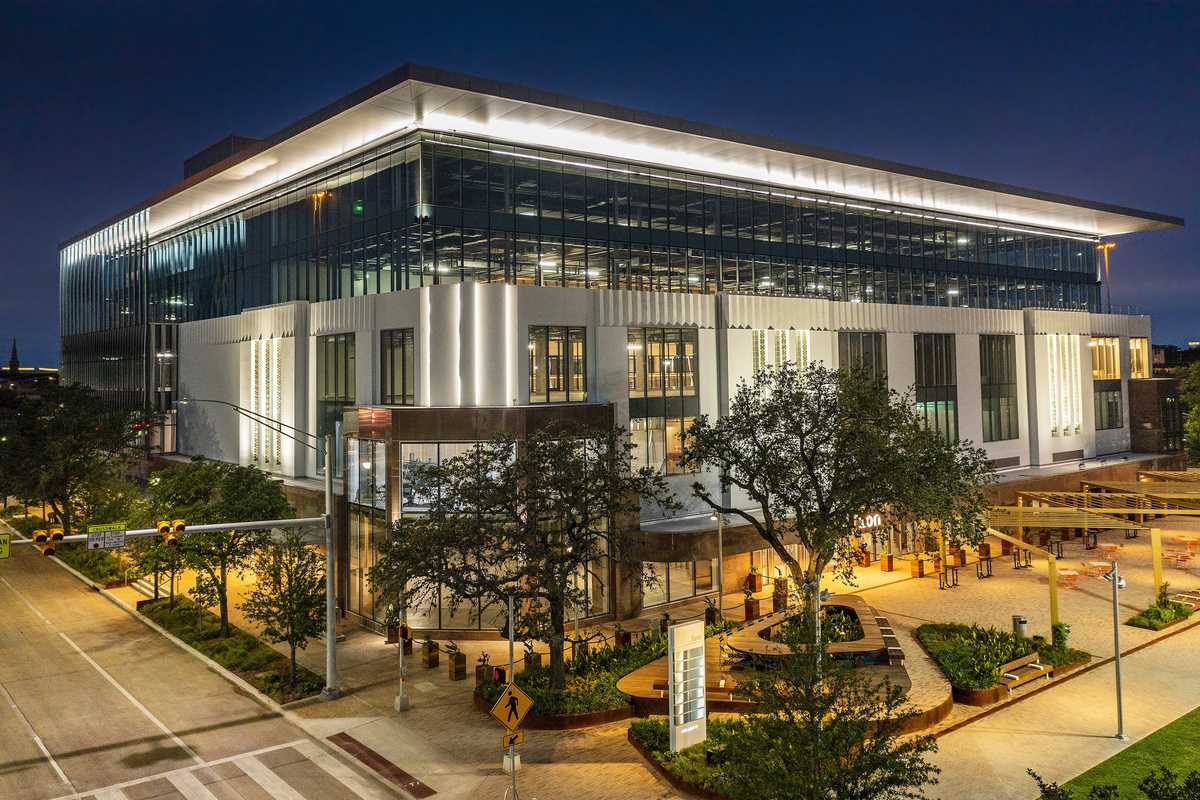
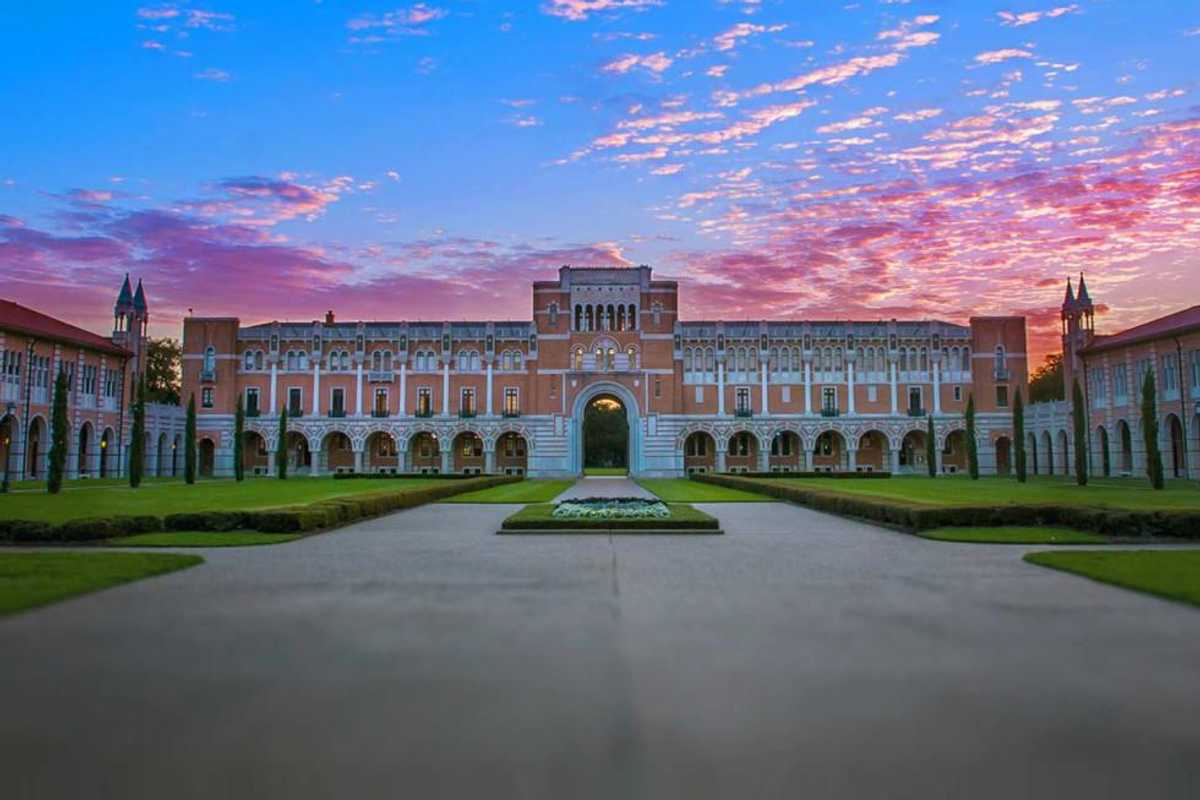
The University of Michigan's Intero Biosystems earned a top-place finish and the largest total investment from the 2025 Rice Business Plan Competition. Photo courtesy Rice University.

Editor's note: As 2026 ramps up, the Houston innovation scene is looking for the latest groups of innovative startups that'll make an impact. A number of accelerators and competitions have opened applications. Read below to see which might be a good fit for you or your venture. And take careful note of the deadlines. Please note: this article may be updated to include additional information and programs.

Did we miss an accelerator or competition accepting applications? Email innoeditor@innovationmap.com for editorial consideration.

2026 HCC Business Plan Competition

Deadline: Jan. 26

Details: HCC’s annual Business Plan Competition (BPC) is an opportunity for proposed, startup and existing entrepreneurs to develop focused plans to start or grow their businesses. Accepted teams will be announced and training will begin in late February and run through early June, with six free, three-hour training sessions. Advising will be provided to each accepted team. Applicants can apply as a team of up to five persons. Finalists will present to to gudges on May 27, 2026. Last year, $26,000 was awarded in seed money to the top five teams. In-kind prizes were also awarded to all graduating teams including free products, services and memberships, with an estimated in-kind value totaling $147,000. Find more information here.

University of Houston Technology Bridge Innov8 Hub (Spring 2026)

Deadline: Jan . 30

Details: UHTB Innov8 Hub’s immersive, 12-week startup acceleration program designed to help early-stage founders launch and scale their technology startups. Selected participants will gain access to expert mentors and advisors, collaborate with a cohort of peers, and compete for cash prizes during our final pitch event. The cohort begins Feb. 16, 2026. The program culminates in Pitch Day, where participants present their ventures to an audience of investors and partners from across the UH innovation ecosystem. Find more information here.

Rice Business Plan Competition 2026

Deadline: Jan. 31

Details: The Rice Business Plan Competition, hosted by the Rice Alliance for Technology and Entrepreneurship, gives collegiate entrepreneurs real-world experience to pitch their startups, enhance their business strategy and learn what it takes to launch a successful company. Forty-two teams will compete for more than $1 million in cash, investments and prizes on April 9-11, 2026. Find more information here.

Rice Veterans Business Battle 2026

Deadline: Jan. 31

Details: The Rice Veterans Business Battle is one of the nation’s largest pitch competitions for veteran-led startups, providing founders with mentorship, exposure to investors and the opportunity to compete for non-dilutive cash prizes. The event has led to more than $10 million of investments since it began in 2015. Teams will compete April 8-9, 2026. Find more information here.

TEX-E Fellows Application 2026-2027

Deadline: Feb. 10

Details: The TEX‑E Fellowship is a hands-on program designed for students interested in energy, climate, and entrepreneurship across Texas. It connects participants with industry mentors, startup founders, investors and academic leaders while providing practical, "real-world" experience in customer discovery, business modeling, and energy-transition innovation. Fellows gain access to workshops, real-world projects, and a statewide network shaping the future of energy and climate solutions. Participants must be a student at PVAMU, UH, UT Austin, Rice University, MIT or Texas A&M. Find more information here.

2026 Energy Venture Day & Pitch Competition

Deadline: Feb. 13

Details: The Rice Alliance, the Houston Energy Transition Initiative (HETI) and TEX-E will present the annual Energy Venture Day and Pitch Competition during CERAWeek on March 24-25, 2026. Energy Venture Day features two days of presentations by energy tech ventures driving efficiency and advancements toward the energy transition. On March 24, the Pitch Preview at the Ion will feature over 50 companies presenting in front of Rice Alliance's robust network of investors and industry partners. On March 25, the Energy Venture Day and Pitch Competition during CERAWeek will showcase 36 ventures at the George R Brown Convention Center. The pitch competition is divided up into the TEX-E university track, in which Texas student-led energy startups compete for $50,000 in cash prizes, and the industry ventures track. The industry track is subdivided into three additional tracks, spanning materials to clean energy. The top three companies from each industry track will be named. The winner of the CERAWeek competition will also have the chance to advance and compete for the $1 million investment prize at the Startup World Cup. Find more information here.

Greentown Go Make 2026

Deadline: March 10

Details: Greentown Go Make 2026 is an open-innovation program with Shell and Technip Energies. The six-month program is advancing industrial decarbonization by accelerating catalytic innovations. Selected startups will gain access to a structured platform to engage leadership from Shell and Technip Energies and explore potential partnership outcomes, including pilots and demonstrations. They’ll also receive networking opportunities, partnership-focused programming, and marketing visibility throughout the program. The cohort will be selected in May. Find more information here.


Ad Placement 300x100
Ad Placement 300x600

CultureMap Emails are Awesome

NASA awards Texas Space Commission role in $10M aerospace workforce initiative

space hub

The Texas Space Commission is one of seven organizations tapped by NASA to lead the space agency's new state and regional Skilled Technical Workforce Hubs.

The $10.5 million initiative aims to help foster the next generation of skilled workers in the aerospace industry.

Through the new program, the hubs will work together over the next three years to meet growing industry needs by aligning “industry employers, community colleges, high school career and technical education programs, and workforce systems,” according to a news release from NASA.

It aims to create clear pathways for workers in technical jobs, like welding, electrical work and machining, plus other jobs that require advanced STEM knowledge but do not require a bachelor’s degree.

“The need for technical talent is already urgent and will only continue to grow as we return humanity to the Moon and set our sights on Mars and beyond,” Elaine Ho, associate administrator for the Office of STEM Engagement at NASA, said in the release. “NASA is uniquely positioned to be the catalyst and convener that accelerates America’s aerospace workforce development and fosters the next generation of technicians.”

As part of the initiative, the TSC plans to launch the statewide network known as the Texas Space STEM Alliance (TSSA). According to a TSC release, the TSSA will link up schools, colleges, workforce groups and aerospace companies to build a pipeline for space-industry workers.

Additionally, the TSC is developing the Texas Aerospace Pathways Plus (TAP+) portal to consolidate information on training programs, internships, apprenticeships, employment opportunities and scholarships, while also identifying regional gaps in workforce opportunities.

Other state and regional organizations to receive the award include:

  • Antelope Valley Community College District in Lancaster, California
  • Georgia Tech Research Corporation
  • Minnesota State Colleges and Universities
  • Southern Utah University
  • Space Florida
  • State Board for Community Colleges and Occupation Education, Arapahoe Community College in Littleton, Colorado

The Houston area is home to more than 43,000 aerospace and aviation professionals, according to the Greater Houston Partnership. The Texas Space Commission has been awarded $150 million for 24 projects since being established to increase the state’s space economy in 2023.

The funding for the NASA state hubs comes from NASA’s Office of STEM Engagement through its Next Gen STEM Project.

Amazon's robotaxi service Zoox rolls out in 'sprawling' Houston market

On the Road

Amazon-owned robotaxi ride-hailing service Zoox is zooming into Houston in September, becoming the latest robotaxi operator jockeying for local riders.

Initially, self-driving retrofitted SUVs with safety drivers on board will serve downtown Houston, centrally located tourist hotspots, and certain residential neighborhoods. The SUVs will test Houston roads before Zoox rolls out autonomous robotaxis here, the company says.

Zoox takes Houston for a test drive

At the outset, Zoox says, a limited number of vehicles will be driven by people to gather data about Houston roads.

Zoox test drive Photo courtesy of Zoox

“This helps create a detailed picture of each street, from road geometry to traffic lights,” the company says. “Once we have mapped out an area, we will test autonomous driving capabilities. Safety and operational readiness govern the pace of our rollout.”

Zoox says its robotaxi differs from vehicles operated by other ride-hailing services.

The all-electric robotaxi “is purpose-built for autonomous ride-hailing and designed for riders from day one,” the company says. “It has no traditional driving controls and instead has carriage-style seating, sliding glass doors, and features that let the rider personalize their journey.”

To help manage the fleet, Zoox plans to open a depot in Houston for vehicle charging and maintenance, a representative says via email.

Along with Houston, Zoox is launching this month in San Diego. The ride-hailing service already operates in Austin, Dallas, Atlanta, Las Vegas, Los Angeles, Miami, Phoenix, the San Francisco Bay Area, Seattle, and Washington, D.C.

Zoox breaks into “sprawling” Houston market

Zoox describes Houston as its “most sprawling market to date.”

“Driving here means navigating complex service-road networks, unique merging scenarios, and challenging environmental conditions, including severe heat, heavy rain, and urban flooding,” the company says. “It’s a rigorous test of our technology across geography and terrain.”

Zoox will join two other autonomous ride-hailing services in Houston:

  • Waymo began rolling in Houston in February. Alphabet, the parent company of Google, owns Waymo.
  • Electric vehicle manufacturer Tesla began offering robotaxi services earlier this year.

A third Zoox competitor is arriving within the next year. A partnership comprising rideshare provider Uber, EV manufacturer Lucid, and autonomous technology company Nuro plans to launch a robotaxi service in Houston by mid-2027.

---

This article originally appeared on CultureMap.com.

Houston energy giant Shell lists local headquarters for sale for $325M

On the Market

Energy giant Shell has put its U.S. headquarters in Houston’s Energy Corridor on the market and is exploring the sale of its U.S. chemical business.

Green Street News reported Shell just listed its longtime Energy Corridor campus at 150 N. Dairy Ashford Road. The asking price is $325 million, The Real Deal reported. Shell plans to lease back half of the nearly 1.5 million-square-foot Woodcreek campus for 15 years.

A sale-leaseback deal could transform the 43.6-acre campus into a multitenant hub, CoStar News reported.

“Houston is a critical hub for Shell globally and the headquarters of our U.S. businesses,” a Shell spokesperson told the Houston Business Journal. “We remain committed to Houston and are evaluating opportunities to optimize our Woodcreek campus as part of our ongoing review of workplace needs while maintaining a strong presence in the city.”

Shell occupied its first building at the West Houston campus in 1980. The company employs more than 6,000 people in Texas.

Shell is one of the highest-profile businesses occupying space in the Energy Corridor. It’s home to 67,000 workers, more than 27 million square feet of office and mixed-use space, and 3.8 million square feet of retail and restaurant space.

Shell considers $8B sale of chemical business
As the company seeks to unload its Woodcreek campus, The Financial Times reported Shell is looking into selling its U.S. chemical business. The price tag: $8 billion.

Potential buyers include Spring-based ExxonMobil and Houston-based LyondellBasell.

Shell operates four chemical plants in Texas, Louisiana and Pennsylvania, producing an array of chemicals for use in plastics, detergents and pharmaceuticals.

Shell CEO Wael Sawan said last year that the company had spent $45 billion in capital “that is underperforming for us,” split between its chemical business and renewable energy arm.

Shell also agreed to sell its solar and wind power business in India this summer. Read more here.

---

This article originally appeared on EnergyCapitalHTX.com.