
The report considered patents, NIH funding, lab space, venture capital investments and the number of jobs. Photo via Pexels

Houston is ranked No.1 on the first-ever Next 10 U.S. Biopharma Clusters report published by Genetic Engineering & Biotechnology News (GEN).

The report, which ranks the best emerging hubs for life science activities, considered patents, NIH funding, lab space, venture capital investments, and the number of jobs in regions in cities, states and “clusters” across the U.S. GEN touts Houston as the top city for the biopharma industry due to a surge in funding, job creation, medical innovations and startup success.

Here’s how Houston ranked in the report’s different categories;

  • No. 1 for NIH funding with 2,262 awards totaling more than $1.25 billion
  • No. 2 for emerging regions for jobs, with 28,000 jobs
  • No. 2 for lab space, with roughly 8 million square feet in the market
  • No. 6 for patents, with 2,760 patent families

According to BioHouston chairman Jeff Wade, Houston secured half a billion dollars in venture capital funding in 2025 and 2026 to date.

The report called out major biopharm news out of Houston in the last few months, including Bristol Myers Squibb selecting Houston for its $1 billion, 600,000-square-foot manufacturing site and Eli Lily selecting Houston for its $6.5 billion, 236-acre manufacturing site. Both facilities will be located within Generation Park, a 4,300-acre, master-planned commercial district near Lake Houston.

Houston startups like CrossBridge Bio and Duracyte were also mentioned in the report. CrossBridge, which develops antibody-drug conjugates for cancer, was acquired by Eli Lily in April for $300 million. Duracyte, a “living pharmacy” company, was launched out of Rice University’s biotech venture studio RBL LLC this spring and is backed by up to a $45 million Advanced Research Projects Agency for Health (ARPA-H) award.

The startup is working to commercialize its Hybrid Advanced Molecular Manufacturing Regulator (HAMMR) technology, a rechargeable, implantable device that can sense biological signals, monitor tumor environments and adjust therapeutic output in real time.

“There’s a lot of great talent, but the unique advantage that we have is we are able to benefit from a lot of unique clinical infrastructure and clinician insights,” Omid Veiseh, Duracyte co-founder and managing partner of RBL LLC, told GEN. “There are a lot of clinicians here who are eager to partner on investigator-initiated trials.”

The report also touted Houston’s Texas Medical Center, home to the University of Texas MD Anderson Cancer Center and Baylor College of Medicine, and international partnerships like the recently expanded TMC Korea BioBridge.

Other cities to make the list include:

  • No. 2 Minneapolis-St. Paul
  • No. 3 Denver-Boulder
  • No. 4 St. Louis
  • No. 5 Dallas-Fort Worth

States to make the list include:

  • No. 1 Ohio (including Cincinnati, Cleveland, and Columbus)
  • No. 2 Indiana (including Indianapolis)
  • No. 3 Florida (including Jacksonville and Miami-Fort Lauderdale)
  • No. 4 Georgia (including Atlanta and Augusta)
  • No. 5 Wisconsin (including Madison and Kenosha)

Regional state clusters to watch include:

  • Phoenix
  • Pittsburgh
  • Greater Richmond, Virginia
  • South Carolina
  • Utah

See the full report here.

Ad Placement 300x100
Ad Placement 300x600

CultureMap Emails are Awesome

MD Anderson receives $10M gift to launch pancreatic cancer program

med funding

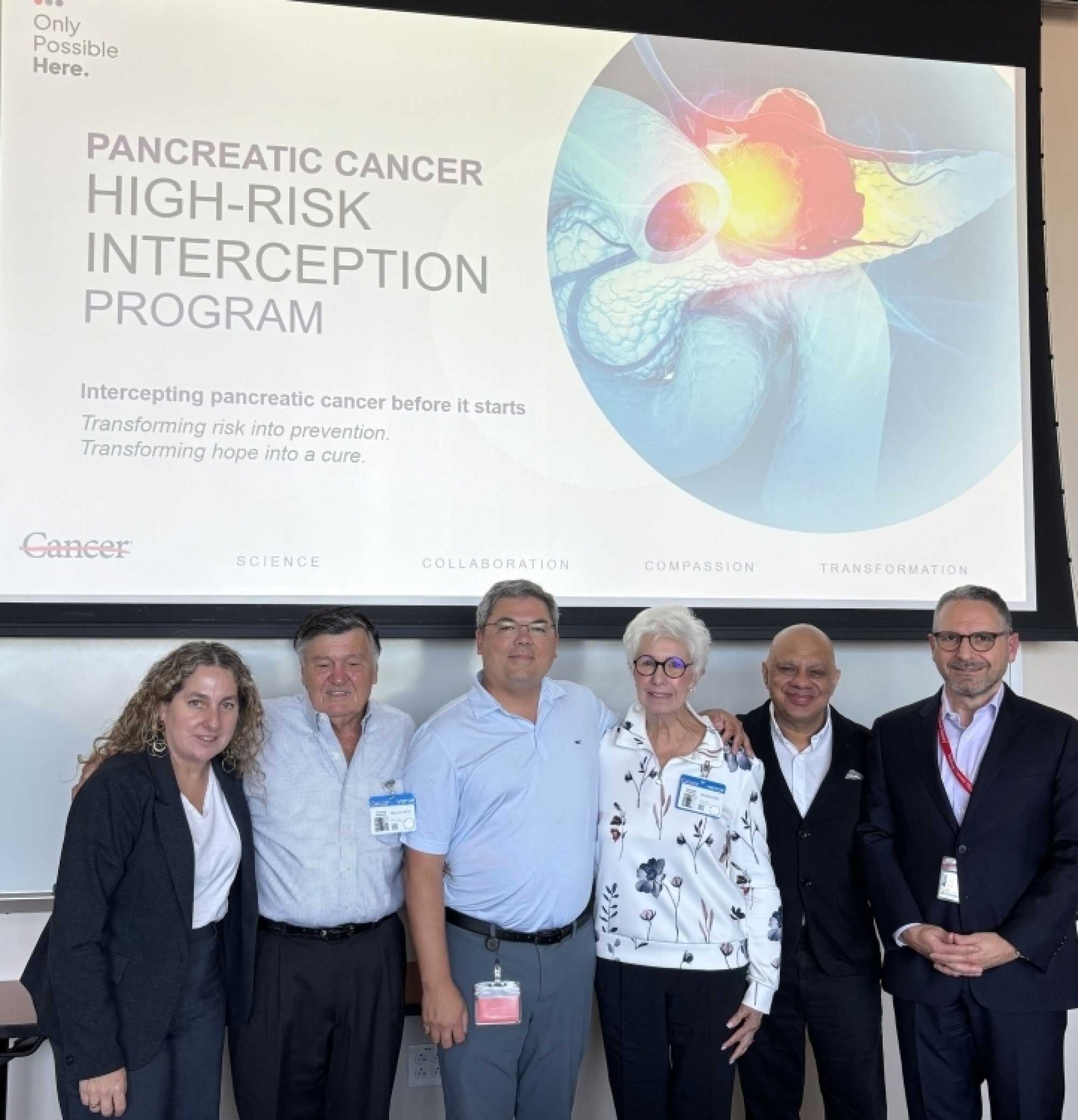
The University of Texas MD Anderson Cancer Center will be getting a significant boost in the fight against pancreatic cancer thanks to a recent gift from longtime supporters Zelma and William Reid. The medical system announced this month that a $10 million donation would help it establish a new Pancreatic Cancer High-Risk Interception Program.

“Philanthropic investments like this create opportunities to accelerate discoveries and pursue bold approaches to some of the most challenging cancers we face,” said Dr. Jeffrey E. Lee, president ad interim of UT MD Anderson, said in a news release. “We are deeply grateful to Zelma and Bill Reid for their generosity and enduring commitment. Their support will help advance innovative research aimed at intercepting pancreatic cancer earlier, when we have the greatest opportunity to improve outcomes for patients.”

Pancreatic cancer is one of the most deadly types of cancer. Despite being relatively rare, it ranks third in total deaths from cancer in the United States. Less than 10 percent of patients diagnosed with pancreatic cancer are still alive five years later.

Dr. Florencia McAllister, William Reid, Dr. Michael P. Kim, Zelma Reid, Dr. Manoop S. Bhutani, and Dr. Matthew H.G. Katz. Photo courtesy MD Anderson

The problem is often detection. The pancreas is located deep in the upper abdomen among many other organs, which can make spotting tumors difficult. Some blood tests can indicate pancreatic cancer, but it is usually not diagnosed until it spreads.

The new Pancreatic Cancer High-Risk Interception Program hopes to assemble new diagnostic techniques and patient screening tools to increase early detection. MD Anderson’s Dr. Michael P. Kim, associate professor of surgical oncology; Dr. Manoop S. Bhutani, professor of gastroenterology and hepatology; and Dr. Florencia McAllister, professor of gastrointestinal medical oncology and genetics, will lead the new program.

The team will rely on advanced imaging, molecular diagnostics, AI-driven assessment, and DNA testing to both create an at-risk patient population profile and hopefully help detect the cancer in its earliest stages. For instance, some of these tools will be able to monitor pancreatic cysts without invasive surgery.

“The ultimate goal is to intercept pancreatic cancer development or to initiate treatment earlier in the disease process, when patients have the best chance for successful outcomes,” Kim added in the release. “This gift will allow us to expand our research efforts, strengthen collaborations across disciplines and accelerate promising strategies to identify and intercept pancreatic cancer before it becomes life-threatening. We are incredibly thankful to the Reids for making this work possible.”

Axiom Space inks partnership to grow semiconductor crystals in orbit

space deal

Down in Webster, Texas, and high above the Earth, Axiom Space and Kansas-based Nitride Global Inc. will grow the next generation of semiconductor crystals in microgravity thanks to a new memorandum of understanding (MOU) signed earlier this month.

“Signing this MOU with Nitride Global reflects the growing commercial interest in producing advanced semiconductor materials in space,” Lucie Low, chief science officer for Axiom Space, said in a news release. “Their leadership in aluminium nitride (AlN) crystal growth and advanced packaging technologies, combined with Axiom Space’s capabilities in orbital infrastructure and mission integration, position us to demonstrate real commercial value in low-Earth orbit (LEO).”

This latest partnership builds on existing collaboration between Axiom and NitrideGlobal and NASA Ames Research Center.

Aluminium nitride crystals are part of the cutting-edge generation of semiconductors essential to emerging high-voltage transistors and also used in various medical technologies. Because of their high thermal stability, they can be used in a variety of environments and applications that have revolutionized everything from electric cars to the grids the cars run on.

However, the crystals are challenging to grow on Earth and face defects and size limitations due to gravity. Growing them in space can enhance their performance, according to NitrideGlobal. Microgravity allows them to grow more uniformly and with fewer defects, potentially resulting in larger, purer and more reliable crystals.

That’s where Axiom Space comes in. The company is developing Axiom Station, a successor to the International Space Station, where new research and manufacturing can be carried out.

“This MOU marks a pivotal milestone in our close partnership with Axiom Space that started as part of the NASA Small Business Innovation Research (SBIR) for AlN growth in space and is now expanding to usher the development of an innovation ecosystem,” Mahyar Khosravi, CEO of Nitride Global Inc., added in the release. “With Axiom Space’s leadership in the in-space manufacturing sector, this partnership will aim to deliver a platform for commercially viable manufacturing of [ultrawide bandgap materials] that will enable the next generation of semiconductor & microelectronics for terrestrial and planetary exploration uses.”

Houston's IAH lands on list of 15 most expensive U.S. airports

Travel Woes

Hold on to those carry-on bags: George Bush Intercontinental Airport is checking in as one of the 15 most expensive airports in the U.S., a new study has revealed.

The analysis from digital commerce and marketing platform ConsumerVoice.org compared the average domestic flight costs at the 50 largest U.S. airports, ranking them from highest to lowest. Flight price data was sourced from the U.S. Department of Transportation’s Bureau of Transportation Statistics (BTS) during the first and second quarters of 2026 and compared with the same period in 2025.

Washington Dulles International Airport in Virginia tops the list as the priciest major airport in the U.S, with domestic flights at IAD costing $534.34 on average. Charlotte Douglas International Airport in North Carolina comes in second place with an average fare cost of $527.79.

IAH lands at No. 13 nationwide, and it's the second most expensive in Texas, the findings show. The typical domestic flight from IAH costs $482.02, and they aren't getting any cheaper. Flights out of IAH are nine percent more expensive than they were a year ago, the report found. The average domestic flight cost $37.80 less in 2025.

Houstonians not only need to be prepared to spend a little extra money when booking their tickets; they'll also need to pack their patience, as IAH also ranks among the worst airports for flight delays and cancellations.

Travelers on a budget can save more on flights out of William P. Hobby Airport, if they're willing to make the drive. Travelers can save about 13 percent on their flights by flying through HOU instead of IAH, but there are other costs to take into consideration.

"Ground transportation, gas, and parking can eat into the difference, so factor these in when choosing the most economical departure airport," the report said.

HOU ranked as the No. 31 most expensive airport on the list with domestic flights coming in at $417.78 on average. Average fares at HOU are also nine percent more expensive than they were last year.

The top 10 priciest major airports in the U.S. are:

  • No. 1 – Washington Dulles International Airport
  • No. 2 – Charlotte Douglas International Airport
  • No. 3 – Detroit metro Wayne County Airport
  • No. 4 – Salt Lake City International
  • No. 5 – Minneapolis-St. Paul International
  • No. 6 – San Francisco International
  • No. 7 – John F. Kennedy International
  • No. 8 – Newark Liberty International
  • No. 9 – Dallas/Fort Worth International
  • No. 10 – Hartsfield-Jackson Atlanta International
---

This article originally appeared on CultureMap.com.