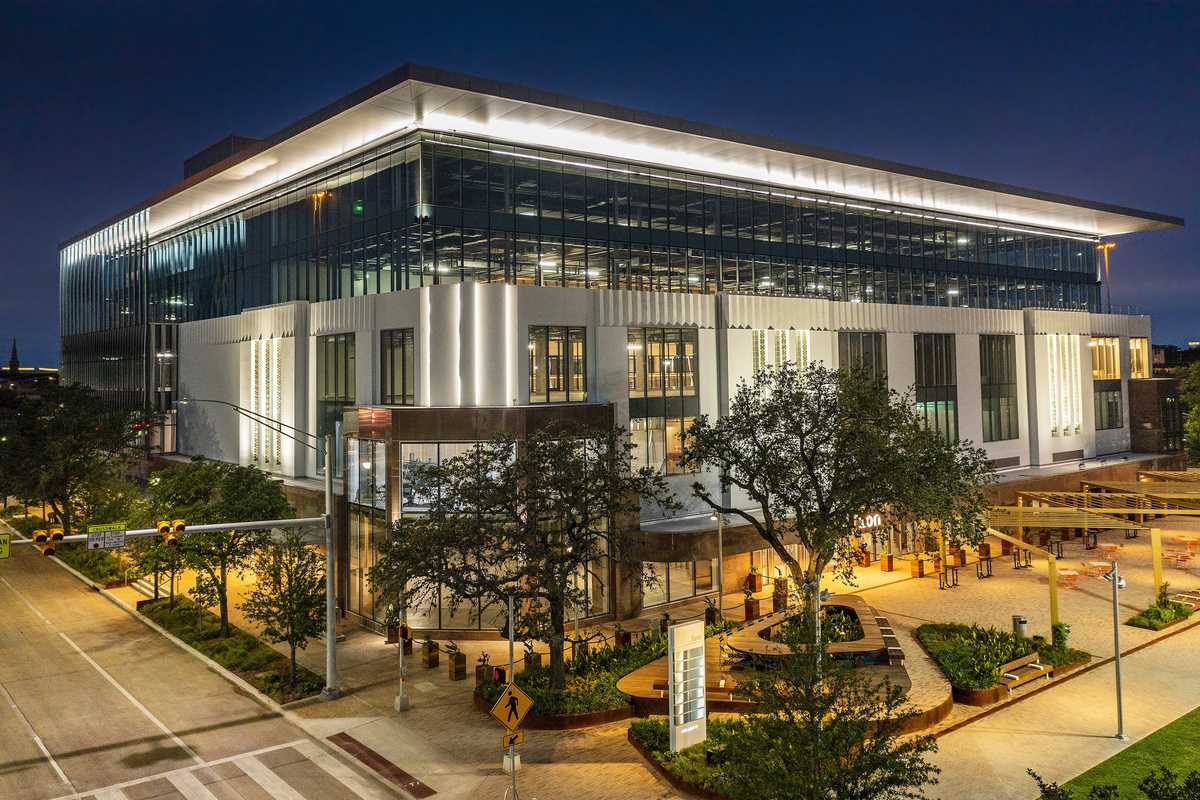
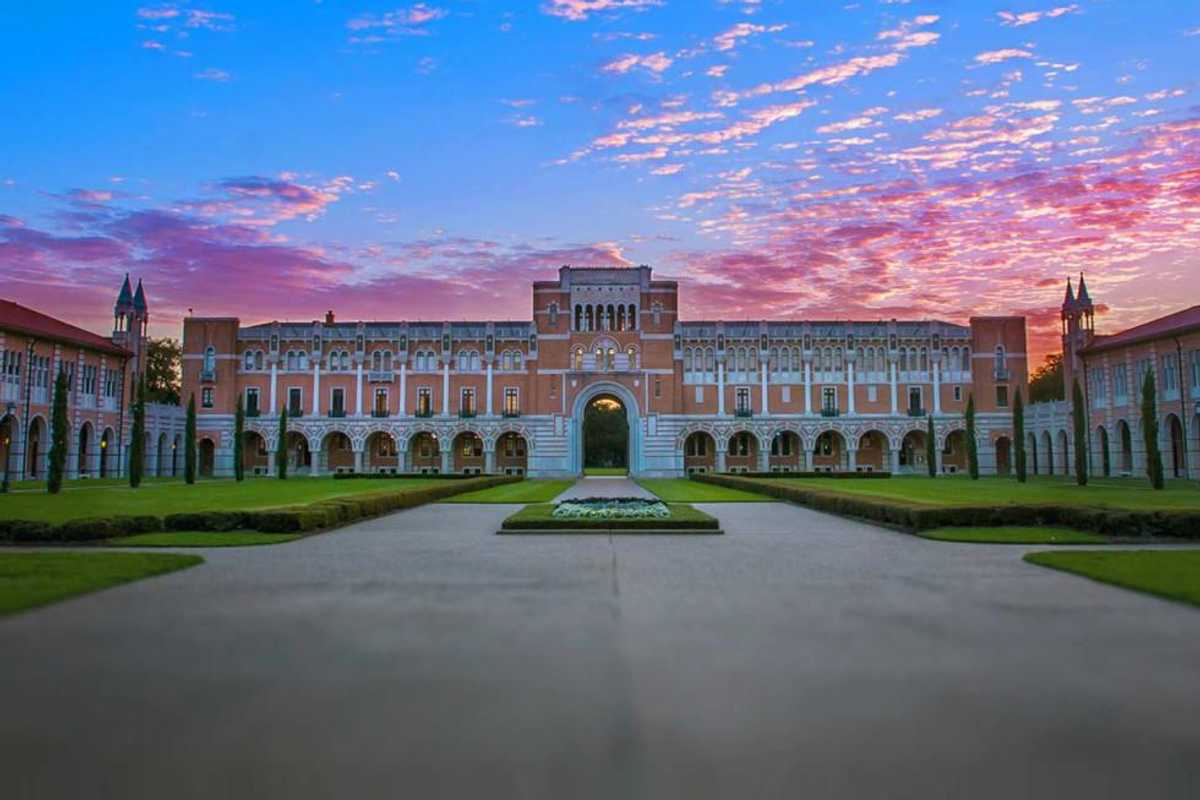
The University of Michigan's Intero Biosystems earned a top-place finish and the largest total investment from the 2025 Rice Business Plan Competition. Photo courtesy Rice University.

Editor's note: As 2026 ramps up, the Houston innovation scene is looking for the latest groups of innovative startups that'll make an impact. A number of accelerators and competitions have opened applications. Read below to see which might be a good fit for you or your venture. And take careful note of the deadlines. Please note: this article may be updated to include additional information and programs.

Did we miss an accelerator or competition accepting applications? Email innoeditor@innovationmap.com for editorial consideration.

2026 HCC Business Plan Competition

Deadline: Jan. 26

Details: HCC’s annual Business Plan Competition (BPC) is an opportunity for proposed, startup and existing entrepreneurs to develop focused plans to start or grow their businesses. Accepted teams will be announced and training will begin in late February and run through early June, with six free, three-hour training sessions. Advising will be provided to each accepted team. Applicants can apply as a team of up to five persons. Finalists will present to to gudges on May 27, 2026. Last year, $26,000 was awarded in seed money to the top five teams. In-kind prizes were also awarded to all graduating teams including free products, services and memberships, with an estimated in-kind value totaling $147,000. Find more information here.

University of Houston Technology Bridge Innov8 Hub (Spring 2026)

Deadline: Jan . 30

Details: UHTB Innov8 Hub’s immersive, 12-week startup acceleration program designed to help early-stage founders launch and scale their technology startups. Selected participants will gain access to expert mentors and advisors, collaborate with a cohort of peers, and compete for cash prizes during our final pitch event. The cohort begins Feb. 16, 2026. The program culminates in Pitch Day, where participants present their ventures to an audience of investors and partners from across the UH innovation ecosystem. Find more information here.

Rice Business Plan Competition 2026

Deadline: Jan. 31

Details: The Rice Business Plan Competition, hosted by the Rice Alliance for Technology and Entrepreneurship, gives collegiate entrepreneurs real-world experience to pitch their startups, enhance their business strategy and learn what it takes to launch a successful company. Forty-two teams will compete for more than $1 million in cash, investments and prizes on April 9-11, 2026. Find more information here.

Rice Veterans Business Battle 2026

Deadline: Jan. 31

Details: The Rice Veterans Business Battle is one of the nation’s largest pitch competitions for veteran-led startups, providing founders with mentorship, exposure to investors and the opportunity to compete for non-dilutive cash prizes. The event has led to more than $10 million of investments since it began in 2015. Teams will compete April 8-9, 2026. Find more information here.

TEX-E Fellows Application 2026-2027

Deadline: Feb. 10

Details: The TEX‑E Fellowship is a hands-on program designed for students interested in energy, climate, and entrepreneurship across Texas. It connects participants with industry mentors, startup founders, investors and academic leaders while providing practical, "real-world" experience in customer discovery, business modeling, and energy-transition innovation. Fellows gain access to workshops, real-world projects, and a statewide network shaping the future of energy and climate solutions. Participants must be a student at PVAMU, UH, UT Austin, Rice University, MIT or Texas A&M. Find more information here.

2026 Energy Venture Day & Pitch Competition

Deadline: Feb. 13

Details: The Rice Alliance, the Houston Energy Transition Initiative (HETI) and TEX-E will present the annual Energy Venture Day and Pitch Competition during CERAWeek on March 24-25, 2026. Energy Venture Day features two days of presentations by energy tech ventures driving efficiency and advancements toward the energy transition. On March 24, the Pitch Preview at the Ion will feature over 50 companies presenting in front of Rice Alliance's robust network of investors and industry partners. On March 25, the Energy Venture Day and Pitch Competition during CERAWeek will showcase 36 ventures at the George R Brown Convention Center. The pitch competition is divided up into the TEX-E university track, in which Texas student-led energy startups compete for $50,000 in cash prizes, and the industry ventures track. The industry track is subdivided into three additional tracks, spanning materials to clean energy. The top three companies from each industry track will be named. The winner of the CERAWeek competition will also have the chance to advance and compete for the $1 million investment prize at the Startup World Cup. Find more information here.

Greentown Go Make 2026

Deadline: March 10

Details: Greentown Go Make 2026 is an open-innovation program with Shell and Technip Energies. The six-month program is advancing industrial decarbonization by accelerating catalytic innovations. Selected startups will gain access to a structured platform to engage leadership from Shell and Technip Energies and explore potential partnership outcomes, including pilots and demonstrations. They’ll also receive networking opportunities, partnership-focused programming, and marketing visibility throughout the program. The cohort will be selected in May. Find more information here.

Ad Placement 300x100
Ad Placement 300x600

CultureMap Emails are Awesome

Tesla self-driving mode wasn't to blame in Houston-area crash, report suggests

Tesla news

Federal safety investigators looking into a runaway Tesla that killed a grandmother in her home say the driver had pressed the accelerator to full speed, suggesting the vehicle's self-driving software was not to blame.

The driver had told police that he had the self-driving software turned on, but a report from the National Transportation Safety Board concluded that he had actually overridden that feature when he pushed hard on the pedal. Moments later the Tesla Model 3 raced down a residential street in Katy, Texas, at highway speeds, slammed into a brick home and killed a 76-year-old woman standing in the front room.

The crash last month drew national attention because Tesla CEO Elon Musk is seeking to reassure the public its self-driving feature is safe as he prepares to turn hundreds of thousands of Teslas already on the road into fully automatic vehicles and begin selling two-seated Cybercabs missing steering wheels and pedals.

The crash came two months after officials at a separate federal agency, the National Highway Traffic Safety Administration, announced it was elevating a 2024 investigation of the self-driving feature to new “engineering analysis” level, raising the possibility of a recall of 3.2 million Tesla vehicles.

That NHTSA probe was triggered by crashes where the self-driving feature failed to alert drivers to take control in fog and other poor visibility conditions.

The agency opened an investigation last year into 58 incidents in which Teslas reportedly violated traffic safety laws while using self-driving technology, leading to more than a dozen crashes and fires and nearly two dozen injuries.

Separate from the National Transportation Safety Board, NHTSA is also looking into the Tesla house crash in Texas, one of 46 “special crash” investigations of Tesla's self-driving or driver-assistance technology in the past decade, according to the agency’s records. In more than a dozen of those crashes, at least one person — a driver, passenger or pedestrian — was killed.

Tesla had originally called its driver assistance software Full Self-Driving, or FSD, but auto experts and regulators complained it was misleading because drivers must always keep their eyes on the road and be ready to take over at any time.

The company has since changed the name to Full Self-Driving (Supervised).

Video of the Katy, Texas, accident shows the Tesla traveling at more than 70 mph (112.65 kilometers per hour), jumping a curb then tearing across a lawn before crushing through a brick wall of a home. A woman standing feet away, Martha Avila, was found amid piles of crumbling plaster, split beams and bits of furniture and rushed to a hospital but died.

Sales of Tesla cars still haven't recovered fully from boycotts last year over Musk's political stands, but the stock is rising anyway as he has successfully shifted attention away from the sales figures. He says they matter less now that the company is on the cusp of major technological advances, such as turning Teslas into hands-free vehicles and having its Optimus robots take over for humans for tasks at home and work.

Tesla stock has risen 22% in the past year and is currently trading at 170 times expected annual earnings compared to 20 for the S&P 500.

For its second-quarter financial results, financial analysts surveyed by FactSet expect earnings per share will barely budge — 32 cents versus 33 cents a year earlier — continuing a sixth quarter streak of flat or falling profits.

London AI startup selects Houston for first U.S. office after $20M raise

welcome to houston

London-based AI firm Applied Computing has announced a $20 million Series A round and a new office in Houston.

The new Bayou City office is Applied Computing’s first in the United States and part of its North American expansion. The company is known for its Orbital AI platform, which is tailored for energy operations.

The funding round was led by Houston-based KBR Inc., with participation from San Francisco-based Databricks Ventures. KBR’s investment was first announced in March.

KBR and Applied Computing have also entered into a multi-year agreement to deliver exclusive AI products for the energy sector. KBR already has integrated Orbital into its INSITE 3.0 platform for energy projects, and is also using the product for ammonia production.

Applied Computing’s Orbital platform combines physics-grounded intelligence with models across chemical engineering, time-series forecasting and language, according to the company. The system analyzes sensor readings and can recognize a facility’s equipment constraints and operator activity. The platform can also allow technicians to run simulations of how a change to a facility could affect the rest of its operations.

According to TechCrunch, Applied Computing will use the $20 million to further explore projects and deployments with the energy sector, hire engineering and research positions, and continue to expand internationally, potentially into the Middle East.

The company is also working on deals with a major U.S. stream operator, TechCrunch reports. And Applied Computing shared on LinkedIn that it plans to announce its first partnership with a major European oil company in the coming weeks.

“Yesterday we showed Orbital live in deployments at our demo day at the Energy Institute in London,” Callum Adamson, CEO and co-founder of Applied Computing, posted on LinkedIn on July 16. “Today, we're announcing the capital to scale it globally as well as the launch of our new offices in Houston and Bangalore. In the weeks following, there will be more announcements on our progress, partnerships and deployments.”

The company opened its Bangalore offices in December.

Texas is no longer America's No. 1 most financially distressed state

Report Rebound

After spending an unfortunate year as the No. 1 state with the most people in financial distress, Texas has slightly recovered. But the Lone Star State isn't out of the woods yet: it's still among the five most financially distressed states in America for 2026.

According to WalletHub's 2026 report, Texas sits in the No. 4 spot this year, while Kansas, Louisiana, and Florida moved up to become the top three states with the most financially distressed residents.

The personal finance website's experts compared all 50 states based on residents' average credit scores, the share of people with "accounts in distress" (meaning an account that's in forbearance or has deferred payments), the one-year change in bankruptcy filings from March 2025, and search interest indexes for "debt" and "loans."

Despite improving in the overall ranking, the study found Texas has had the fourth-biggest spike in bankruptcy filings nationally from March 2025 to March 2026. Texas residents also have the 10th worst average credit scores in the country, according to the findings.

This is how Texas ranked across the study's six key dimensions, where No. 1 means "most distressed:"

  • No. 4 – Change in bankruptcy filings from March 2024 to March 2025 rank
  • No. 5 – Average number of accounts in distress rank
  • No. 8 – "Loans" search interest index rank
  • No. 8 – People with accounts in distress rank
  • No. 12 – Credit score rank
  • No. 13 – “Debt” search interest index rank

It feels like inflation and affordability have been top-of-mind for many Americans over recent years, and uncertainty around the national economy also adds another level of distress. That's especially true for Houston residents, which were dubbed the second most financially distressed people in America earlier in 2026.

"Americans have faced significant financial challenges in recent years, as inflation, shifting unemployment levels, public health emergencies, and natural disasters have made it more difficult for many households to stay on top of their bills," the report said.

The top three states that have the least financially distressed residents are Maine (No. 50), Rhode Island (No. 49), and Hawaii (No. 48).

The top 10 most financially distressed states in America for 2026 are:

  • No. 1 – Kansas
  • No. 2 – Lousiana
  • No. 3 – Florida
  • No. 4 – Texas
  • No. 5 – South Carolina
  • No. 6 – Wyoming
  • No. 7 – Georgia
  • No. 8 – California
  • No. 9 – North Carolina
  • No. 10 – Kentucky
---

A version of this article originally appeared on CultureMap.com.