Comicpalooza takes place Friday, May 9, to Sunday, May 12. Courtesy of Comicpalooza

People from around the world will be flocking to downtown Houston by the thousands, and not just for the Astros and the Rockets. The 11th annual Comicpalooza is taking over the George R. Brown Convention Center from Friday, May 10, to Sunday, May 12.

"This major super block in downtown will be absolutely electric this weekend," Michael Heckman, Comicpalooza president, tells InnovationMap.

Last year, the convention attracted over 50,000 people from 47 states and 17 countries, and it made an economic impact of over $20 million, Heckman says. This year, with the help of Game of Thrones stars and an inaugural ESPN event, Comicpalooza should surpass last year's accomplishments.

Here's what you can expect from this weekend.

A crowd at the panel that has two Game of Thrones actresses

Emilia Clarke (left) plays Daenerys in Game of Thrones, and Nathalie Emmanuel plays her adviser and friend, Missandei. Photos courtesy of Comicpalooza

A panel on Saturday morning at 11 am will have two Game of Thrones stars — Emilia Clarke (Daenerys) and Nathalie Emmanuel (Missandei). The panel is sure to attract the masses, and the two actresses are major gets by the organization.

"To be able to get Emilia Clarke in the middle of the final season of Game of Thrones, with only two episodes to go — the hype has been unbelievable," Heckman says. "To be able to have a pop culture phenomenon like that come here to Houston — and it will be her first fan event. She's done the San Diego Comic Con, but that was more of a media event."

Both actresses also have autograph visits available for purchase. Clarke's are sold out online, but some opportunities will be made available day of.

The first ever ESPN collegiate esports competition
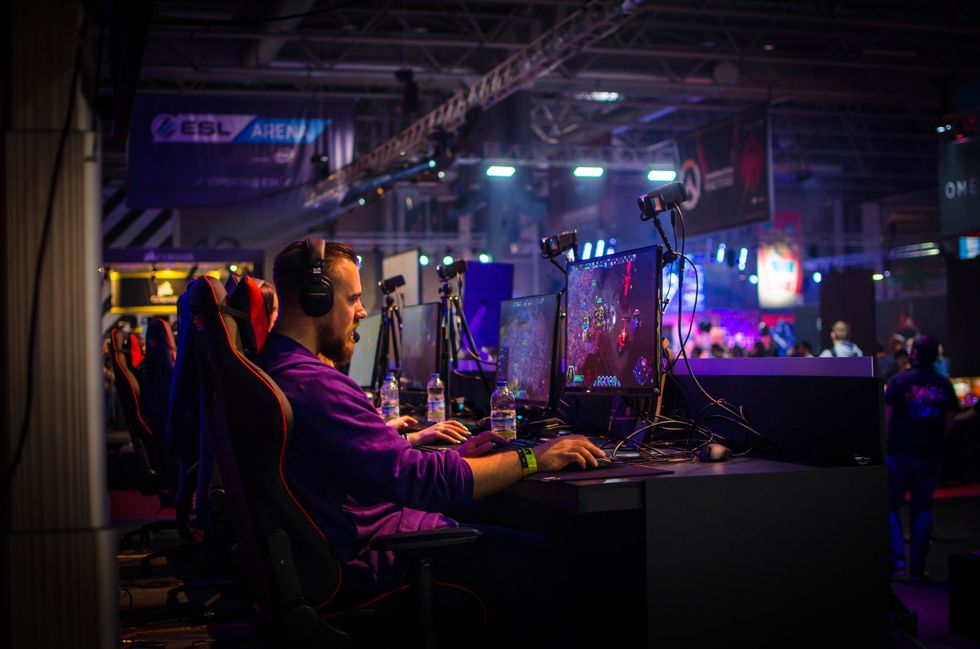
ESPN's inaugural esports competition for college students is premiering at Comicpalooza. Jamie McInall/Pexels

For the first time ever, ESPN is having a collegiate esports championship and chose Houston to be the place for the finals.

"We've understood the value of [esports] for Comicpalooza for a number of years. ESPN is making a big investment — it's their first ever event of this nature, but it won't be their last," Heckman says.

Students from hundreds of schools have competed to make it to the semifinals and championship in Houston, and scholarships are on the line. The weekend will have 22 teams across five video games — Hearthstone, Heroes of the Storm, Overwatch, StarCraft II, and Street Fighter V — according to ESPN. To read more about the competition, click here.

Makers on display
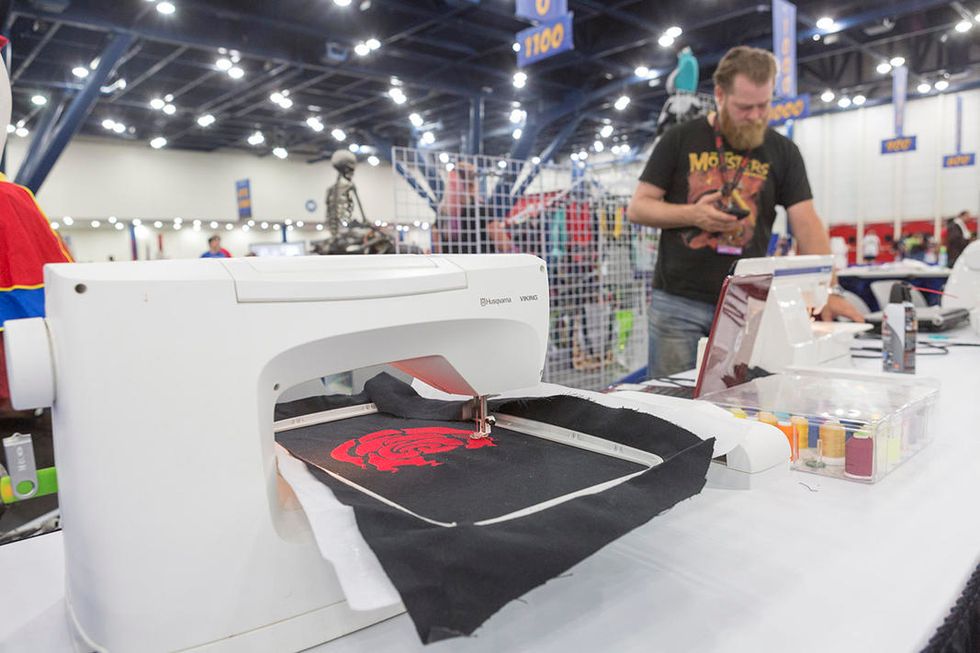
Anyone can check out the Comicpalooza Maker's Space — there's even a place to fix any cosplay wardrobe malfunctions. Photo via comicpalooza.com

Calling all makers — professionals or wannabes. Comicpalooza's Maker's Space is open to cosplayers, artists, engineers, scientists and everyone in between who wants to create and build using old and new technology, from small electrical parts to towering 3D printers and Lego masterpieces.

"What a lot of people don't know is there are so many interesting aspects to Comicpalooza — from literature tracks to a film festival to a makerspace," Heckman says. "There are hundreds of exhibitors on the expo showfloor, but there's an area carved out for makers."

A party on the promenade

Free concert anyone? Photo via comicpalooza.com

From 6 to 10 pm on Saturday, Avenida Houston will be transformed into an after party put on by Saint Arnold's and headlined by Icona Pop. It's free to attend, and you can get more info here.

VIPs all around
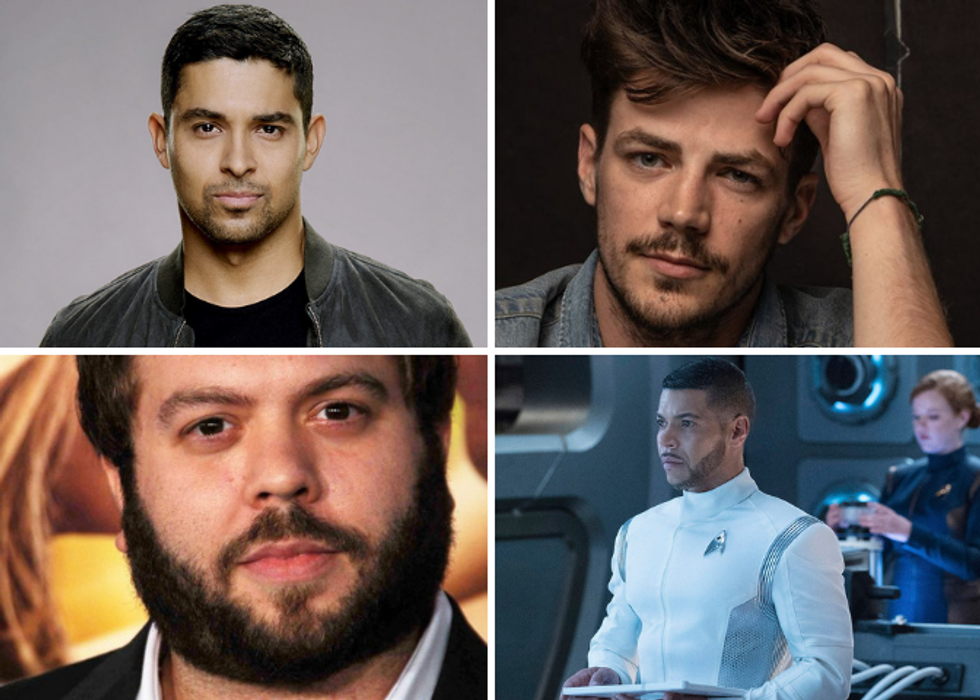
It's not just the Game of Thrones people being featured. Photos via comicpalooza.com

Comicpalooza attendees can grab photos with or autographs from over 30 different actors across major franchises — like Star Trek, Walking Dead, and so much more.

The list of actors is as follows: Emilia Clarke, Nathalie Emmanuel, Grant Gustin, Wilmer Valderrama, Dan Fogler, Gates McFadden, Michael Dorn, John Wesley Shipp, Peter Serafinowicz, Griffin Newman, Yara Martinez, Brendan Hines, Scott Speiser, Jeremy Davies, Andrew Divoff, Mira Furlan, Erick Avari and more.

Ad Placement 300x100
Ad Placement 300x600

CultureMap Emails are Awesome

Houston researcher builds radar to make self-driving cars safer

eyes on the road

A Rice University researcher is giving autonomous vehicles an “extra set of eyes.”

Current autonomous vehicles (AVs) can have an incomplete view of their surroundings, and challenges like pedestrian movement, low-light conditions and adverse weather only compound these visibility limitations.

Kun Woo Cho, a postdoctoral researcher in the lab of Rice professor of electrical and computer engineering Ashutosh Sabharwal, has developed EyeDAR to help address such issues and enhance the vehicles’ sensing accuracy. Her research was supported in part by the National Science Foundation.

The EyeDAR is an orange-sized, low-power, millimeter-wave radar that could be placed at streetlights and intersections. Its design was inspired by that of the human eye. Researchers envision that the low-cost sensors could help ensure that AVs always pick up on emergent obstacles, even when the vehicles are not within proper range for their onboard sensors and when visibility is limited.

“Current automotive sensor systems like cameras and lidar struggle with poor visibility such as you would encounter due to rain or fog or in low-lighting conditions,” Cho said in a news release. “Radar, on the other hand, operates reliably in all weather and lighting conditions and can even see through obstacles.”

Signals from a typical radar system scatter when they encounter an obstacle. Some of the signal is reflected back to the source, but most of it is often lost. In the case of AVs, this means that "pedestrians emerging from behind large vehicles, cars creeping forward at intersections or cyclists approaching at odd angles can easily go unnoticed," according to Rice.

EyeDAR, however, works to capture lost radar reflections, determine their direction and report them back to the AV in a sequence of 0s and 1s.

“Like blinking Morse code,” Cho added. “EyeDAR is a talking sensor⎯it is a first instance of integrating radar sensing and communication functionality in a single design.”

After testing, EyeDAR was able to resolve target directions 200 times faster than conventional radar designs.

While EyeDAR currently targets risks associated with AVs, particularly in high-traffic urban areas, researchers also believe the technology behind it could complement artificial intelligence efforts and be integrated into robots, drones and wearable platforms.

“EyeDAR is an example of what I like to call ‘analog computing,’” Cho added in the release. “Over the past two decades, people have been focusing on the digital and software side of computation, and the analog, hardware side has been lagging behind. I want to explore this overlooked analog design space.”

12 winners named at CERAWeek clean tech pitch competition in Houston

top teams

Twelve teams from around the country, including several from Houston, took home top honors at this year's Energy Venture Day and Pitch Competition at CERAWeek.

The fast-paced event, held March 25, put on by Rice Alliance, Houston Energy Transition Initiative and TEX-E, invited 36 industry startups and five Texas-based student teams focused on driving efficiency and advancements in the energy transition to present 3.5-minute pitches before investors and industry partners during CERAWeek's Agora program.

The competition is a qualifying event for the Startup World Cup, where teams compete for a $1 million investment prize.

PolyJoule won in the Track C competition and was named the overall winner of the pitch event. The Boston-based company will go on to compete in the Startup World Cup held this fall in San Francisco.

PolyJoule was spun out of MIT and is developing conductive polymer battery technology for energy storage.

Rice University's Resonant Thermal Systems won the second-place prize and $15,000 in the student track, known as TEX-E. The team's STREED solution converts high-salinity water into fresh water while recovering valuable minerals.

Teams from the University of Texas won first and second place in the TEX-E competition, bringing home $25,000 and $10,000, respectively. The student winners were:

Companies that pitched in the three industry tracts competed for non-monetary awards. Here are the companies named "most-promising" by the judges:

Track A | Industrial Efficiency & Decarbonization

Track B | Advanced Manufacturing, Materials, & Other Advanced Technologies

  • First: Licube, based in Houston
  • Second: ZettaJoule, based in Houston and Maryland
  • Third: Oleo

Track C | Innovations for Traditional Energy, Electricity, & the Grid

The teams at this year's Energy Venture Day have collectively raised $707 million in funding, according to Rice. They represent six countries and 12 states. See the full list of companies and investor groups that participated here.

---

This article originally appeared on our sister site, EnergyCapitalHTX.com.