Jeffery and Mindy Hildebrand are noted for their service to employees and community. Photo by Anthony Rathbun

According to Forbes, half of all of the world’s billionaires are less wealthy than they were in 2022. But that’s not the case for most Houston-area billionaires like oil tycoon Jeffery Hildebrand, who was named the richest man in the city.

The 2023 edition of Forbes’ World’s Billionaires List declared Hildebrand’s net worth at $10.2 billion, placing him as the 171st richest person in the world. His fortune is $2.7 billion higher than his 2022 net worth of $7.5 billion, when he ranked No. 316 on the list.

As CultureMap reported, in 2015, Hildebrand made headlines when he gifted each of his 1,381 employees a $100,000 holiday bonus.

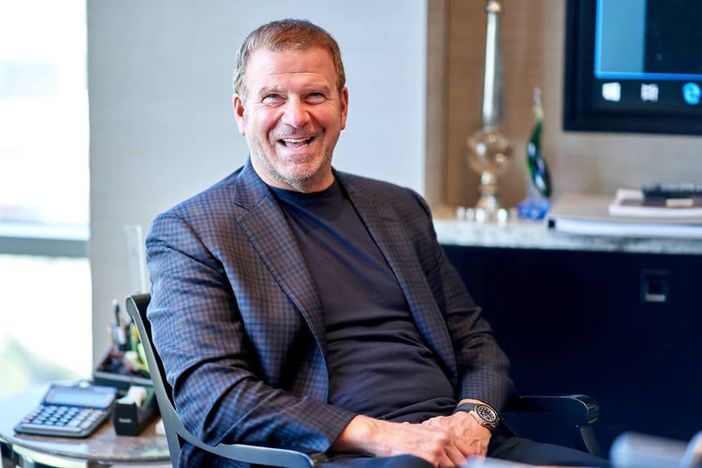
Houston’s favorite hospitality mogul and Rockets owner Tilman Fertitta is the city’s second-richest man, with his net worth climbing up to $8.1 billion. He ranked No. 256 on Forbes’ list, substantially higher than his No. 471 rank in 2022 when his net worth was $5.6 billion. Fertitta is surely living life to the fullest after hosting Miami rapper Pitbull at his San Luis Salute celebration earlier this year.

Tilman Fertitta Shut Up and Listen book laughing

Tilman Fertitta is sitting pretty at No. 2. Photo by J. Thomas Ford

Other Houston-area billionaires that made Forbes 2023 world’s richest list are:

  • Pipeline magnate Richard Kinder: tied for No. 317, $7.2 billion, down from $7.5 billion
  • Houston siblings and pipeline heirs Dannine Avara, Scott Duncan, Milane Frantz, and Randa Duncan Williams: all tied for No. 352, $6.8 billion, up from $6.6 billion
  • Toyota mega-dealer Dan Friedkin: tied for No. 466, $5.5 billion, up from $4.3 billion
  • Houston Texans owner Janice McNair: tied for No. 534, $5 billion, up from $4.2 billion
  • Hedge fund honcho John Arnold: tied for No. 878, $3.3 billion, unchanged since 2018
  • Energy exploration chief exec George Bishop: tied for No. 982, $3 billion, up from $2.7 billion
New to the 2023 report is Kamal Ghaffarian, the co-founder and executive chairman of Houston's Axiom Space, with a net worth of $2.1 billion. Though his LinkedIn notes that he is based in Maryland, reports add that he resides in Florida. His Forbes rank is No. 1434.An honorable mention (and billionaire newbie) is Amy Adams Strunk, the controlling owner of the Tennessee Titans and daughter of Houston Oilers owner Bud Adams. She has a residence in Waller (about 40 miles northwest of Houston) and her net worth is $1.7 billion — making her No. 1725 on the list.One name missing from Forbes 2023 report is software entrepreneur Robert Brockman, who passed away last August. Brockman fell from grace after he was charged in the largest tax fraud case in U.S. history in 2020. Forbes listed his 2022 net worth at $4.7 billion. He is survived by his wife, son, and two grandchildren.Elsewhere in Texas, Elon Musk reigns as the richest man in the state and in its capital city of Austin with a net worth of $180 billion. The Tesla and Space-X founder is the second richest person in the world, wedging his way between No. 1 Bernard Arnault of France (overseer of the LVMH empire of 75 fashion and cosmetics brands, including Louis Vuitton and Sephora), with a net worth of $211 billion; and No. 3 Jeff Bezos, the American Amazon founder, worth $114 billion.

Dallas Cowboys owner Jerry Jones'$13.3 billion net worth won him the title of Dallas' richest person, and the 12th richest sports owner on Forbes' "World's Richest Sports Owners 2023." His net worth is up from $10.6 billion last year.

The Fort Worth-based Walmart family heiress Alice Walton earned a spot on Forbes’ list as the third richest woman in the world. Her fortune is pegged at $56.7 billion, down slightly from $65.3 billion last year.

------

This article originally ran on CultureMap.

Richard Kinder once again lands on this prestigious list. Photo courtesy of BBVA

11 Houston billionaires join Elon Musk on Forbes' list of the world's richest

mo' money

In the battle of the world’s billionaires, a newly minted Texan comes out on top — and nearly a dozen Houstonians fare quite well.

Forbes magazine’s new ranking of the world’s richest people puts Texas transplant Elon Musk at No. 1, with a net worth of $219 billion. That’s up from $151 billion in 2021, $24.6 billion in 2020, $22.3 billion in 2019, and $19.9 billion in 2018. The CEO of Austin-based vehicle manufacturer Tesla and leader of a host of other businesses, Musk was ranked second on Forbes’ 2021 list. He sat behind Amazon founder Jeff Bezos, whose net worth in 2021 was pegged at $177 million. This year, Forbes estimates Bezos’ net worth is $171 billion.

Here in Houston, 11 locals land on the prestigious list. They are:

  • Oil mogul Jeffery Hildebrand: tied for No. 316, $7.5 billion, up from $2 billion
  • Pipeline magnate Richard Kinder: tied for No. 316, $7.5 billion, up from $7 billion
  • Houston siblings and pipeline heirs Dannine Avara, Scott Duncan, Milane Frantz, and Randa Duncan Williams: each tied for No. 375, $6.6 billion, up from $6 billion
  • Hospitality titan and Houston Rockets owner Tilman Fertitta: tied for No. 471, $5.6 billion, up from $4.6 billion
  • Houston software entrepreneur Robert Brockman: tied for No. 601, $4.7 billion, down from $6 billion
  • Toyota mega-dealer Dan Friedkin: tied for No. 665, $4.3 billion, up from $4.1 billion
  • Houston Texans owner Janice McNair: tied for No. 687, $4.2 billion, up from $4.1 billion
  • Hedge fund honcho John Arnold: tied for No. 913, $3.3 billion, unchanged from last year

Meanwhile, Nearly 30 other Texans appear in this year’s top 1,000. Here, they are grouped by where they live and their global ranking, 2022 net worth, and 2021 net worth.

Austin

  • Elon Musk, founder and CEO of Tesla: No. 1, $219 billion, up from $151 billion
  • Michael Dell, founder, chairman, and CEO of Round Rock-based Dell Technologies: No. 24, $55.1 billion, up from $45.1 billion
  • Venture capitalist Robert Smith: tied for No. 369, $6.7 billion, up from $6 billion
  • Tito’s Vodka baron Bert “Tito” Beveridge: tied for No. 637, $4.5 billion, down from $4.6 billion
  • Tech entrepreneur Thai Lee: tied for No. 709, $4.1 billion, up from $3.2 billion

Dallas

  • Dallas Cowboys owner Jerry Jones: tied for No. 185, $10.6 billion, up from $8.9 billion
  • Banking and real estate kingpin Andy Beal: tied for No. 201, $9.9 billion, up from $7.9 billion
  • Oil and real estate titan Ray Lee Hunt: tied for No. 386, $6.5 billion, up from $4.2 billion
  • Money manager Ken Fisher: tied for No. 509, $5.3 billion, down from $5.5 billion
  • Media magnate and Dallas Mavericks owner Mark Cuban: tied for No. 601, $4.7 billion, up from $4.4 billion
  • Oil and gas guru Trevor Rees-Jones: tied for No. 637, $4.5 billion, up from $4 billion
  • Hotel and investment titan Robert Rowling: tied for No. 637, $4.5 billion, up from $3.9 billion
  • Oil baron W. Herbert Hunt: tied for No. 665, $4.3 billion, up from $2 billion
  • Margot Birmingham Perot: widow of tech and real estate entrepreneur H. Ross Perot Sr., tied for No. 665, $4.3 billion, up from $4.1 billion
  • Oil and gas tycoon Kelcy Warren: tied for No. 728, $4 billion, up from $3.4 billion
  • Real estate bigwig H. Ross Perot, Jr.: tied for No. 951, $3.2 billion, up from $1.6 billion

Fort Worth

  • Walmart heiress Alice Walton: No. 18, $65.3 billion, up from $61.8 billion
  • Oil and investment guru Robert Bass: tied for No. 536, $5.1 billion, unchanged from last year
  • Private equity magnate David Bonderma: tied for No. 637, $4.5 billion, up from $4.1 billion
  • Investor and oilman Sid Bass: tied for No. 883, $3.4 billion, up from $2.9 billion

Elsewhere in Texas

  • Sports and entertainment mogul Stan Kroenke (Vernon): tied for No. 183, $10.7 billion, up from $8.2 billion
  • Walmart heiress Ann Walton Kroenke (Vernon): tied for No. 227, $9 billion, up from $8.4 billion
  • Oil tycoon Autry Stephens (Midland): tied for No. 552, $5 billion, not previously ranked

“The tumultuous stock market contributed to sharp declines in the fortunes of many of the world’s richest,” Kerry A. Dolan, assistant managing editor of Wealth at Forbes, says of this year’s ranking. “Still, more than 1,000 billionaires got wealthier over the past year. The top 20 richest alone are worth a combined $2 trillion, up from $1.8 trillion in 2021.”

------

This article originally ran on CultureMap.

Pipeline mogul and Memorial Park benefactor Richard Kinder (pictured with his wife, Nancy) leads the Houston billionaires. Photo by Michelle Watson/Catchlight Group

Houston billionaires named to Forbes' list of richest Americans for 2019

Seeing dollar signs

Who's the richest person in Texas? That title once again goes to Walmart heiress Alice Walton, of Fort Worth, according to the newly released Forbes 400 ranking. But seven very wealthy Houstonians also appear on the list of the 400 richest people in the country right now.

The top Houstonian on the list is Houston pipeline mogul Richard Kinder, who is tied with another Walmart heiress, Ann Walton Kroenke, for sixth place in Texas and No. 67 nationally. Forbes estimates they're each worth $7.5 billion.

The other Houston billionaires on the list are:

  • Randa Duncan Williams and her siblings Dannine Avara, Scott Duncan, and Milane Frantz, all of whom live in Houston. Each boasts an estimated net worth of $6.3 billion, tying them for the eighth place in Texas and 100th place nationally.
  • Restaurant mogul and Houston Rockets owner Tilman Fertitta, $4.9 billion. Tied for 15th in Texas and No. 140 in U.S.
  • Toyota titan Dan Friedkin, $4 billion. Tied for No. 21 in Texas. Tied for No. 187 in U.S.
  • Houston Texans co-founder Janice McNair, widow of businessman and Texans co-founder Bob McNair, $4 billion. Tied for No. 21 in Texas and No. 187 in U.S.
  • Energy executive Jeffery Hildebrand, $3.8 billion. No. 23 in Texas. Tied for No. 207 in U.S.
  • Former hedge fund manager John Arnold, $3.3 billion. No. 26 in Texas. No. 261 in U.S.
  • Energy mogul George Bishop of The Woodlands, $2.4 billion. Tied for No. 33 in Texas and No. 355 in U.S.

With an estimated net worth at $51.4 billion, Walton is the 11th richest person in the country (and the richest person in the Lone Star State). Second in line is Austin's Michael Dell, founder, chairman, and CEO of Round Rock-based Dell Technologies, who notches a net worth of $32.3 billion, which puts him at No. 18 on the list of America's billionaires. Holding down third place in Texas and 48th in the U.S. is Dallas banker and real estate titan Andy Beal, with an estimated net worth of $9.8 billion.

This year, Dallas Cowboys owner Jerry Jones got muscled out of the No. 4 spot in Texas by Stan Kroenke, whose professional sports holdings include the NFL's Los Angeles Rams. The estimated net worth of Kroenke, who owns a 520,000-acre ranch west of Wichita Falls, is $9.7 billion, compared with $8.6 billion for Jones. That puts Kroenke in 49th place and Jones in 56th place among the richest Americans.

Here are the other Texans who made it onto this year's Forbes 400, in order of ranking:

  • Omni Hotels and Gold's Gym king Robert Rowling of Dallas. $5.5 billion. No. 12 in Texas. Tied for No. 119 in U.S.
  • Oil and gas heir Ray Lee Hunt of Dallas. $5.2 billion No. 13 in Texas. No. 127 in U.S.
  • Venture capital entrepreneur Robert Smith of Austin. $5 billion. No. 14 in Texas. Tied for No. 131 in U.S.
  • Oil heir Robert Bass of Fort Worth. $4.9 billion. Tied for No. 15 in Texas and No. 140 in U.S.
  • Pipeline executive Kelcy Warren of Dallas. $4.3 billion. No. 17 in Texas. Tied for No. 159 in U.S.
  • Vodka tycoon Bert "Tito" Beveridge of Austin. $4.2 billion. Tied for No. 18 in Texas and No. 168 in U.S.
  • Margot Birmingham Perot of Dallas, widow of tech entrepreneur H. Ross Perot. $4.2 billion. Tied for No. 18 in Texas and No. 168 in U.S.
  • Tech entrepreneur and Dallas Mavericks owner Mark Cuban of Dallas. $4.1 billion. No. 20 in Texas. Tied for No. 179 in U.S.
  • Private equity giant David Bonderman of Fort Worth. $3.7 billion. Tied for No. 24 in Texas and No. 217 in U.S.
  • Oil and gas chief Trevor Rees-Jones of Dallas. $3.7 billion. Tied for No. 24 in Texas and No. 217 in U.S.
  • Investor and oil heir Sid Bass of Fort Worth. $3.1 billion. Tied for No. 27 in Texas and No. 275 in U.S.
  • John Paul DeJoria of Austin. $3.1 billion. Tied for No. 27 in Texas and No. 275 in U.S.
  • Tech entrepreneur Thai Lee of Austin. $3 billion. Tied for No. 29 in Texas and No. 287 in U.S.
  • Software entrepreneur Joe Liemandt of Austin. $3 billion. Tied for No. 29 in Texas and No. 287 in U.S.
  • Oil heir W. Herbert Hunt of Dallas. $2.6 billion. Tied for No. 31 in Texas and No. 333 in U.S.
  • Investor and former grocery distributor Drayton McLane Jr. of Temple. $2.6 million. Tied for No. 31 in Texas and No. 333 in U.S.
  • Hearing-aid titan Bill Austin of Brownsville. $2.4 billion. Tied for No. 33 in Texas and No. 355 in U.S.
  • Energy entrepreneur and Texas Rangers co-owner Ray Davis of Dallas. $2.3 billion. Tied for No. 35 in Texas and No. 363 in U.S.
  • Big-time banker Gerald Ford of Dallas. $2.3 billion. Tied for No. 35 in Texas and No. 363 in U.S.
  • Oil heir Edward Bass of Fort Worth. $2.2 billion. Tied for No. 37 in Texas and No. 370 in U.S.
  • Oil heir Lee Bass of Fort Worth. $2.2 billion. Tied for No. 37 in Texas and No. 370 in U.S.
  • Real estate developer H. Ross Perot Jr. of Dallas. $2.2 billion. Tied for No. 37 in Texas and No. 370 in U.S.
  • Private equity entrepreneur Brian Sheth of Austin. $2.2 billion. Tied for No. 37 in Texas and No. 370 in U.S.
------

This article originally ran on CultureMap.

Ad Placement 300x100
Ad Placement 300x600

CultureMap Emails are Awesome

​Planned UT Austin med center, anchored by MD Anderson, gets $100M gift​

med funding

The University of Texas at Austin’s planned multibillion-dollar medical center, which will include a hospital run by Houston’s University of Texas MD Anderson Cancer Center, just received a $100 million boost from a billionaire husband-and-wife duo.

Tench Coxe, a former venture capitalist who’s a major shareholder in chipmaking giant Nvidia, and Simone Coxe, co-founder and former CEO of the Blanc & Otus PR firm, contributed the $100 million—one of the largest gifts in UT history. The Coxes live in Austin.

“Great medical care changes lives,” says Simone Coxe, “and we want more people to have access to it.”

The University of Texas System announced the medical center project in 2023 and cited an estimated price tag of $2.5 billion. UT initially said the medical center would be built on the site of the Frank Erwin Center, a sports and entertainment venue on the UT Austin campus that was demolished in 2024. The 20-acre site, north of downtown and the state Capitol, is near Dell Seton Medical Center, UT Dell Medical School and UT Health Austin.

Now, UT officials are considering a bigger, still-unidentified site near the Domain mixed-use district in North Austin, although they haven’t ruled out the Erwin Center site. The Domain development is near St. David’s North Medical Center.

As originally planned, the medical center would house a cancer center built and operated by MD Anderson and a specialty hospital built and operated by UT Austin. Construction on the two hospitals is scheduled to start this year and be completed in 2030. According to a 2025 bid notice for contractors, each hospital is expected to encompass about 1.5 million square feet, meaning the medical center would span about 3 million square feet.

Features of the MD Anderson hospital will include:

  • Inpatient care
  • Outpatient clinics
  • Surgery suites
  • Radiation, chemotherapy, cell, and proton treatments
  • Diagnostic imaging
  • Clinical drug trials

UT says the new medical center will fuse the university’s academic and research capabilities with the medical and research capabilities of MD Anderson and Dell Medical School.

UT officials say priorities for spending the Coxes’ gift include:

  • Recruiting world-class medical professionals and scientists
  • Supporting construction
  • Investing in technology
  • Expanding community programs that promote healthy living and access to care

Tench says the opportunity to contribute to building an institution from the ground up helped prompt the donation. He and others say that thanks to MD Anderson’s participation, the medical center will bring world-renowned cancer care to the Austin area.

“We have a close friend who had to travel to Houston for care she should have been able to get here at home. … Supporting the vision for the UT medical center is exactly the opportunity Austin needed,” he says.

The rate of patients who leave the Austin area to seek care for serious medical issues runs as high as 25 percent, according to UT.

New Rice Brain Institute partners with TMC to award inaugural grants

brain trust

The recently founded Rice Brain Institute has named the first four projects to receive research awards through the Rice and TMC Neuro Collaboration Seed Grant Program.

The new grant program brings together Rice faculty with clinicians and scientists at The University of Texas Medical Branch, Baylor College of Medicine, UTHealth Houston and The University of Texas MD Anderson Cancer Center. The program will support pilot projects that address neurological disease, mental health and brain injury.

The first round of awards was selected from a competitive pool of 40 proposals, and will support projects that reflect Rice Brain Institute’s research agenda.

“These awards are meant to help teams test bold ideas and build the collaborations needed to sustain long-term research programs in brain health,” Behnaam Aazhang, Rice Brain Institute director and co-director of the Rice Neuroengineering Initiative, said in a news release.

The seed funding has been awarded to the following principal investigators:

  • Kevin McHugh, associate professor of bioengineering and chemistry at Rice, and Peter Kan, professor and chair of neurosurgery at the UTMB. McHugh and Kan are developing an injectable material designed to seal off fragile, abnormal blood vessels that can cause life-threatening bleeding in the brain.
  • Jerzy Szablowski, assistant professor of bioengineering at Rice, and Jochen Meyer, assistant professor of neurology at Baylor. Szablowski and Meyer are leading a nonsurgical, ultrasound approach to deliver gene-based therapies to deep brain regions involved in seizures to control epilepsy without implanted electrodes or invasive procedures.
  • Juliane Sempionatto, assistant professor of electrical and computer engineering at Rice, and Aaron Gusdon, associate professor of neurosurgery at UTHealth Houston. Sempionatto and Gusdon are leading efforts to create a blood test that can identify patients at high risk for delayed brain injury following aneurysm-related hemorrhage, which could lead to earlier intervention and improved outcomes.
  • Christina Tringides, assistant professor of materials science and nanoengineering at Rice, and Sujit Prabhu, professor of neurosurgery at MD Anderson, who are working to reduce the risk of long-term speech and language impairment during brain tumor removal by combining advanced brain recordings, imaging and noninvasive stimulation.

The grants were facilitated by Rice’s Educational and Research Initiatives for Collaborative Health (ENRICH) Office. Rice says that the unique split-funding model of these grants could help structure future collaborations between the university and the TMC.

The Rice Brain Institute launched this fall and aims to use engineering, natural sciences and social sciences to research the brain and reduce the burden of neurodegenerative, neurodevelopmental and mental health disorders. Last month, the university's Shepherd School of Music also launched the Music, Mind and Body Lab, an interdisciplinary hub that brings artists and scientists together to study the "intersection of the arts, neuroscience and the medical humanities." Read more here.

Your data center is either closer than you think or much farther away

houston voices

A new study shows why some facilities cluster in cities for speed and access, while others move to rural regions in search of scale and lower costs. Based on research by Tommy Pan Fang (Rice Business) and Shane Greenstein (Harvard).

Key findings:

  • Third-party colocation centers are physical facilities in close proximity to firms that use them, while cloud providers operate large data centers from a distance and sell access to virtualized computing resources as on‑demand services over the internet.
  • Hospitals and financial firms often require urban third-party centers for low latency and regulatory compliance, while batch processing and many AI workloads can operate more efficiently from lower-cost cloud hubs.
  • For policymakers trying to attract data centers, access to reliable power, water and high-capacity internet matter more than tax incentives.

Recent outages and the surge in AI-driven computing have made data center siting decisions more consequential than ever, especially as energy and water constraints tighten. Communities invest public dollars on the promise of jobs and growth, while firms weigh long-term commitments to land, power and connectivity.

Against that backdrop, a critical question comes into focus: Where do data centers get built — and what actually drives those decisions?

A new study by Tommy Pan Fang (Rice Business) and Shane Greenstein (Harvard Business School) provides the first large-scale statistical analysis of data center location strategies across the United States. It offers policymakers and firms a clearer starting point for understanding how different types of data centers respond to economic and strategic incentives.

Forthcoming in the journal Strategy Science, the study examines two major types of infrastructure: third-party colocation centers that lease server space to multiple firms, and hyperscale cloud centers owned by providers like Amazon, Google and Microsoft.

Two Models, Two Location Strategies

The study draws on pre-pandemic data from 2018 and 2019, a period of relative geographic stability in supply and demand. This window gives researchers a clean baseline before remote work, AI demand and new infrastructure pressures began reshaping internet traffic patterns.

The findings show that data centers follow a bifurcated geography. Third-party centers cluster in dense urban markets, where buyers prioritize proximity to customers despite higher land and operating costs. Cloud providers, by contrast, concentrate massive sites in a small number of lower-density regions, where electricity, land and construction are cheaper and economies of scale are easier to achieve.

Third-party data centers, in other words, follow demand. They locate in urban markets where firms in finance, healthcare and IT value low latency, secure storage, and compliance with regulatory standards.

Using county-level data, the researchers modeled how population density, industry mix and operating costs predict where new centers enter. Every U.S. metro with more than 700,000 residents had at least one third-party provider, while many mid-sized cities had none.

ImageThis pattern challenges common assumptions. Third-party facilities are more distributed across urban America than prevailing narratives suggest.

Customer proximity matters because some sectors cannot absorb delay. In critical operations, even slight pauses can have real consequences. For hospital systems, lag can affect performance and risk exposure. And in high-frequency trading, milliseconds can determine whether value is captured or lost in a transaction.

“For industries where speed is everything, being too far from the physical infrastructure can meaningfully affect performance and risk,” Pan Fang says. “Proximity isn’t optional for sectors that can’t absorb delay.”

The Economics of Distance

For cloud providers, the picture looks very different. Their decisions follow a logic shaped primarily by cost and scale. Because cloud services can be delivered from afar, firms tend to build enormous sites in low-density regions where power is cheap and land is abundant.

These facilities can draw hundreds of megawatts of electricity and operate with far fewer employees than urban centers. “The cloud can serve almost anywhere,” Pan Fang says, “so location is a question of cost before geography.”

The study finds that cloud infrastructure clusters around network backbones and energy economics, not talent pools. Well-known hubs like Ashburn, Virginia — often called “Data Center Alley” — reflect this logic, having benefited from early network infrastructure that made them natural convergence points for digital traffic.

Local governments often try to lure data centers with tax incentives, betting they will create high-tech jobs. But the study suggests other factors matter more to cloud providers, including construction costs, network connectivity and access to reliable, affordable electricity.

When cloud centers need a local presence, distance can sometimes become a constraint. Providers often address this by working alongside third-party operators. “Third-party centers can complement cloud firms when they need a foothold closer to customers,” Pan Fang says.

That hybrid pattern — massive regional hubs complementing strategic colocation — may define the next phase of data center growth.

Looking ahead, shifts in remote work, climate resilience, energy prices and AI-driven computing may reshape where new facilities go. Some workloads may move closer to users, while others may consolidate into large rural hubs. Emerging data-sovereignty rules could also redirect investment beyond the United States.

“The cloud feels weightless,” Pan Fang says, “but it rests on real choices about land, power and proximity.”

---

This article originally appeared on Rice Business Wisdom. Written by Scott Pett.

Pan Fang and Greenstein (2025). “Where the Cloud Rests: The Economic Geography of Data Centers,” forthcoming in Strategy Science.