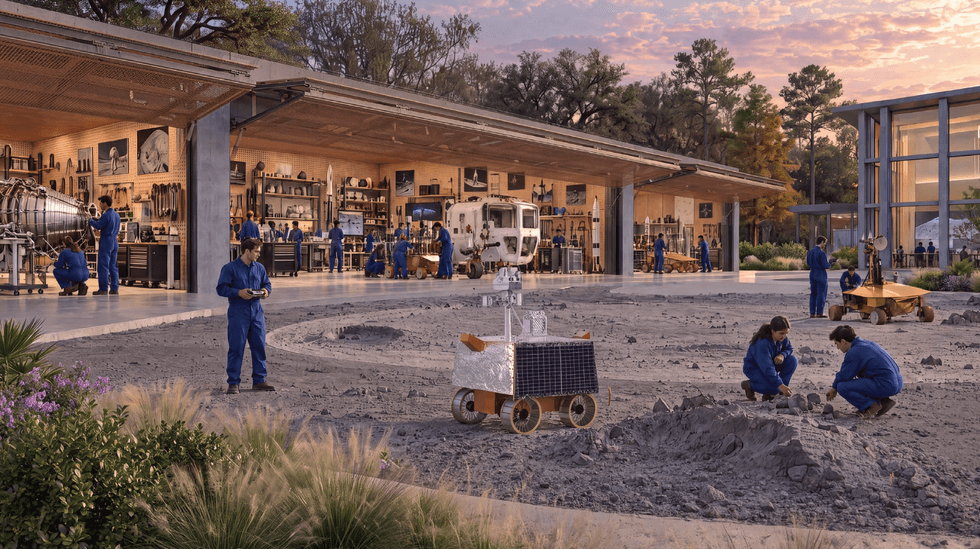

Here's who won at two of the Houston Energy and Climate Week's signature pitch competitions. Photo via greentown.org

Approximately 100 startups from around the world pitched their breakthrough technologies and businesses during Houston Energy and Climate Week, with a select few taking home top prizes and bragging rights.

Each year, investors at the Rice Alliance Energy Technology Venture Forum name the 10 most-promising startups. Greentown's Climatetech Summit also culminates in a pitch event, where member companies can earn cash prizes.

Here's who won at two of the week's anchor events and competitions.

Rice Alliance Energy Tech Venture Forum

The 23nd annual event was held Thursday, Sept. 17, at Rice University’s Jones Graduate School of Business. The most-promising companies were selected by industry experts and participating investors attending the event.

The 10 most-promising companies included:

  • Australia-based Aquafortus, which has developed a non-thermal liquid to liquid desalination technology for resource recovery from wastewater brine
  • Houston-based Focis AI, which converts industrial laser scans into a queryable digital twin of refineries and plants
  • Houston-based ironlattice, a semiconductor manufacturing company
  • Houston-based Licube, which has developed technology to produce ultra-high-purity lithium compounds for the fusion energy, pharmaceuticals, semiconductors and high-performance solid-state battery sectors
  • Houston-based Mars Materials, a clean chemical manufacturing business that is working to convert captured carbon into resources, such as carbon fiber and wastewater treatment chemicals
  • Dallas-based MCatalysis, which has developed a suite of proprietary microwave-driven catalysts to produce high-quality, ready-to-use fuels compatible with existing infrastructure
  • Oslo, Norway-based OTee, an automation machinery manufacturer
  • Houston-based Pike Robotics, which deploys its Wall-Eye robot to inspect hazardous tanks without taking assets offline
  • New Mexico-based Spiritus, a direct-air-capture (DAC) technology company
  • San Francisco-based UptimeAI Inc., which develops AI reasoning agents for industrial operations teams

Stellai won the People's Choice Award. The Norwegian company develops AI products for the waste management industry.

The energy technology ventures selected to participate in the forum were named earlier this year. See the full list here, and read about last year's winners here.

Greentown Lab's Climatetech Summit

The annual summit was held Wednesday, Sept. 16, featured a number of Houston startups in its pitch competition and lighting pitch round. Judges included Dave Dreessen,, Jon Greene, Naval Preet Singh, Philip Llewellyn, Erin Madro, Justin Yeung, Jay Kim, Rawand Rasheed and Moji Karimi.

Pitch winners included:

  • First place: Elementium Materials' CEO Matthew Dawson, winning a $10,000 cash prize sponsored by TotalEnergies plus another $10,000 in legal services sponsored by Foley Hoag. The company develops advanced battery electrolytes. It is a Greentown Boston member; though Dawson is based in Houston.
  • Second place: Houston-based Solidec CEO and co-founder Ryan DuChanois, winning $5,000 in legal services sponsored by Foley Hoag. The company electrolyzes air, water and electricity into onsite hydrogen peroxide.

Lightening pitch winners included:

  • First place: Montana-based MagDrive Technologies, winning a $1,000 cash prize sponsored by Energy Transition Ventures. The company develops magnetically actuated, zero-emission valve systems that eliminate fugitive emissions and improve reliability.
  • Second place: Houston-based HEXASpec, winning a $500 cash prize sponsored by Foley Hoag. The company has created a new material to improve heat management for the semiconductor industry.

Read Greentown's recap of the summit here.

Houston Energy and Climate Week announced that the 2027 event will move to the spring, held April 4-10.

---

This article originally appeared on our sister site, EnergyCapitalHTX.com.
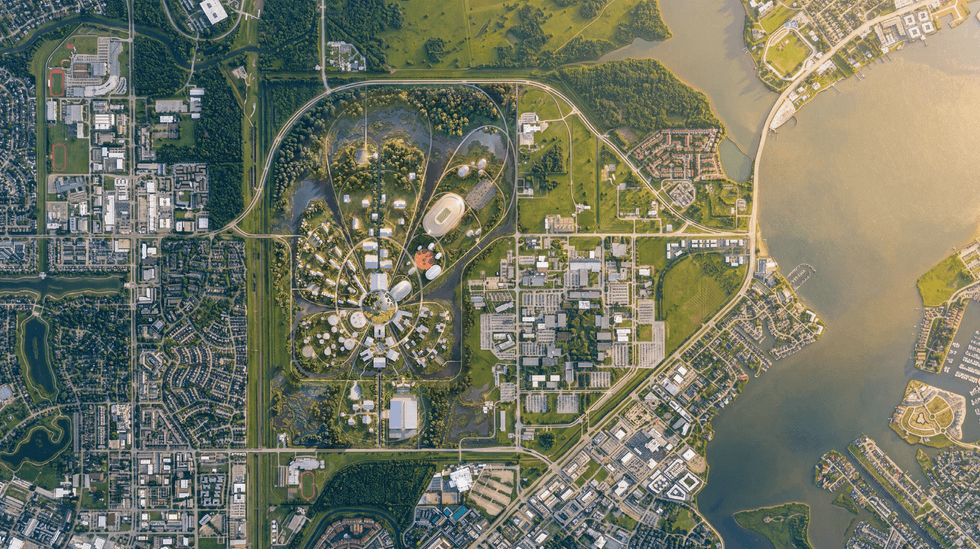
Meet some of Greentown's newest members. Photo courtesy of Greentown Labs

14 climatech startups join Greentown Houston in first half of 2026

green team

Climatech incubator Greentown Labs reports that 14 startups have joined its Houston community so far this year.

The companies are among 30 new startups to have joined Greentown Houston and Greentown Boston in 2026. Four of the companies are headquartered in Houston.

The startups are working on a range of "hydrogen-powered heavy-duty transport to AI-driven grid interconnection," according to Greentown.

The local startups that joined Greentown Houston include:

  • Houston-based Focis AI, which transforms industrial laser scans into structured asset intelligence to automatically identify, classify and map components in refineries and plants
  • Houston-based Iron Lattice, which develops next-generation memory technology for AI and high-performance computing that improves energy efficiency, endurance and scalability while remaining compatible with existing semiconductor manufacturing
  • Houston-based Orbital Arc, which is developing a new ion engine designed to improve the efficiency and scalability of spacecraft propulsion from low Earth orbit to deep space
  • Houston-based Sustain Energy LLC, which delivers cleaner, lower-cost fuel to industrial customers in pipeline-absent, underserved markets, cutting their energy costs and emissions with no infrastructure investment on their end

Other startups from around the world joined the Houston incubator in the same time period, including:

  • Ankara-based AIS Field, which develops robotic, AI-assisted non-destructive inspection systems, including submersible tank and boiler crawlers
  • San Francisco-based Armada AI, which builds rapidly deployable modular and edge data centers that run on local, stranded, or renewable power
  • San Francisco-based Armeta, which turns complex engineering drawings and legacy documentation into structured, usable data
  • Pittsburgh-based Atlas Robotics, which develops a Physical AI platform that powers autonomous material-handling robots and AI-guided forklifts
  • Ghana-based Cocoa Potash, which transforms high-emissions agricultural waste from cocoa, coconut, and palm-nut into organic potash, fertilizer and renewable energy
  • Israel-based Criaterra, which produces low-carbon, cement-free building materials
  • Italy-based ETAK, which manufactures modular reactors that convert solid waste into clean syngas
  • Kenya-based FelixFusion, which uses its Felix platform to model every grid connection point, including capacity, upgrade costs, and constraints
  • San Diego-based Gemini Energy, which builds next-generation fuel cells for data-center power
  • Tokyo-based Hibot, which develops robotic systems for inspecting and maintaining infrastructure in hazardous, hard-to-access environments
  • Austin-based Sheetak, which designs and manufactures thermoelectric coolers, generators, and assemblies for solid-state cooling and energy harvesting
  • The Netherlands-based ToPerform, which makes AI-powered, non-intrusive fouling sensors that monitor pipelines around the clock and predict the optimal cleaning time

Another 16 startups joined Greentown's Boston incubator. See the full list of new members here.

More than 100 startups joined Greentown last year, according to an end-of-year reflection shared by Greentown CEO Georgina Campbell Flatter. Read more about them here.

---

This article originally appeared on our sister site, EnergyCapitalHTX.com.
Ad Placement 300x100
Ad Placement 300x600

CultureMap Emails are Awesome

New report reveals potential developers, future uses for iconic Astrodome

8th wonder

A new report identifies the Astrodome as a good fit for an adaptive reuse project. Written by consulting firm WT Partnership for the Astrodome Conservancy, the report demonstrates significant interest in preserving the historic stadium as a year-round venue that complements the property’s existing tenants, the Houston Texans and the Houston Livestock Show & Rodeo.

Announced in August, the RFI generated more than 600 responses from interested parties. Of those, WT Partnership identified 11 submissions for more detailed analysis, including from CityCentre developer Midway; Houston-based real estate development firm DC Partners; Space Center Houston; and Triple Five Worldwide Group, the company behind the Mall of America in Minnesota and American Dream in New York City.

“Most respondents saw this development as a preservation-anchored, mixed-use destination centered on three complementary demand drivers: experiential entertainment and cultural programming, hospitality and food/beverage activation, and strategic commercial tenancy,” the report states.

For example, DC Partners, the company behind The Allen development that includes the Thompson Hotel and Mexican steakhouse Toca Madera, proposed creating a space-themed museum, attractions, and hotel concept called “Space City.” According to the report, the almost $1 billion project would be almost completely funded by tax credits and various investment and debt vehicles. Harris County would only contribute $40 million.

“The Astrodome was born from the kind of vision and imagination that made Houston a city known for doing what others thought impossible” Astrodome Conservancy executive director Beth Wiedower Jackson said in a statement. “When it opened, there was nothing else like it in the world. That same spirit of innovation can guide us in finding a financially feasible new purpose for this remarkable building. The private-sector interest reflected in this report show that the possibilities are very real.”

Along with submitting the report to the Harris County Commissioners Court, the conservancy is asking elected officials to establish a task force that could evaluate potential private sector partners and begin creating a plan to move forward.

Since its closure in 2003, the Astrodome has remained vacant, except for its brief use as a shelter following Hurricane Katrina in 2007. A debate has ranged about what to do with the property ever since.

Demolition has been previously estimated at about $55 million (likely more in today’s dollars), but its status on the National Register of Historic Places makes that virtually impossible. Meanwhile, Harris County pays hundreds of thousands of dollars a year to maintain the building.

“Doing nothing is not a viable option,” Wiedower Jackson added. “The longer we wait, the greater the risk of losing the interest and momentum this process has generated. We now have credible private-sector entities bringing forward development concepts, expertise and potential investment. We owe it to the people of Harris County to take the next step and determine which of these opportunities can become reality.”

---

This article first appeared on CultureMap.com.

Texas-based CrowdStrike to acquire Zscaler in mega $44 billion deal

Tech Talk

CrowdStrike is buying cloud security company Zscaler in an all-stock deal worth about $43.9 billion, the companies said November 23, in a major acquisition that combines two of the cybersecurity industry's biggest names.

The all-stock deal arrives after a string of high-profile hacks hit banks, supermarket fridges and crypto platforms, forcing the White House to shake up its cybersecurity leadership and raising alarms with officials around the world.

Cybersecurity experts have warned that artificial intelligence is being used to turbocharge cyberattacks by making it quicker and easier to find software flaws.

“Security used to be about keeping the adversary out," George Kurtz, CEO of Austin-based CrowdStrike, said in a statement. “Today, safety is required to let AI in.”

Reports of advanced artificial intelligence models deploying agents working on their own to break into other organizations have also raised alarms.

“In the AI era, Zero Trust security has become non-negotiable, and AI agents are rapidly becoming the new weakest link," Zscaler CEO Jay Chaudhry said.

CrowdStrike's focus has been on so-called endpoint security, with services to protect laptops, mobile devices and desktop computers. Santa Clara, California-based Zscaler, meanwhile, specializes in cloud-based network protection.

Zscaler shareholders will get 1.135 shares of CrowdStrike for each Zscaler share they own, under the deal's terms, which represent a 34% premium to Zscaler's closing price on Friday.

Shares of CrowdStrike tumbled more than 7% before the opening bell Monday. Shares of Zscaler rose 20%.

Existing CrowdStrike shareholders will own about 84.1% of the combined company, while existing Zscaler shareholders will hold the remaining 15.9%.

CrowdStrike and Zscaler were already working together in a partnership that included 2,000 shared customers. The deal would expand the combined company's market by more than $185 billion by 2029.

The transaction is expected to close in the second half of CrowdStrike's fiscal 2028 year, which begins in February.

Texas officially bids to make Houston home of U.S. Space Academy

space race

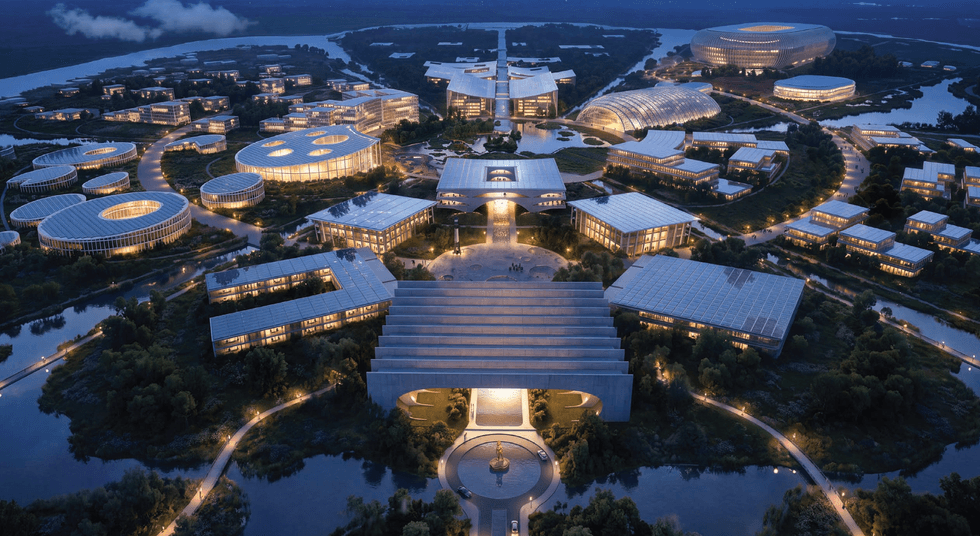
Texas has officially submitted its proposal to have Houston be the home of the United States Space Academy (USSA).

“Texas has long been home to critical training missions for our nation’s military and for advancing human spaceflight,” Gov. Greg Abbott said in a news release. “Our universities, research institutions, and commercial space industry give the United States an extraordinary foundation for educating its next generation of space leaders.”

The Texas Space Commission (TSC) confirmed Texas filed an official response to NASA’s Request for Information (RFI) for the new academy. NASA’s plans include groundbreaking on the USSA in 2027, with enrollment planned for the inaugural class of 300 students in 2028 and a goal of transitioning to a permanent campus by 2031.

For students, the learning model could “link classroom and laboratory instruction with supervised research and team projects in spacecraft engineering, robotics, and mission operations,” according to the release. The academy will help students prepare for careers in national security space, civil and commercial careers, and also teach them to apply what they’ve learned to real-world mission trials.

Currently, Houston hosts America’s Mission Control and astronaut corps at NASA’s Johnson Space Center. In addition to JSC, Houston also hosts major aerospace startups, such as Axiom Space, Venus Aerospace and Intuitive Machines, as well as the Houston Spaceport at Ellington Airport and the new Texas A&M University Space Institute.

Texas boasts aerospace, aviation and civilian-defense industries that employ 160,000 workers across 2,200 establishments, according to the Texas Economic Development & Tourism Office. In the Houston area alone, there are 500 companies in the aerospace and aviation space. Academically, the state also has universities that are innovating in aerospace, energy, tech and beyond, including Rice University, the University of Houston, the Texas A&M system and the University of Texas system.

In August, President Trump signed an executive order to create the Presidential Commission on the United States Space Academy, which will guide the establishment of the NASA-led federal effort. The following month, Abbot appointed the seven-member team to help bring the USSA to Texas, which is being led by State Rep. Greg Bonnen from Friendswood. The squad also includes Houston ties in former NASA astronaut and current senior vice president of Houston-based Intuitive Machines Jack Fischer, another former NASA astronaut and current director of the Texas A&M Space Institute Nancy Curry-Gregg (a UH graduate), and associate director of the Texas A&M Space Institute Robert Ambrose.

“Houston makes the most sense as the location for this incredible learning ecosystem to teach and train our next generation of spacefaring Americans,” Bonnen added in a news release. “Texas offers NASA the opportunity to educate students where human spaceflight is practiced every day. Nowhere else in the world can a student walk from their classroom to Mission Control or the Astronaut Corps Office, much less any of the many companies building hardware for payloads. NASA and the White House have an amazing proposal from Texas to consider.”

The state legislature will convene in January regarding the efforts of the Texas Space Commission.

“I fully support establishing the proposed United States Space Academy in the Lone Star State to prepare future generations for interstellar travel through rigorous education, world-class training, and commitment to public service, “ Governor-elect Gina Hinojosa added in a statement. “ As I am preparing to take office, my commitment is to carry this effort forward by implementing the well-developed proposal led by State Rep. Greg Bonnen with support from the Texas Space Commission to advance the Academy’s mission.”'

View a video of the plans proposed by the TSC here.

Renderings courtesy Texas Space Commission