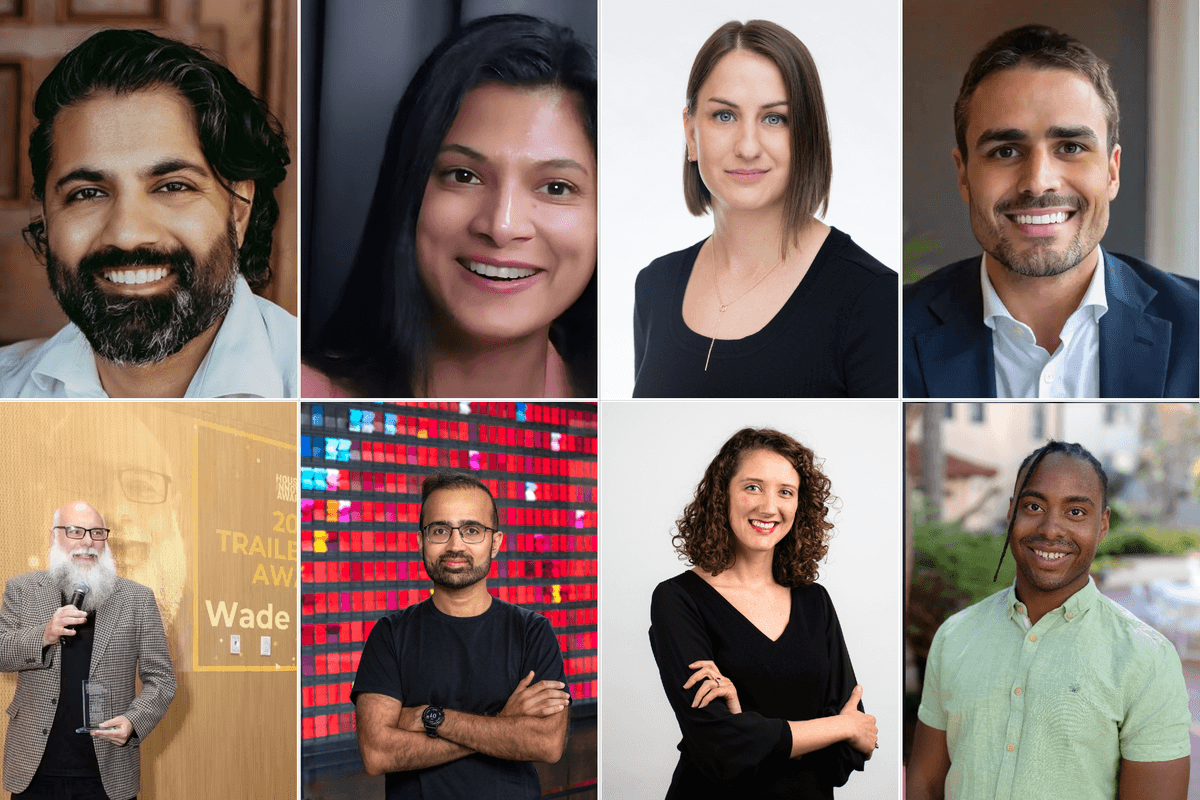
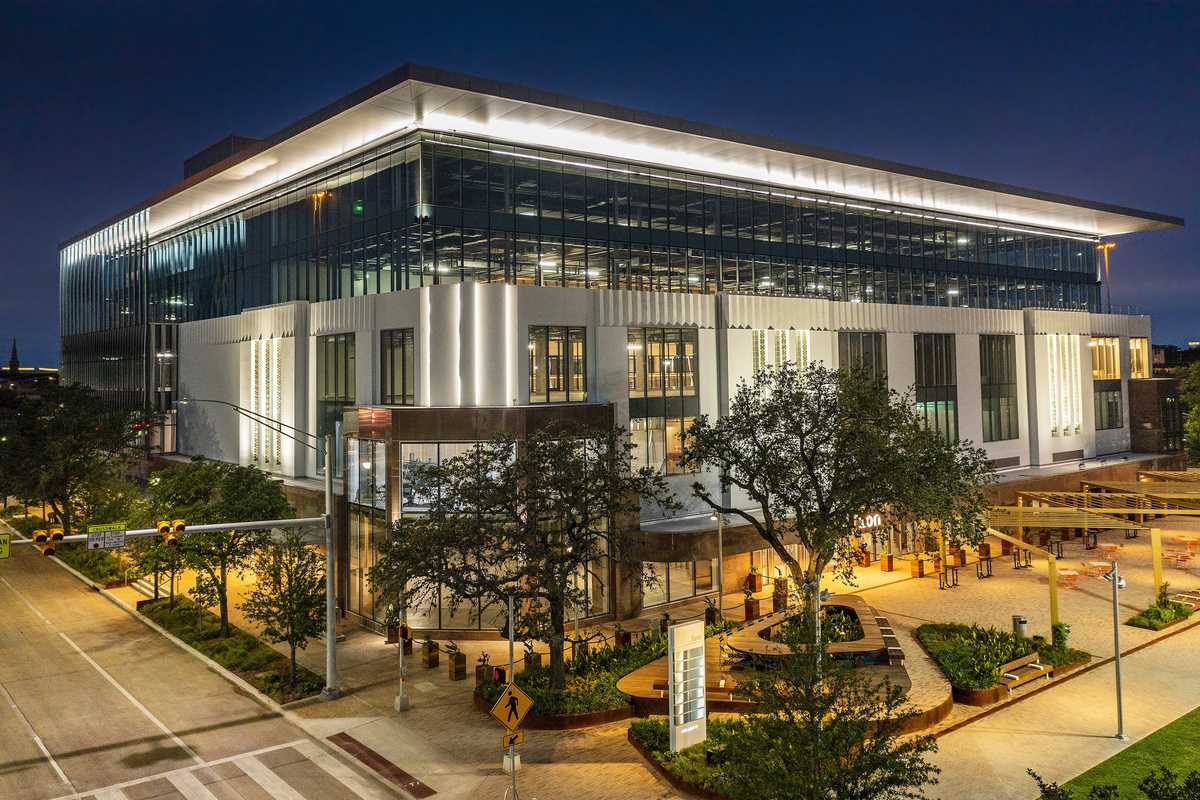
September brings the return of Houston Energy and Climate Startup Week and some of its signature anchor events. Photo via houstonenergyclimatestartupweek.com

The energy transition and AI will be the talk of this town this month, thanks to a packed calendar of Houston events. September brings the return of Houston Energy and Climate Startup Week and some of its signature anchor events, plus AI conferences and talks exploring how the technology is impacting everything from healthcare to leadership. Here’s what not to miss and how to register. Please note: this article may be updated to add more events.


Sept. 3 — Entrepreneurship Roundtable with Open

Open Houston and the Ion present this roundtable event to bring together founders, builders, and innovators at various stages of venture development. This month's session will feature Faisal Bhutto, president and CEO of Houston-based AI and tech consulting firm Alykas.

This event is Thursday, Sept. 3, from 10-11:30 a.m. at the Ion. An optional lunch ticket is available for purchase. Register here.

Sept. 3 — AI Operator Spotlight: Houston’s Top AI Leaders Open Their Playbooks

The Houston AI Club, Allenix, the Ion District and Collide are bringing together industry leaders to share their expertise and first-hand experiences building AI companies. The event will feature a panel with Chuck Yates, co-founder of Collide, and Charles Jessup, senior manager of AI fluency at Raytheon, plus an open networking session.

This event is Thursday, Sept. 3, from 5:30-8 p.m. at the Ion. Register here.

Sept. 8 — The Technology Leadership Advantage Series – For CEOs, VCs and PE Firms

Ram Prasad, CEO of Houston-based IT consulting firm Delence, will explore the role of leadership in turning AI investments into business value during the latest installment of this series at the Ion. The event will explore why AI strategies often fail before the technology does and how companies should approach AI ownership, governance, investment and accountability.

This event is Tuesday, Sept. 8, from noon-1 p.m. at the Ion. Register here.

Sept. 14–18 — Houston Energy and Climate Startup Week

Houston Energy and Climate Startup Week returns for its third year, with panels, happy hours and pitch days focused on the energy transition. See the schedule of events here. The week will begin with a kickoff block party and open house at the Ion.

This event starts Monday, Sept. 14. The Ion District will host many of the week's events. Find more information here.

Sept. 15 — Meet the Activate Houston Cohort 2026 Fellows

Meet Activate's latest cohort, which was named this summer, and learn more about their hardtech and climate-focused solutions. Also meet founders from the organization’s 2025 cohort during Houston Energy and Climate Startup Week.

This event is Tuesday, Sept. 15, from 5-7 p.m. at the Ion. Register here.

Sept. 15 – Cypher Pilotathon and Startup Showcase

Grab coffee and take in keynotes and panels featuring leaders from Amperon, Aramco Ventures, New Climate Ventures, Syzygy Plasmonics and many others during this signature event, this year under the theme “The NEW Energy Industrial Revolution.” After lunch, hear pitches from 31 ventures during the Pilotathon. This year's event will also feature a startup showcase with interactive booths where attendees can meet founders and see demonstrations, plus an industry hub where corporates and investors can engage with emerging technologies and identify the pilots they want to move forward with.

This event is Tuesday, Sept. 15, from 9 a.m.-5 p.m. at POST Houston. Get tickets here.

Sept. 15-17 — The AI in Health Conference

Rice University's Ken Kennedy Institute will present this future-focused event, aimed at bridging the gap between artificial intelligence and real-world health outcomes. The event will feature panels with leaders from institutions and companies from around the world, plus technical talks, poster presentations and networking receptions.

This event begins Tuesday, Sept. 15 at 8 a.m. at the BRC at Rice University. Register here.

Sept. 16 — Greentown Labs Climatech Summit

Entrepreneurs, investors, corporate leaders, policymakers and philanthropists will head to Houston this month for the annual Greentown Climatetech Summit. Hear from Greentown CEO Georgina Campbell Flatter and keynote speaker Tim Latimer, CEO and co-founder of Houston geothermal unicorn Fervo Energy, plus numerous other engaging panels at the Ion. Then head to Greentown Labs for an open house and startup showcase, where attendees can meet some of the climatech incubators' members, before taking in the startup pitch competition followed by happy hour over at the Continental Club.

This event is Wednesday, Sept. 16, from 8 a.m.–9 p.m. at multiple locations. Register here.

Sept. 18 — Rice Alliance Energy Tech Venture Forum

Hear from clean energy startups from around the world at the 23rd annual Energy Tech Venture Forum. In addition to the pitches, this event will also host keynotes from Sean Maher, chief economist at Phillips 66, and Ira Ehrenpreis, founder and managing partner of DBL Partner. Panels will focus on technologies, infrastructure and commercialization strategies needed to deploy breakthrough innovations at scale. Following the event, the Rice Alliance will also name its annual “Most Promising” startup.

This event is Thursday, Sept. 17, from 7:30 a.m.-5 p.m. at Rice University’s Jones Graduate School of Business. Register here.

Sept. 23 – Houston Methodist Innovation Discussion

Houston Methodist presents its latest Innovation Discussion this month for the Houston health IT community. This month's event will feature Dr. Jordan Dale, chief medical information officer and chief health AI officer at Houston Methodist, and Ginny Torno, executive director of innovation and IT clinical, ancillary and research systems for Houston Methodist. The two will share insights into Houston Methodist’s innovation strategy and approach to scaling new ideas, plus real-world lessons on AI adoption and more.

This event is Wednesday, Sept. 23, from 5:30-7 p.m. at the Ion. Register here.

Sept. 23 — UH Energy Career Fair

Find your next job or team member at UH's energy-focused career fair. The event will feature companies from the fossil fuels, electrical power, nuclear power and renewables industries; plus nonprofits, governmental agencies and startups. And though the event is geared toward business, engineering, technology and science majors, it is open to students of all majors.

This event is Wednesday, Sept. 23, from 11 a.m.-2 p.m. at the UH Student Center. Find more information here.

Sept. 30 — First Principles Tech Talk: From Orbit to the Lunar Surface

Head to the Ion for the first-ever First Principles Tech Talk. This event will feature short talks and moderated discussions geared toward founders, engineers and operators in the commercial space industry. The inaugural event will feature Megan Ortiz and Zach Paugh from Houston-based Axiom Space.

This event is Wednesday, Sept. 30, from 5-7 p.m. at the Ion. Register here.

Ad Placement 300x100
Ad Placement 300x600

CultureMap Emails are Awesome

Momentum is where Houston founders go to break $1 million — apply by Sept. 30

Inside EO

Houston loves a startup story. The harder story, the one that decides whether a company becomes an employer, a brand, and a fixture of the city, is what happens after the start. Most businesses that survive their early years still never cross $1 million in revenue. Fewer than 5 percent ever do. The rest get stuck in the messy middle, somewhere between $250,000 and $1 million, where the owner is still the salesperson, the product, and the back office all at once, and nothing runs without them.

Momentum, the accelerator run by EO Houston, exists for exactly that stage. It is a yearly accelerator for owners and co-founders between $250,000 and $1 million in revenue who are ready to push past seven figures, built around eight months of classes a year and a confidential monthly Forum. Members are invited to go through it for two years: the first pass to build the systems, the second to run them at a higher level, with a new lens and alongside a new cohort.

The next cohort launches in October, with applications open now at eohouston.com/momentum until September 30. Here is the case the chapter makes for joining, point by point.

A curriculum built by operators, not consultants

Momentum's curriculum was built by two operators. Al Danto, an EO Houston founding member who built and exited his own company, is now a Partner at Exit Advisors and a Senior Lecturer in Entrepreneurship at Rice University. He built the curriculum alongside Jacky Fischer, the owner of Houston's 3 Men Movers, who brought a working owner's eye, not an academic one, to how the program is structured. The material covers what actually decides whether a company scales: building systems, hiring and leading a team, and turning an annual vision into 90-day commitments with clear owners.

“Everything in this curriculum got tested inside a real company, either mine or one run by the people who shaped it. If a tool did not survive contact with a real business, it did not make the cut," Danto says.

Momentum is an independent program of EO Houston and requires no university affiliation; faculty and alumni participate as instructors and coaches in their individual capacities. What carries over is the standard: real experience over theory.

EO Houston Momentum classroom A Momentum class in session. Photo courtesy of EO Houston

Entrepreneurs teaching entrepreneurs since 1987

Momentum works because of what sits behind it. The Entrepreneurs' Organization was founded in 1987 on a simple idea: business owners grow fastest alongside peers who have already been where they are going. Today, EO is a global, peer-to-peer network spanning 200+ chapters in over 80 countries, and it runs on a practice called Forum, a small, confidential group of six to 10 fellow owners who meet monthly. Forum members do not give advice. They share experience: what actually happened when they faced the same hire, the same cash crunch, the same decision. Ask EO members anywhere in the world and most will call Forum the single most valuable thing they belong to. Every Momentum member sits in one.

Built for scaling small businesses, not launching startups

Houston's accelerator landscape mostly serves the very early stage: the idea, the pitch deck, the startup swinging for a billion-dollar outcome. Momentum sits in the gap those programs leave behind. It is built for regular companies that are already real, with revenue, payroll, and customers, and an owner who needs help scaling what works into a business that matures. That focus is the point: EO Houston is the place a small business goes to get help growing.

The price is different too. Accelerators usually charge in ownership, a stake in the company in exchange for the program. Momentum takes none. EO Houston is a nonprofit, and the program runs on dues of $3,500 for the year. The outcome the chapter is after is simple: more Houston businesses crossing $1 million, still fully owned by the people who built them.

An on-ramp into Houston's most established founder community

EO Houston counts more than 200 member businesses, every one run by an owner who has already scaled past $1 million, with 75+ chapter events a year. Momentum members plug into that community from day one: the classes, their own Forum, the annual gala, the retreats, the socials. Two years around people who have already done the thing you are trying to do changes what you believe is normal. And when a Momentum member crosses $1 million, the on-ramp becomes a doorway: graduates step into EO Houston membership itself and the global network behind it. The program's full story and curriculum live at eomomentum.com.

Avneesh Oberoi, founder of Oberoi Investments and The DoughCone, walked that path, finishing the program and joining EO Houston in July 2026.

“I truly can say that the experience for the last two years has been life-changing and so memorable… I am also so filled with gratitude to have met so many people open to sharing their experiences and time. It’s made such a difference in how I think, operate, and spend my time and resources," Oberoi says. "I joined with the goal of taking my business I started personally, The DoughCone, and figuring out how to optimize the business and maximize revenue, while navigating a board seat and ownership in a much larger family business on its third generation of ownership… and EO has given me so many tools and experience shares and perspectives I’ve been able to take to both businesses. The growth has been unreal.”

The door swings both ways. EO Houston is opening Momentum to its own members too, owners whose companies average $3 million to $5 million in sales, because the chapter believes the same curriculum and Forum that carry a founder to $1 million keep working well past it.

Sarah Seitz shows how the pieces connect. A former teacher, she founded The Enrichery, a Houston education company offering academic coaching, test prep, and college counseling that has grown to locations across the city. She completed the Goldman Sachs 10,000 Small Businesses program, then joined EO Houston to keep growing. This year, a year after joining, The Enrichery made the Inc. 5000 list of America's fastest-growing private companies. She coached Momentum through its first year, and has since moved from coaching into leadership, helping shape the program's growth from its board.

For owners finishing a program like 10,000 Small Businesses who are not yet at $1 million, Momentum is where the coaching and community continue until they qualify for EO.

Apply by September 30

Momentum's next cohort begins in October 2026, and applications close September 30. The program is for owners and co-founders of Houston businesses doing more than $250,000 a year who are ready to build past $1 million, and now for EO Houston members ready to keep growing. The full curriculum, dues, dates, and FAQ are on the application page. Apply by September 30 at eohouston.com/momentum.

Fewer than 5 percent of businesses make it past $1 million, and there is nothing inevitable about which 5 percent. Houston has the founders. Momentum exists to give them the systems and the peers.

---

EO Houston is the Houston chapter of the Entrepreneurs' Organization, a global peer-to-peer network of business owners founded in 1987, with more than 200 member businesses and 75+ chapter events a year. Momentum is an independent program of EO Houston. Rice University faculty and alumni participate as instructors and coaches in their individual capacities.

Houston founders launch edtech startup, pilot to pinpoint why students are struggling

learning gaps

Early detection. It sounds simple enough: identify a problem before it has the chance to become a bigger one.

But in practice, early detection is much more difficult to navigate, especially in education, when it comes to identifying the reasons behind a student's academic struggles.

That’s why co-founders Alapati “Al” Ware and Estela Montanez launched Progress Report, a Houston-built K-12 learning-intelligence platform designed to go beyond identifying that a student is struggling.

The platform recently began its pilot program with 35 educators and more than 200 students in Texas and Arizona.

“It’s a micro-learning school that works with children with disabilities, primarily dyslexia and nonverbal students,” Ware tells InnovationMap.

The platform is also being used by homeschool parents, home teachers and Houston educators, including those at SWPS College & Career Preparatory Academy, a Houston charter school.

Ware says Progress Report was designed to fill a gap he and Montanez saw in existing edtech. Some platforms cater almost entirely to students, leaving teachers with little insight into if and how a child is learning. Others focus heavily on district data, where “the student is just a number,” leaving teachers to navigate disconnected tools.

“Our goal was [to] focus purely on the teacher because the teacher is the backbone,” Ware says.

Progress Report traces student performance to learning gaps and prerequisite skills, helping educators understand not only where a student is struggling, but what may be causing it.

The platform then helps teachers build individualized instruction for general education students, students with special education and Individualized Education Program (IEP) needs, and Spanish-speaking learners—all within one educator-controlled system.

The goal is to reduce the guesswork and hours of manual work educators can spend developing individualized lesson plans.

Progress Report helps idenitify learning gaps and common roadblocks for each student. Image courtesy Progress Report

For Ware and Montanez, the mission is also personal.

The concept dates back to around 2023, when the co-founders first had to navigate and address their children’s educational needs.

Ware, Progress Report’s CEO and CTO with a background in edtech, built the platform end-to-end after watching his daughter, who had an IEP related to speech, struggle to get the support she needed.

Montanez, the company’s COO, brought another perspective. Her son is on the autism spectrum. She now leads Progress Report’s operations, partnerships and pilot execution while helping carry its focus on bilingual families from Puerto Rico to Houston.

Together, they began researching ways to personalize their children’s learning and help them progress academically. Montanez’s son went on to become an AP student and high school athlete, while Ware’s daughter began reading more than two grade levels above her grade, they tell InnovationMap.

But Progress Report isn’t designed simply to give a struggling student more work.

Take a student who appears to have difficulty with math.

The problem may not actually be math, the founders share. The student could understand the calculations but struggle to comprehend complex words used in a math problem.

Progress Report is designed to trace those performance patterns back to learning gaps, prerequisite skills or other instructional barriers. From there, it can recommend a next instructional step while leaving the educator in control.

The same concept applies to accommodations.

The system can read IEPs, 504 Plans, Present Levels of Academic Achievement and Functional Performance (PLAAFPs), evaluations and other special education records. Approved IEP goals can then be mapped into the student’s learning graph, while accommodations can carry over into lesson planning and question delivery.

The founders say that approach separates Progress Report from simply adding another artificial intelligence chatbot to a classroom. And still, they believe teachers have to remain at the center.

Teachers, in fact, helped build Progress Report.

The founders began meeting with Houston-area educators months before the pilot. Their feedback helped shape the platform before testing began.

“We’ve been building alongside these educators,” Ware says.

Parents are another piece.

Progress Report can give parents access to their child’s learning record so they can see learning gaps as they develop. Teachers can also see information on work being completed at home when the parent and educator are working together.

After the pilot wraps, Ware and Montanez plan to introduce a $29.99 monthly subscription for homeschool parents, teachers and other educators. They say the price was intentionally kept relatively low to help make the tools more accessible.

They are also exploring ways to work with organizations that could help families who can’t afford the platform.

Moving forward, the goal is considerably bigger.

Over the next five years, Ware and Montanez want Progress Report to become what they describe as a “gold standard” in every state. They know getting there will require building relationships with educators, technology leaders, policymakers and school board members.

For now, they’re starting with a few hundred students and a question that sounds simple but can be remarkably difficult to answer: Why is this student struggling?

If Progress Report works the way its founders envision, teachers and parents will have a clearer answer.