Don't miss these June events—from lightning pitches to a female-focused AI summit. Photo by Scott Halleran/Getty Images

Editor's note: From lightning pitches to a female-focused AI summit and energy conferences, there's still plenty to do as Houston settles into the summer. Here are the Houston business and innovation events you can't miss in June and how to register. Please note: this article might be updated to add more events.


June 3 – Founders Live Houston 

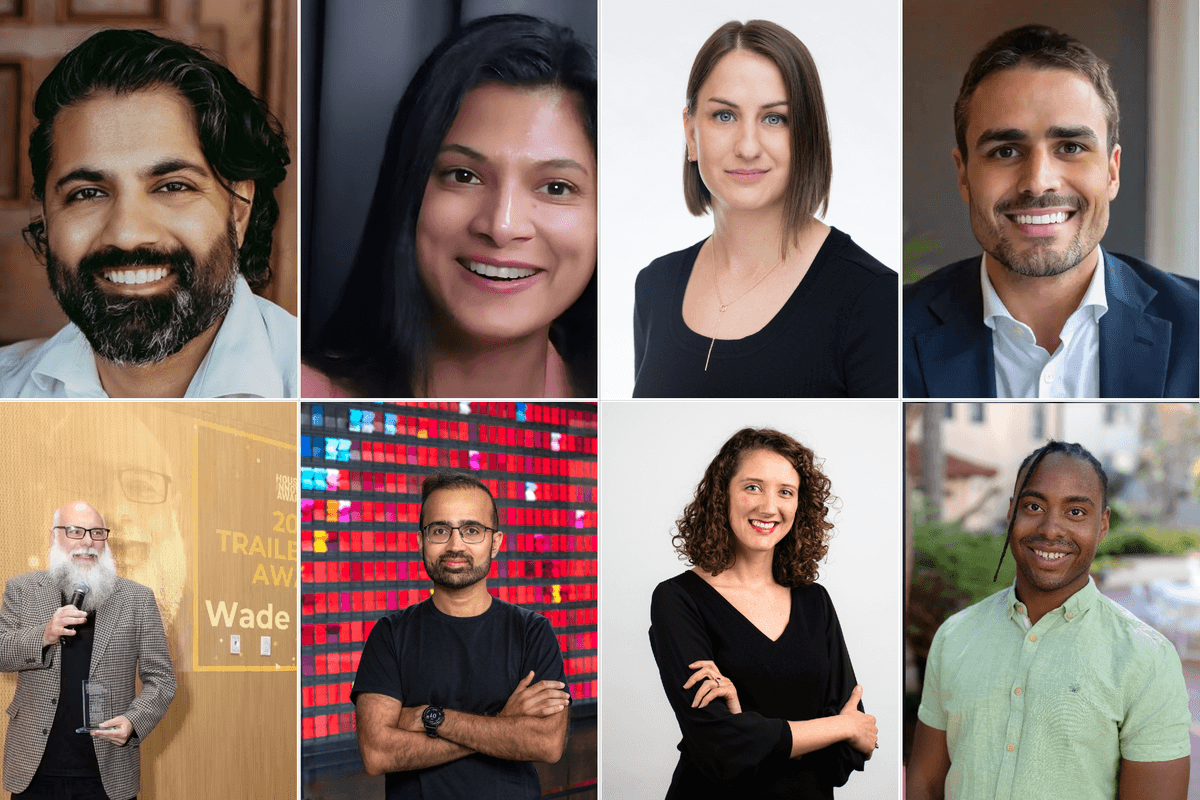
Watch five Houston founders present their 99-second pitches at Founders Live Houston. Competing teams include AyeDu (Vinita Gupta), Omniscale (Tony Hernandez-Ferman), AnswerPath (Chris Mullins), Katana.video (Sam Bhattacharyya) and TraceWrap (Laketta B.).

This event is Tuesday, May 3, at 5:30 p.m. at the Ion. Register here.

June 4 – Center for Human Performance Research & Networking Event

Rice University and Houston Methodist's Center for Human Performance will host an event to support its work in the study of exercise physiology, injury prevention and rehabilitation. The organizations will share more information on seed grant opportunities, and the event will feature presentations from Rice and Houston Methodist leaders, networking sessions and a poster showcase.

This event is Wednesday, June 4, from 3-5:30 p.m. at the BioScience Research Collaborative at Rice University. Register here.

June 12 – Transition on Tap

Meet and hear lighting pitches from eight of Greentown Labs’ newest startup members. Attendees can network with entrepreneurs, investors, corporate leaders, philanthropists, students and other climate champions. Georgina Campbell Flatter, CEO of Greentown Labs, and Victor Martinez, Greentown's memberships manager, will also speak.

This event is Thursday, June 12, from 5:30-7:30 p.m. at Greentown Houston. Register here.

June 16-18 — Energy Drone & Robotics Summit

This three-day summit, the largest of its kind, will connect 1,500-plus leaders in the global energy/industrial robotics, drone and data sectors. Attendees will glean the latest ideas, use cases, best practices, tech and trends from a wide variety of robotics and drone industry experts.

This event begins June 16 at Woodlands Waterway Marriott. Register here.

June 17 – SGSF’s #SUPERGirlsInSTEM Summit, The Intersection of AI & Workforce

SUPERGirls SHINE Foundation is hosting a one-day summit for women ages 18-24 focused on the evolving intersection of AI and the STEM workforce. The conference will feature keynote speakers, panel discussions and hands-on workshops.

This event is Tuesday, June 17, from 9 a.m.-1 p.m. at the Ion. Register here.

June 18 – 2025 Obsidi BNXT: Juneteenth Tech Forum

Obsidi.com, an online platform launched by the Black Professionals in Tech Network (BPTN), will host a forum for high-performing Black and allied tech executives. The event offers networking opportunities, keynotes and panels that feature executives from Echelon Health Partners, Hewlett-Packard Enterprise, SAP, Intuit and more.

The event is Wednesday, June 18, at NRG Center. Register here.

June 24 — Houston Methodist Leadership Speaker Series

Head to the Houston Methodist Tech Hub at Ion to hear the latest installment of the Houston Methodist Leadership Speaker Series. Trent Fulin, vice president and CEO at Houston Methodist Cypress Hospital, will discuss the new 105-acre campus and its first 100 days of patient care, followed by a Q&A.

This event is Tuesday, June 23, from 4:45-6 p.m. Register here.

June 25-26 – Carbon Capture Technology Expo and  Hydrogen Technology Conference & Expo North America

Tackling climate change is one of the biggest global challenges that requires immediate action, and many industrial sectors are now looking to new technology to help meet net-zero emission targets. The Carbon Capture Technology Expo is North America's leading event for carbon capture, utilization and storage. The expo offers opportunities to network with industry frontrunners and best-in-class solution providers.

This event begins June 25 at NRG Center. Click here to register. It is co-located with the Hydrogen Technology Conference & Expo North America. Expo passes are free.

June 26 – NASA Tech Talk

Every fourth Thursday of the month, NASA experts, including longtime engineer Montgomery Goforth, present on technology development challenges NASA’s Johnson Space Center and the larger aerospace community are facing and how Houston’s innovation community can leverage them. Stick around after for drinks and networking at Second Draught.

This event is Thursday, June 26, from 6-7 p.m. at the Ion. Register here.

Ad Placement 300x100
Ad Placement 300x600

CultureMap Emails are Awesome

AI-powered Houston startup helps restaurants boost customer loyalty

order up

It’s no secret that restaurant trends move fast and margins run thin. And with the proliferation of platforms like Uber Eats, DoorDash and Easy Cater, customer loyalty is fleeting.

The solution?

How about an AI-powered restaurant technology platform that helps restaurant brands cut back on third-party platforms in favor of driving direct discovery, conversion and loyalty?

Enter Saivory. Founded in 2025 by Stephen Klein, a software investor, and Fajita Pete’s restaurateur Hugh Guill, the Houston-based startup aims to help eateries better understand and activate guest behavior across digital channels as AI increasingly reshapes how consumers discover and engage with brands.

In less than a year, Saivory has partnered with Shipley Do-Nuts and Fajita Pete’s to bring AI-powered ordering to life.

“With Saivory, we were able to answer the question of, ‘what if the ordering process could be reduced to a single step, where customers simply tell us what they want and AI takes care of the rest?’” Klein tells InnovationMap.

The Houston-based startup made such an immediate impact that it was selected as a semi-finalist during Start-Up Alley at MURTEC, the restaurant industry’s leading technology conference, which took place last month in Las Vegas.

“Houston is a great hub for technology innovation, and we were proud to represent the city at MURTEC this year,” says Klein. “We didn’t win, but we were able to talk about some of the work that we have existing in the market for clients right now and a little bit about what we’re working on in the future.”

In the current restaurant technology ecosystem, the third-party aggregators own the customer attention that brings volume to restaurants, while also taking big commissions and having control over the end relationships with the customer.

That can often make it difficult for restaurants to grow loyalty and repeat business from customers. Saivory aims to level the playing field for restaurants, helping them stay more connected to their customers.

Take Saivory’s recent application with Shipley’s Do-Nuts, for example.

Saivory powered the donut giant’s AI-ordering and launched Shipley's website and mobile app to support its over 300 locations in Texas alone.

Shipley’s new AI-powered assistant helps users create personalized order recommendations based on individual or group preferences. And unlike standard chatbox features, the new assistant makes custom recommendations based on multiple customer factors, including budgetary habits, individual flavor preferences and order size. It can also be used for large catering orders.

“They're seeing more traffic to the site and they're seeing when customers use our AI-enabled flows,” Klein says. “And they're seeing higher basket sizes, bigger tickets, by about 25 percent.”

Klein says Saivory’s technology helps strengthen first-party digital relationships, reduce friction and cart abandonment, improve average order value, and delivers personalized, efficient experiences.

“It’s a win-win: the customer gets the right order quickly, while the restaurant gets a bigger margin,” he adds.

Additionally, the technology makes it easier for restaurants to share rewards, loyalty and discounts, ultimately growing more direct traffic and making restaurants less reliant on third-party delivery apps.

Next up for Saivory is adding new components to its platform to enhance the relationship between restaurant and customer, as well as technology around making it easier for restaurants to get found on Google.

“A lot of people are still searching for the best donuts near me,” Klein says. “Or what’s the best Mexican food near me? Customers will increasingly move to AI, where they’re going to ask where they should eat dinner and expect it to just order them dinner. They will eventually expect the technology to know how to do that. So that’s what we’re driving at.”

Houston leads U.S. in population growth for 2025, Census says

Boomtown

Imagine that the Houston metro area swallowed a city the size of Pearland in just one year. That’s essentially what happened from 2024 to 2025, with the Houston metro ranking first in the U.S. for population growth based on the number of people.

New estimates from the U.S. Census Bureau show the 10-county Houston metro added 126,720 residents from July 1, 2024, to July 1, 2025. That’s just shy of Pearland’s roughly 133,000-resident tally.

To calculate population, the Census Bureau counts births, deaths, new residents, and moved-away residents.

Region’s population approaches 8 million

On July 1, 2025, the Houston metro’s population hovered slightly above 7.9 million, up 1.6 percent from the same time in 2024. In the very near future, the region’s population should break the eight million mark.

This follows massive growth in the past 20 years. From 2005 to 2025, the region’s population soared by 39 percent. By comparison, the growth rate from 2021 to 2025 sat at nine percent.

A forecast from the Texas Demographics Center indicates that under a middle-of-the-road scenario, the Houston metro’s population will reach nearly 8.5 million in mid-2030 and more than 9.5 million in mid-2040.

Dan Potter, director of Rice University’s Houston Population Research Center, attributes much of the region’s population surge to people moving to the area from outside the U.S. In Harris County, this means a combination of military personnel returning home, people living or working overseas coming back to the U.S., and immigrants relocating to the U.S., he tells CultureMap.

But Harris County fell short from 2024 to 2025 when it comes to people moving here from elsewhere in the U.S., according to Potter. Counties surrounding Harris County benefited from that trend, drawing new residents who preferred to settle in the suburbs.

“The incredible pull and attraction of the Houston area is its economy, its people, and its affordability, and the significant growth that was observed in 2024 and again in 2025 speaks to the magnetism of the region,” Potter says. “That pull to Houston is too strong to be turned off overnight.”

Cooling economy and immigration shifts slow down growth

Whether looking at urban or suburban places, population growth in the Houston area slowed in 2025 and appears to be slowing even more this year, Potter says.

“A cooling economy and changes to immigration policy are a one-two combination that could knock out the region’s population growth,” says Potter, citing the region’s addition of a less-than-expected 14,800 jobs in 2025 as an example.

Weaker population growth may not be felt evenly across the metro area, according to Potter.

A continuing influx of people from Houston to outlying counties such as Brazoria, Fort Bend, Liberty, Montgomery, and Waller could curb growth in Harris County, Potter said. Why? If the number of people arriving from other other countries flattens or even drops, then there could be “doughnut-style population growth for the next few years, where Harris County and Houston see declines while the suburban counties see an increase.”

Harris County represents 40 percent of region’s population lift

Houston-anchored Harris County accounted for almost 40 percent of the region’s population spike from 2024 to 2025. In one year, Harris County grew by 48,695 residents, or 1 percent, pushing its population past five million. That increase put Harris County in first place for numeric growth (rather than percentage growth) among all U.S. counties.

From 2020 to 2025, Harris County’s growth rate was 6.6 percent. It remains the country’s third largest county based on population, behind Southern California’s Los Angeles County and Illinois’ Chicago-anchored Cook County.

Harris County is on track to surpass Cook County in size in the near future. As of July 1, 2025, a nearly 150,000-resident gap separated population-losing Cook County and fast-growing Harris County.

The Texas Demographics Center predicts Harris County’s population will be 5.37 million in mid-2030 and just short of six million in mid-2040.

Suburban counties see significant population gains

Harris County isn’t the only county in the area that experienced a growth spurt from 2024 to 2025:

  • Waller County’s population climbed 5.69 percent, winding up at 69,858. Its growth rate ranked second among U.S. counties.
  • Liberty County’s population rose 4.4 percent to 121,364, putting its growth rate in eighth place among U.S. counties.
  • Montgomery County gained 30,011 residents, with its population landing at 781,194. That placed it at No. 4 among U.S. counties for numeric growth.
  • Fort Bend County picked up 24,163 residents, arriving at a total of 975,191 and positioning it at No. 8 among U.S. counties for numeric growth. Fort Bend County, the region’s second largest county based on population, is projected to break the one million-resident mark by July 2030, according to the Texas Demographics Center.

“Lower mortgage rates from 2009 to 2022 and the rise of remote work have made suburban housing more attractive, especially for families seeking affordability,” Pramod Sambidi, the Houston-Galveston Area Council’s assistant director of data analytics and research, said last year. “Additionally, suburban areas are seeing more multifamily developments than before the pandemic.”

---

This article originally appeared on CultureMap.com.

5 Houston-area companies named among world's most innovative for 2026

In The Spotlight

Led by Conroe-based Hertha Metals, five organizations in the Houston area earned praise on Fast Company’s list of the World’s Most Innovative Companies of 2026.

Hertha Metals ranked No. 1 in the manufacturing category.

Last year, Hertha unveiled a single-step process for steelmaking that it says is cheaper, more energy-efficient and just as scalable as traditional steel manufacturing. It started testing the process in 2024 at a one-metric-ton-per-day pilot plant.

At the same time, Hertha announced more than $17 million in venture capital funding from investors such as Breakthrough Energy, Clean Energy Ventures, Khosla Ventures, and Pear VC.

“We’re not just reinventing steelmaking; we’re redefining what’s possible in materials, manufacturing, and national resilience,” Laureen Meroueh, founder and CEO of Hertha, said at the time.

Meroueh was also recently named to Inc. Magazine's 2026 Female Founders 500 list.

Hertha, founded in 2022, says traditional steelmaking relies on an outdated, coal-based multistep process that is costly, and contributes up to 9 percent of industrial energy use and 10 percent of global carbon emissions.

By contrast, Hertha’s method converts low-grade iron ore into molten steel or high-purity iron in one step. The company says its process is 30 percent more energy-efficient than traditional steelmaking and costs less than producing steel in China.

Last year, Hertha said it planned to break ground in 2026 on a plant capable of producing more than 9,000 metric tons of steel per year. In its next phase, the company plans to operate at 500,000 metric tons of steel production per year.

Here are Fast Company’s rankings for the four other Houston-area organizations:

  • Houston-based Vaulted Deep, No. 3 in catchall “other” category.
  • XGS Energy, No. 7 in the energy category. XGS’ proprietary solid-state geothermal system uses thermally conductive materials to deliver affordable energy anywhere hot rock is located. While Fast Company lists Houston as XGS’ headquarters, and the company has a major presence in the city, XGS is based in Palo Alto, California.
  • Houston-based residential real estate brokerage Epique Realty, No. 10 in the business services category. Epique, which bills itself as the industry’s first AI brokerage, provides a free AI toolkit for real estate agents to enhance marketing, streamline content creation, and improve engagement with clients and prospects.
  • Texas A&M University’s Nanostructured Materials Lab in College Station. The lab studies nano-structured materials to make materials lighter for the aerospace industry, improve energy storage, and enable the creation of “smart” textiles.
---

This article first appeared on our sister site, EnergyCapitalHTX.com.