


The five-year plan was launched during the CPRIT 2026 Innovations Conference in Galveston this month. Photo via Unsplash.com

MD Anderson, on behalf of a coalition of health systems, has announced a new plan to eliminate cervical cancer in Texas.

The five-year Texas Lone Star Cervical Cancer Elimination Plan was launched during the Cancer Prevention and Research Institute of Texas (CPRIT) 2026 Innovations Conference in Galveston this month.

The plan focuses on three major pillars with goals to be achieved by 2032:

  • HPV vaccination: Increase the percentage of Texas boys and girls up to date on human papillomavirus (HPV) vaccination by age 15 from 50.5 percent to 80 percent
  • Cervical cancer screening: Raise the share of Texas women up to date on cervical cancer screening from 64 percent to 80 percent
  • Timely follow-up, diagnosis and treatment: Ensure 80 percent of women receive diagnostic follow-up and treatment when needed through community outreach, patient navigation, provider training and survivorship support

Overall, the coalition wants to see fewer than four new cases of cervical cancer annually per 100,000 Texas women by 2032, according to a news release from MD Anderson. Currently, Texas has an incidence rate of 9.5 women per 100,000 diagnosed with cervical cancer, compared with 7.5 women per 100,000 nationally.

“Texas has the tools to prevent nearly every case of cervical cancer, but tools can save lives only when people can utilize them,” Dr. Ernest Hawk, vice president and division head of Cancer Prevention and Population Sciences at MD Anderson, said in the release. “The Lone Star Cervical Cancer Elimination Plan gives us a shared roadmap to vaccinate more of our children, screen more of our women and make sure every abnormal result leads to care. With innovations like HPV self-collection and the commitment of partners across the state, elimination is within reach.”

About 40 other hospitals, health care organizations and companies join MD Anderson in the coalition that launched the Lonestar Plan. Those based in Houston include Houston Methodist, Rice University, UTHealth Houston, Texas Children's Hospital, Houston Health Department and others.

The CPRIT also announced its Texans Conquer Cancer Awards and its CPRIT Champion awards during the Innovations Conference this week. Several are based in Houston, including:

  • Zhiqiang An, co-founder of CrossBridge Bio, Director of the Texas Therapeutics Institute, and Vice President of Drug Discovery at the University of Texas Health Science Center at Houston
  • Dr. Abbey Berenson, Director of the UTMB Center for Interdisciplinary Research in Women's Health Care
  • Dr. Michael Taylor, Chair of Pediatric Neuro-Oncology at Texas Children's Cancer and Hematology Center and Director of Texas Children's Pediatric Brain Tumor Research Program

To date, the CPRIT has awarded more than $4.2 billion in grants to fight cancer in the state. Over the summer, it awarded four $2 million grants to institutions in Houston and Bryan for the creation or expansion of “core” cancer research facilities.

Texas Medical Center Innovation recently announced that its $2 million grant would renew its Accelerator for Cancer Therapeutics for five years. Read more from TMCi about the renewal here.
Ad Placement 300x100
Ad Placement 300x600

CultureMap Emails are Awesome

Meta selects UTHealth for AI-powered medicine partnership

medical innovation

UTHealth Houston is one of five universities partnering with Meta to utilize AI models on various medical research capacities. Meta announced the partnership late last month.

“Through our collaboration with Meta, we aim to bring next-generation open-weight AI models into healthcare to accelerate scientific discovery and improve lives,” Xiaoqian Jiang, associate vice president for medical AI, chair of the Department of Health Data Science and Artificial Intelligence at McWilliams School of Biomedical Informatics at UTHealth Houston, said in a Meta news blog.

“Our goal is to make the benefits of AI more widely accessible, advancing research and care with rigorous privacy protection,” he added.

The partnership also comes with $250,000 for research funding from Meta. The other four universities in the partnership include Caltech, Ohio State University, Louisiana State University and Indiana University.

As the debate over widespread implementation of AI rages, one area where it has proved useful is in medical research. AI can be extremely useful in summarizing data from recent findings; analyzing large sets of patient or genetic information; and accelerating hypothetical models. With rigorous oversight and careful curation, AI models can significantly speed up medical research.

That’s where Meta's open-weight models like Muse Glimmer and Muse Spark come in. Jiang will be using Muse Glimmer for drug discovery and bioinformatics research, relying on Glimmer’s autonomous, multi-step agentic workflow paradigms to evaluate efficiency and accuracy across healthcare systems.

A major problem in modern healthcare is that patient data is often spread across multiple systems in different formats. Glimmer can streamline this, with Jiang focusing particularly on glioblastoma patients.

Glioblastoma is an aggressive form of brain tumor that has roughly a 10 percent survival rate over five years. Because it expands microscopically through the brain in fast-growing branches, tumors can spread quickly and require whole teams to treat. Analyzing data across providers and testing facilities in a rapid, concise way is essential to research and can be made far easier with AI modeling.

Projects from other selected universities focus on using AI for disease detection, improving surgical outcomes and making healthcare more accessible. Read about them here.

MD Anderson receives $10M gift to launch pancreatic cancer program

med funding

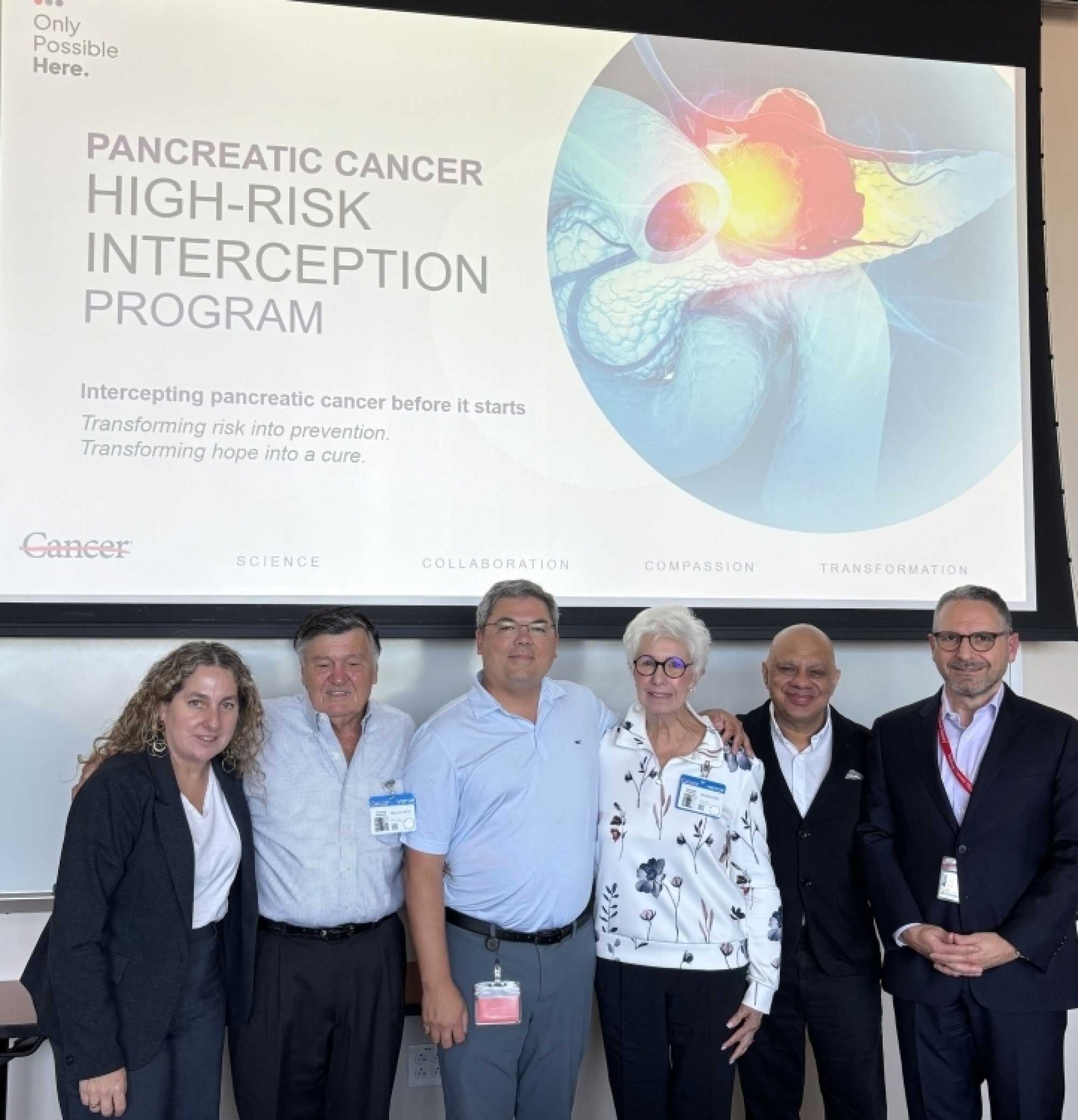
The University of Texas MD Anderson Cancer Center will be getting a significant boost in the fight against pancreatic cancer thanks to a recent gift from longtime supporters Zelma and William Reid. The medical system announced this month that a $10 million donation would help it establish a new Pancreatic Cancer High-Risk Interception Program.

“Philanthropic investments like this create opportunities to accelerate discoveries and pursue bold approaches to some of the most challenging cancers we face,” said Dr. Jeffrey E. Lee, president ad interim of UT MD Anderson, said in a news release. “We are deeply grateful to Zelma and Bill Reid for their generosity and enduring commitment. Their support will help advance innovative research aimed at intercepting pancreatic cancer earlier, when we have the greatest opportunity to improve outcomes for patients.”

Pancreatic cancer is one of the most deadly types of cancer. Despite being relatively rare, it ranks third in total deaths from cancer in the United States. Less than 10 percent of patients diagnosed with pancreatic cancer are still alive five years later.

Dr. Florencia McAllister, William Reid, Dr. Michael P. Kim, Zelma Reid, Dr. Manoop S. Bhutani, and Dr. Matthew H.G. Katz. Photo courtesy MD Anderson

The problem is often detection. The pancreas is located deep in the upper abdomen among many other organs, which can make spotting tumors difficult. Some blood tests can indicate pancreatic cancer, but it is usually not diagnosed until it spreads.

The new Pancreatic Cancer High-Risk Interception Program hopes to assemble new diagnostic techniques and patient screening tools to increase early detection. MD Anderson’s Dr. Michael P. Kim, associate professor of surgical oncology; Dr. Manoop S. Bhutani, professor of gastroenterology and hepatology; and Dr. Florencia McAllister, professor of gastrointestinal medical oncology and genetics, will lead the new program.

The team will rely on advanced imaging, molecular diagnostics, AI-driven assessment, and DNA testing to both create an at-risk patient population profile and hopefully help detect the cancer in its earliest stages. For instance, some of these tools will be able to monitor pancreatic cysts without invasive surgery.

“The ultimate goal is to intercept pancreatic cancer development or to initiate treatment earlier in the disease process, when patients have the best chance for successful outcomes,” Kim added in the release. “This gift will allow us to expand our research efforts, strengthen collaborations across disciplines and accelerate promising strategies to identify and intercept pancreatic cancer before it becomes life-threatening. We are incredibly thankful to the Reids for making this work possible.”

Axiom Space inks partnership to grow semiconductor crystals in orbit

space deal

Down in Webster, Texas, and high above the Earth, Axiom Space and Kansas-based Nitride Global Inc. will grow the next generation of semiconductor crystals in microgravity thanks to a new memorandum of understanding (MOU) signed earlier this month.

“Signing this MOU with Nitride Global reflects the growing commercial interest in producing advanced semiconductor materials in space,” Lucie Low, chief science officer for Axiom Space, said in a news release. “Their leadership in aluminium nitride (AlN) crystal growth and advanced packaging technologies, combined with Axiom Space’s capabilities in orbital infrastructure and mission integration, position us to demonstrate real commercial value in low-Earth orbit (LEO).”

This latest partnership builds on existing collaboration between Axiom and NitrideGlobal and NASA Ames Research Center.

Aluminium nitride crystals are part of the cutting-edge generation of semiconductors essential to emerging high-voltage transistors and also used in various medical technologies. Because of their high thermal stability, they can be used in a variety of environments and applications that have revolutionized everything from electric cars to the grids the cars run on.

However, the crystals are challenging to grow on Earth and face defects and size limitations due to gravity. Growing them in space can enhance their performance, according to NitrideGlobal. Microgravity allows them to grow more uniformly and with fewer defects, potentially resulting in larger, purer and more reliable crystals.

That’s where Axiom Space comes in. The company is developing Axiom Station, a successor to the International Space Station, where new research and manufacturing can be carried out.

“This MOU marks a pivotal milestone in our close partnership with Axiom Space that started as part of the NASA Small Business Innovation Research (SBIR) for AlN growth in space and is now expanding to usher the development of an innovation ecosystem,” Mahyar Khosravi, CEO of Nitride Global Inc., added in the release. “With Axiom Space’s leadership in the in-space manufacturing sector, this partnership will aim to deliver a platform for commercially viable manufacturing of [ultrawide bandgap materials] that will enable the next generation of semiconductor & microelectronics for terrestrial and planetary exploration uses.”