Rice lands $15M U.S. Army award to launch next-gen wireless research center
defense funding
The U.S. Army Research Office has awarded Rice University $15 million to establish a new center for next-generation sensing and communications.
The five-year research center—dubbed the Center for Large Aperture Secure Sensing, Imaging and Communications (CLASSIC)—will unite researchers from universities and national laboratories to develop advanced antenna technologies for future wireless systems. Edward Knightly, the Sheafor-Lindsay Professor of Electrical and Computer Engineering at Rice, will lead the center that “combines expertise in wireless networking, antennas, radar, artificial intelligence, circuits and physics to address growing demands on wireless systems,” according to Rice.
“The challenges we’re tackling require advances that span physics, hardware, communications and computing," Knightly said in a news release. “By combining those strengths in a single center, we can accelerate the development and demonstration of technologies that would not be possible through individual efforts alone.”
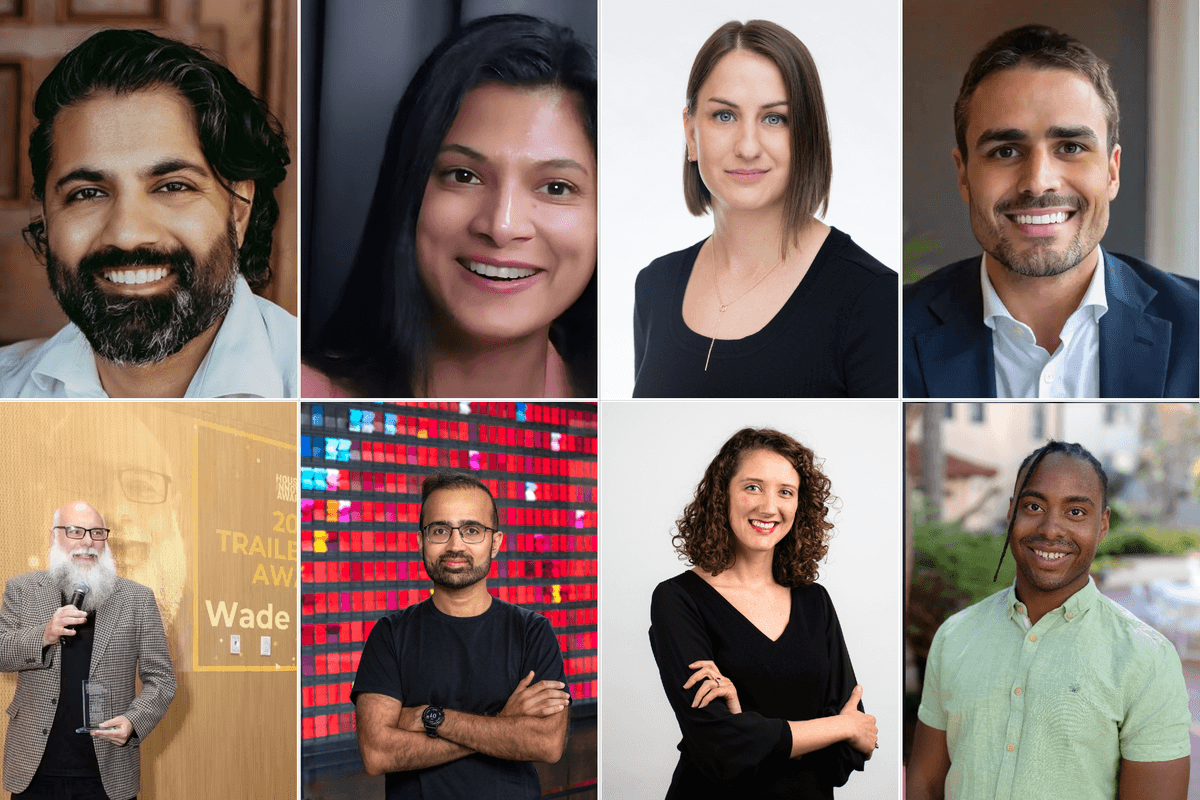
Joining Knightly will be Ashutosh Sabharwal of Rice, Sensen Li of the University of Texas at Austin, Hou-Tong Chen of Los Alamos National Laboratory, Danijela Cabric of UCLA, Josep M. Jornet and Tommaso Melodia of Northeastern University, Daniel M. Mittleman of Brown University, and Willie Padilla of Duke University.
Industry partners include Booz Allen Hamilton, Intel, Keysight, Lockheed Martin, MITRE, Northrop Grumman, Qualcomm and Raytheon.
CLASSIC researchers will investigate how large-scale antenna arrays (ELSAAs) can expand the capabilities of wireless systems where technology is limited.
ELSAAs use thousands of coordinated antenna elements to direct radio waves. Researchers aim to develop ways to use the technology to help maintain steady communication when signals are blocked or disrupted and to detect and generate detailed images of concealed objects.
Along with ELSAAs, the center will work to develop sensing techniques for threat detection, study wireless jamming and build resilient high-speed wireless networks. Researchers will ultimately validate the technology in labs and via drone-based field trials.
CLASSIC will also work on developing an AI-driven modeling framework that will simulate complex electromagnetic environments in real time.
“This award demonstrates Rice’s leadership in tackling complex national research challenges through collaboration across disciplines and institutions,” David Sholl, executive vice president for research at Rice, added in the release.