Jeffery and Mindy Hildebrand are noted for their service to employees and community. Photo by Anthony Rathbun

According to Forbes, half of all of the world’s billionaires are less wealthy than they were in 2022. But that’s not the case for most Houston-area billionaires like oil tycoon Jeffery Hildebrand, who was named the richest man in the city.

The 2023 edition of Forbes’ World’s Billionaires List declared Hildebrand’s net worth at $10.2 billion, placing him as the 171st richest person in the world. His fortune is $2.7 billion higher than his 2022 net worth of $7.5 billion, when he ranked No. 316 on the list.

As CultureMap reported, in 2015, Hildebrand made headlines when he gifted each of his 1,381 employees a $100,000 holiday bonus.

Houston’s favorite hospitality mogul and Rockets owner Tilman Fertitta is the city’s second-richest man, with his net worth climbing up to $8.1 billion. He ranked No. 256 on Forbes’ list, substantially higher than his No. 471 rank in 2022 when his net worth was $5.6 billion. Fertitta is surely living life to the fullest after hosting Miami rapper Pitbull at his San Luis Salute celebration earlier this year.

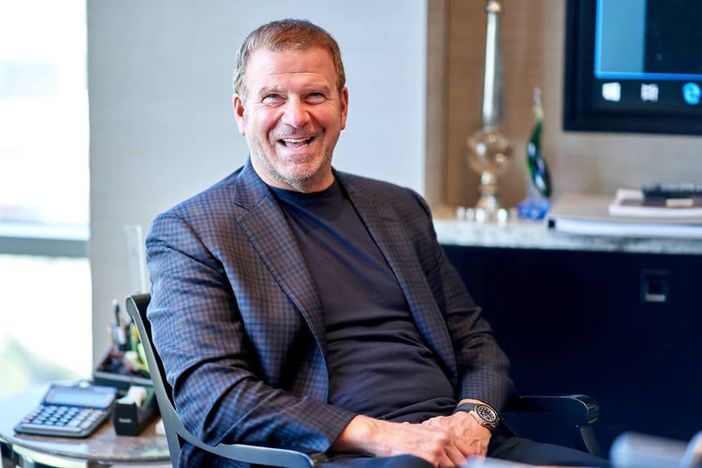
Tilman Fertitta Shut Up and Listen book laughing

Tilman Fertitta is sitting pretty at No. 2. Photo by J. Thomas Ford

Other Houston-area billionaires that made Forbes 2023 world’s richest list are:

  • Pipeline magnate Richard Kinder: tied for No. 317, $7.2 billion, down from $7.5 billion
  • Houston siblings and pipeline heirs Dannine Avara, Scott Duncan, Milane Frantz, and Randa Duncan Williams: all tied for No. 352, $6.8 billion, up from $6.6 billion
  • Toyota mega-dealer Dan Friedkin: tied for No. 466, $5.5 billion, up from $4.3 billion
  • Houston Texans owner Janice McNair: tied for No. 534, $5 billion, up from $4.2 billion
  • Hedge fund honcho John Arnold: tied for No. 878, $3.3 billion, unchanged since 2018
  • Energy exploration chief exec George Bishop: tied for No. 982, $3 billion, up from $2.7 billion
New to the 2023 report is Kamal Ghaffarian, the co-founder and executive chairman of Houston's Axiom Space, with a net worth of $2.1 billion. Though his LinkedIn notes that he is based in Maryland, reports add that he resides in Florida. His Forbes rank is No. 1434.An honorable mention (and billionaire newbie) is Amy Adams Strunk, the controlling owner of the Tennessee Titans and daughter of Houston Oilers owner Bud Adams. She has a residence in Waller (about 40 miles northwest of Houston) and her net worth is $1.7 billion — making her No. 1725 on the list.One name missing from Forbes 2023 report is software entrepreneur Robert Brockman, who passed away last August. Brockman fell from grace after he was charged in the largest tax fraud case in U.S. history in 2020. Forbes listed his 2022 net worth at $4.7 billion. He is survived by his wife, son, and two grandchildren.Elsewhere in Texas, Elon Musk reigns as the richest man in the state and in its capital city of Austin with a net worth of $180 billion. The Tesla and Space-X founder is the second richest person in the world, wedging his way between No. 1 Bernard Arnault of France (overseer of the LVMH empire of 75 fashion and cosmetics brands, including Louis Vuitton and Sephora), with a net worth of $211 billion; and No. 3 Jeff Bezos, the American Amazon founder, worth $114 billion.

Dallas Cowboys owner Jerry Jones'$13.3 billion net worth won him the title of Dallas' richest person, and the 12th richest sports owner on Forbes' "World's Richest Sports Owners 2023." His net worth is up from $10.6 billion last year.

The Fort Worth-based Walmart family heiress Alice Walton earned a spot on Forbes’ list as the third richest woman in the world. Her fortune is pegged at $56.7 billion, down slightly from $65.3 billion last year.

------

This article originally ran on CultureMap.

Richard and Nancy Kinder are among America's most wealthy. Photo by Michelle Watson/Catchlight Group

Richard Kinder and 10 other Houston billionaires cash in on Forbes list of richest Americans

where's the money

Never one to overtly draw attention to himself, Houston pipeline magnate — and Memorial Park benefactorRichard Kinder has landed on a coveted list, as have 10 other Houstonians.

Forbes has released the Forbes 400 list of richest Americans, and Kinder ranks eighth in Texas and 128th nationally with an estimated net worth of $7.1 billion.

Meanwhile, Houston hospitality king and Rockets owner Tilman Fertitta ranks 11th in Texas and 158th nationally with an estimated net worth of $6.3 billion.

Houston pipeline heirs Dannine Avara, Scott Duncan, Milane Frantz, and Randa Duncan Williams tie for 12th place in Texas and tie for 161st nationally. Each has an estimated net worth of $6.2 billion.

Software entrepreneur Robert Brockman ranks 19th in Texas and ties for 229th nationally with a net worth of $4.7 billion.

Oil mogul Jeffery Hildebrand ranks 20th in Texas and ties for 240th nationally with a net worth of $4.6 billion.

Toyota mega-dealer Dan Friedkin ranks 24th in Texas and ties for 253rd with an estimated net worth of $4.4 billion.

Houston Texans owner Janice McNair of Houston ranks 26th in Texas and ties for 269th nationally with an estimated net worth of $4.2 billion.

Finally, local hedge fund honcho John Arnold ties for 30th in Texas and ties for 358th nationally with an estimated net worth of $3.3 billion.

Here's how billionaires from other major metros in Texas fared on the Forbes 400 list.

Austin

No shocker here: Tesla and SpaceX guru Elon Musk ranks No. 2 among the richest Americans and No. 1 among the richest Texans. What is shocking, however, is how much Musk's net worth skyrocketed from 2020 to 2021. Hint: It's more than $100 billion.

This year, the Forbes 400 estimates his net worth stood at $190.5 billion as of September 3. To give that some context, the size of the economy in the state of Kansas exceeds $193 billion.

Last year, Musk's estimated net worth was $68 billion. This means that from 2020 to 2021, his net worth exploded by $122.5 billion, or 180 percent.

Among the richest Americans, only Amazon's Jeff Bezos beats Musk — but not by much. The Forbes 400 pegs Bezos' net worth at $201 billion as of September 3, up from $179 billion at the same time last year.

Forbes lists Musk's residence as Austin, although he has said he spends much of his time in Boca Chica. The Texas Gulf Coast community hosts Starbase, a launch site for SpaceX rockets. Regardless of precisely where he lives, Musk does spend a lot of time in the Austin area, where Tesla is building a $1.1 billion vehicle manufacturing plant. Musk relocated to Texas last year.

Before Musk arrived in the Lone Star State, Walmart heir Alice Walton of Fort Worth ranked as the richest person in Texas. She's now in second place, with a net worth estimated at $67.9 billion. Walton ranks as the 12th richest American and richest American woman on this year's Forbes 400.

Aside from Musk, Austin billionaires who appear on the Forbes 400 are:

  • Michael Dell, founder, chairman, and CEO of Round Rock-based Dell Technologies. Estimated net worth: $50.1 billion. Texas rank: No. 3. U.S. rank: No. 18.
  • Robert Smith, founder, chairman, and CEO of private equity firm Vista Equity Partners. Estimated net worth: $6.7 billion. Texas rank: No. 9. U.S. rank: No. 141.
  • Vodka titan Bert "Tito" Beveridge. Estimated net worth: $4.8 billion. Texas rank: No. 18. U.S. rank: No. 224 (tie).
  • IT entrepreneur Thai Lee. Estimated net worth: $4.1 billion. Texas rank: No. 27 (tie). U.S. rank: No. 273 (tie).
  • Software entrepreneur Joe Liemandt. Estimated net worth: $3 billion. Texas rank: No. 33 (tie). U.S. rank: No. 377 (tie).
  • Jim Bryer, founder and CEO of venture capital firm Bryer Capital. Estimated net worth: $2.9 billion. Texas rank: 35 (tie). U.S. rank: No. 389 (tie).

Dallas-Fort Worth

Banking and real estate mogul Andy Beal of Dallas holds the No. 5 spot in Texas and No. 78 nationally. His estimated net worth is $9.9 billion.

Dallas Cowboys owner Jerry Jones of Dallas sits at No. 7 in Texas and No. 86 nationally with an estimated net worth of $9.1 billion.

Money manager Ken Fisher of Dallas ranks 10th in Texas and 151st nationally with an estimated net worth of $6.4 billion.

Oil and real estate titan Ray Lee Hunt of Dallas ranks 16th in Texas and ties for 188th nationally with an estimated net worth of $5.7 billion.

Oil and investment mogul Robert Bass of Fort Worth ranks 17th in Texas and ties for 212th nationally with an estimated net worth of $5 billion.

Private equity kingpin David Bonderman of Fort Worth ties for 21st in Texas and ties for 247th nationally with an estimated net worth of $4.5 billion.

Media magnate and Dallas Mavericks owner Mark Cuban of Dallas ties for 21st in Texas and ties for 247th nationally with an estimated net worth of $4.5 billion.

Oil and gas honcho Trevor Rees-Jones of Dallas ties for 21st in Texas and ties for 247th nationally with an estimated net worth of $4.5 billion.

Hotel and investment guru Robert Rowling of Dallas ranks 25th in Texas and ties for 261st nationally with an estimated net worth of $4.3 billion.

Margot Birmingham Perot of Dallas, widow of tech and real estate entrepreneur H. Ross Perot Sr., ties for 27th in Texas and ties for 273rd nationally with an estimated net worth of $4.1 billion.

Oil and gas tycoon Kelcy Warren of Dallas ranks 29th in Texas and ties for 289th nationally with an estimated net worth of $3.9 billion.

Real estate bigwig H. Ross Perot Jr. of Dallas ranks 32nd in Texas and 363rd nationally with an estimated net worth of $3.2 billion.

Homebuilder Donald Horton and family of Fort Worth tie for 35th in Texas and tie for 389th nationally with an estimated net worth of $2.9 billion.

Oil baron W. Herbert Hunt of Dallas ties for 35th in Texas and ties for 389th nationally with an estimated net worth of $2.9 billion.

------

This article originally ran on CultureMap.

Ad Placement 300x100
Ad Placement 300x600

CultureMap Emails are Awesome

UH receives $2.6M gift to support opioid addiction research and treatment

drug research

The estate of Dr. William A. Gibson has granted the University of Houston a $2.6 million gift to support and expand its opioid addiction research, including the development of a fentanyl vaccine that could block the drug's ability to enter the brain.

The gift builds upon a previous donation from the Gibson estate that honored the scientist’s late son Michael, who died from drug addiction in 2019. The original donation established the Michael C. Gibson Addiction Research Program in UH's department of psychology. The latest donation will establish the Michael Conner Gibson Endowed Professorship in Psychology and the Michael Conner Gibson Research Endowment in the College of Liberal Arts and Social Sciences.

“This incredibly generous gift will accelerate UH’s addiction research program and advance new approaches to treatment,” Daniel O’Connor, dean of the College of Liberal Arts and Social Sciences, said in a news release.

The Michael C. Gibson Addiction Research Program is led by UH professor of psychology Therese Kosten and Colin Haile, a founding member of the UH Drug Discovery Institute. Currently, the program produces high-profile drug research, including the fentanyl vaccine.

According to UH, the vaccine can eliminate the drug’s “high” and could have major implications for the nation’s opioid epidemic, as research reveals Opioid Use Disorder (OUD) is treatable.

The endowed professorship is combined with a one-to-one match from the Aspire Fund Challenge, a $50 million grant program established in 2019 by an anonymous donor. UH says the program has helped the university increase its number of endowed chairs and professorships, including this new position in the department of psychology.

“Our future discoveries will forever honor the memory of Michael Conner Gibson and the Gibson family,” O’Connor added in the release. “And I expect that the work supported by these endowments will eventually save many thousands of lives.”

CenterPoint and partners launch AI initiative to stabilize the power grid

AI infrastructure

Houston-based utility company CenterPoint Energy is one of the founding partners of a new AI infrastructure initiative called Chain Reaction.

Software companies NVIDIA and Palantir have joined CenterPoint in forming Chain Reaction, which is aimed at speeding up AI buildouts for energy producers and distributors, data centers and infrastructure builders. Among the initiative’s goals are to stabilize and expand the power grid to meet growing demand from data centers, and to design and develop large data centers that can support AI activity.

“The energy infrastructure buildout is the industrial challenge of our generation,” Tristan Gruska, Palantir’s head of energy and infrastructure, says in a news release. “But the software that the sector relies on was not built for this moment. We have spent years quietly deploying systems that keep power plants running and grids reliable. Chain Reaction is the result of building from the ground up for the demands of AI.”

CenterPoint serves about 7 million customers in Texas, Indiana, Minnesota and Ohio. After Hurricane Beryl struck Houston in July 2024, CenterPoint committed to building a resilient power grid for the region and chose Palantir as its “software backbone.”

“Never before have technology and energy been so intertwined in determining the future course of American innovation, commercial growth, and economic security,” Jason Wells, chairman, president and CEO of CenterPoint, added in the release.

In November, the utility company got the go-ahead from the Public Utility Commission of Texas for a $2.9 billion upgrade of its Houston-area power grid. CenterPoint serves 2.9 million customers in a 12-county territory anchored by Houston.

A month earlier, CenterPoint launched a $65 billion, 10-year capital improvement plan to support rising demand for power across all of its service territories.

---

This article originally appeared on our sister site, EnergyCapitalHTX.com.

Houston researchers develop material to boost AI speed and cut energy use

ai research

A team of researchers at the University of Houston has developed an innovative thin-film material that they believe will make AI devices faster and more energy efficient.

AI data centers consume massive amounts of electricity and use large cooling systems to operate, adding a strain on overall energy consumption.

“AI has made our energy needs explode,” Alamgir Karim, Dow Chair and Welch Foundation Professor at the William A. Brookshire Department of Chemical and Biomolecular Engineering at UH, explained in a news release. “Many AI data centers employ vast cooling systems that consume large amounts of electricity to keep the thousands of servers with integrated circuit chips running optimally at low temperatures to maintain high data processing speed, have shorter response time and extend chip lifetime.”

In a report recently published in ACS Nano, Karim and a team of researchers introduced a specialized two-dimensional thin film dielectric, or electric insulator. The film, which does not store electricity, could be used to replace traditional, heat-generating components in integrated circuit chips, which are essential hardware powering AI.

The thinner film material aims to reduce the significant energy cost and heat produced by the high-performance computing necessary for AI.

Karim and his former doctoral student, Maninderjeet Singh, used Nobel prize-winning organic framework materials to develop the film. Singh, now a postdoctoral researcher at Columbia University, developed the materials during his doctoral training at UH, along with Devin Shaffer, a UH professor of civil engineering, and doctoral student Erin Schroeder.

Their study shows that dielectrics with high permittivity (high-k) store more electrical energy and dissipate more energy as heat than those with low-k materials. Karim focused on low-k materials made from light elements, like carbon, that would allow chips to run cooler and faster.

The team then created new materials with carbon and other light elements, forming covalently bonded sheetlike films with highly porous crystalline structures using a process known as synthetic interfacial polymerization. Then they studied their electronic properties and applications in devices.

According to the report, the film was suitable for high-voltage, high-power devices while maintaining thermal stability at elevated operating temperatures.

“These next-generation materials are expected to boost the performance of AI and conventional electronics devices significantly,” Singh added in the release.