Jeffery and Mindy Hildebrand are noted for their service to employees and community. Photo by Anthony Rathbun

According to Forbes, half of all of the world’s billionaires are less wealthy than they were in 2022. But that’s not the case for most Houston-area billionaires like oil tycoon Jeffery Hildebrand, who was named the richest man in the city.

The 2023 edition of Forbes’ World’s Billionaires List declared Hildebrand’s net worth at $10.2 billion, placing him as the 171st richest person in the world. His fortune is $2.7 billion higher than his 2022 net worth of $7.5 billion, when he ranked No. 316 on the list.

As CultureMap reported, in 2015, Hildebrand made headlines when he gifted each of his 1,381 employees a $100,000 holiday bonus.

Houston’s favorite hospitality mogul and Rockets owner Tilman Fertitta is the city’s second-richest man, with his net worth climbing up to $8.1 billion. He ranked No. 256 on Forbes’ list, substantially higher than his No. 471 rank in 2022 when his net worth was $5.6 billion. Fertitta is surely living life to the fullest after hosting Miami rapper Pitbull at his San Luis Salute celebration earlier this year.

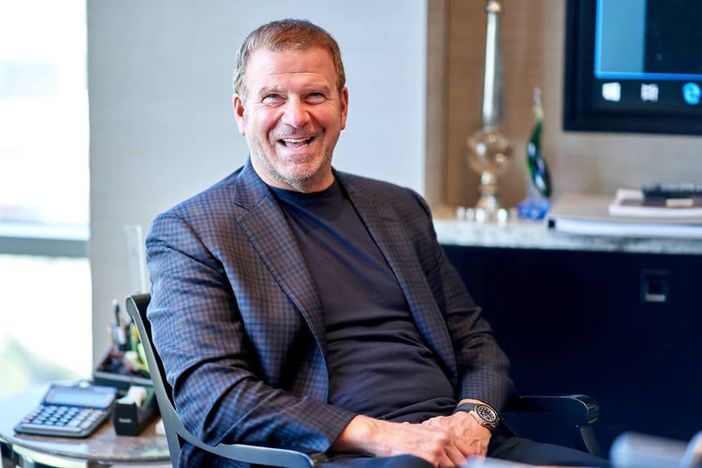
Tilman Fertitta Shut Up and Listen book laughing

Tilman Fertitta is sitting pretty at No. 2. Photo by J. Thomas Ford

Other Houston-area billionaires that made Forbes 2023 world’s richest list are:

  • Pipeline magnate Richard Kinder: tied for No. 317, $7.2 billion, down from $7.5 billion
  • Houston siblings and pipeline heirs Dannine Avara, Scott Duncan, Milane Frantz, and Randa Duncan Williams: all tied for No. 352, $6.8 billion, up from $6.6 billion
  • Toyota mega-dealer Dan Friedkin: tied for No. 466, $5.5 billion, up from $4.3 billion
  • Houston Texans owner Janice McNair: tied for No. 534, $5 billion, up from $4.2 billion
  • Hedge fund honcho John Arnold: tied for No. 878, $3.3 billion, unchanged since 2018
  • Energy exploration chief exec George Bishop: tied for No. 982, $3 billion, up from $2.7 billion
New to the 2023 report is Kamal Ghaffarian, the co-founder and executive chairman of Houston's Axiom Space, with a net worth of $2.1 billion. Though his LinkedIn notes that he is based in Maryland, reports add that he resides in Florida. His Forbes rank is No. 1434.An honorable mention (and billionaire newbie) is Amy Adams Strunk, the controlling owner of the Tennessee Titans and daughter of Houston Oilers owner Bud Adams. She has a residence in Waller (about 40 miles northwest of Houston) and her net worth is $1.7 billion — making her No. 1725 on the list.One name missing from Forbes 2023 report is software entrepreneur Robert Brockman, who passed away last August. Brockman fell from grace after he was charged in the largest tax fraud case in U.S. history in 2020. Forbes listed his 2022 net worth at $4.7 billion. He is survived by his wife, son, and two grandchildren.Elsewhere in Texas, Elon Musk reigns as the richest man in the state and in its capital city of Austin with a net worth of $180 billion. The Tesla and Space-X founder is the second richest person in the world, wedging his way between No. 1 Bernard Arnault of France (overseer of the LVMH empire of 75 fashion and cosmetics brands, including Louis Vuitton and Sephora), with a net worth of $211 billion; and No. 3 Jeff Bezos, the American Amazon founder, worth $114 billion.

Dallas Cowboys owner Jerry Jones'$13.3 billion net worth won him the title of Dallas' richest person, and the 12th richest sports owner on Forbes' "World's Richest Sports Owners 2023." His net worth is up from $10.6 billion last year.

The Fort Worth-based Walmart family heiress Alice Walton earned a spot on Forbes’ list as the third richest woman in the world. Her fortune is pegged at $56.7 billion, down slightly from $65.3 billion last year.

------

This article originally ran on CultureMap.

Richard and Nancy Kinder are among America's most wealthy. Photo by Michelle Watson/Catchlight Group

Richard Kinder and 10 other Houston billionaires cash in on Forbes list of richest Americans

where's the money

Never one to overtly draw attention to himself, Houston pipeline magnate — and Memorial Park benefactorRichard Kinder has landed on a coveted list, as have 10 other Houstonians.

Forbes has released the Forbes 400 list of richest Americans, and Kinder ranks eighth in Texas and 128th nationally with an estimated net worth of $7.1 billion.

Meanwhile, Houston hospitality king and Rockets owner Tilman Fertitta ranks 11th in Texas and 158th nationally with an estimated net worth of $6.3 billion.

Houston pipeline heirs Dannine Avara, Scott Duncan, Milane Frantz, and Randa Duncan Williams tie for 12th place in Texas and tie for 161st nationally. Each has an estimated net worth of $6.2 billion.

Software entrepreneur Robert Brockman ranks 19th in Texas and ties for 229th nationally with a net worth of $4.7 billion.

Oil mogul Jeffery Hildebrand ranks 20th in Texas and ties for 240th nationally with a net worth of $4.6 billion.

Toyota mega-dealer Dan Friedkin ranks 24th in Texas and ties for 253rd with an estimated net worth of $4.4 billion.

Houston Texans owner Janice McNair of Houston ranks 26th in Texas and ties for 269th nationally with an estimated net worth of $4.2 billion.

Finally, local hedge fund honcho John Arnold ties for 30th in Texas and ties for 358th nationally with an estimated net worth of $3.3 billion.

Here's how billionaires from other major metros in Texas fared on the Forbes 400 list.

Austin

No shocker here: Tesla and SpaceX guru Elon Musk ranks No. 2 among the richest Americans and No. 1 among the richest Texans. What is shocking, however, is how much Musk's net worth skyrocketed from 2020 to 2021. Hint: It's more than $100 billion.

This year, the Forbes 400 estimates his net worth stood at $190.5 billion as of September 3. To give that some context, the size of the economy in the state of Kansas exceeds $193 billion.

Last year, Musk's estimated net worth was $68 billion. This means that from 2020 to 2021, his net worth exploded by $122.5 billion, or 180 percent.

Among the richest Americans, only Amazon's Jeff Bezos beats Musk — but not by much. The Forbes 400 pegs Bezos' net worth at $201 billion as of September 3, up from $179 billion at the same time last year.

Forbes lists Musk's residence as Austin, although he has said he spends much of his time in Boca Chica. The Texas Gulf Coast community hosts Starbase, a launch site for SpaceX rockets. Regardless of precisely where he lives, Musk does spend a lot of time in the Austin area, where Tesla is building a $1.1 billion vehicle manufacturing plant. Musk relocated to Texas last year.

Before Musk arrived in the Lone Star State, Walmart heir Alice Walton of Fort Worth ranked as the richest person in Texas. She's now in second place, with a net worth estimated at $67.9 billion. Walton ranks as the 12th richest American and richest American woman on this year's Forbes 400.

Aside from Musk, Austin billionaires who appear on the Forbes 400 are:

  • Michael Dell, founder, chairman, and CEO of Round Rock-based Dell Technologies. Estimated net worth: $50.1 billion. Texas rank: No. 3. U.S. rank: No. 18.
  • Robert Smith, founder, chairman, and CEO of private equity firm Vista Equity Partners. Estimated net worth: $6.7 billion. Texas rank: No. 9. U.S. rank: No. 141.
  • Vodka titan Bert "Tito" Beveridge. Estimated net worth: $4.8 billion. Texas rank: No. 18. U.S. rank: No. 224 (tie).
  • IT entrepreneur Thai Lee. Estimated net worth: $4.1 billion. Texas rank: No. 27 (tie). U.S. rank: No. 273 (tie).
  • Software entrepreneur Joe Liemandt. Estimated net worth: $3 billion. Texas rank: No. 33 (tie). U.S. rank: No. 377 (tie).
  • Jim Bryer, founder and CEO of venture capital firm Bryer Capital. Estimated net worth: $2.9 billion. Texas rank: 35 (tie). U.S. rank: No. 389 (tie).

Dallas-Fort Worth

Banking and real estate mogul Andy Beal of Dallas holds the No. 5 spot in Texas and No. 78 nationally. His estimated net worth is $9.9 billion.

Dallas Cowboys owner Jerry Jones of Dallas sits at No. 7 in Texas and No. 86 nationally with an estimated net worth of $9.1 billion.

Money manager Ken Fisher of Dallas ranks 10th in Texas and 151st nationally with an estimated net worth of $6.4 billion.

Oil and real estate titan Ray Lee Hunt of Dallas ranks 16th in Texas and ties for 188th nationally with an estimated net worth of $5.7 billion.

Oil and investment mogul Robert Bass of Fort Worth ranks 17th in Texas and ties for 212th nationally with an estimated net worth of $5 billion.

Private equity kingpin David Bonderman of Fort Worth ties for 21st in Texas and ties for 247th nationally with an estimated net worth of $4.5 billion.

Media magnate and Dallas Mavericks owner Mark Cuban of Dallas ties for 21st in Texas and ties for 247th nationally with an estimated net worth of $4.5 billion.

Oil and gas honcho Trevor Rees-Jones of Dallas ties for 21st in Texas and ties for 247th nationally with an estimated net worth of $4.5 billion.

Hotel and investment guru Robert Rowling of Dallas ranks 25th in Texas and ties for 261st nationally with an estimated net worth of $4.3 billion.

Margot Birmingham Perot of Dallas, widow of tech and real estate entrepreneur H. Ross Perot Sr., ties for 27th in Texas and ties for 273rd nationally with an estimated net worth of $4.1 billion.

Oil and gas tycoon Kelcy Warren of Dallas ranks 29th in Texas and ties for 289th nationally with an estimated net worth of $3.9 billion.

Real estate bigwig H. Ross Perot Jr. of Dallas ranks 32nd in Texas and 363rd nationally with an estimated net worth of $3.2 billion.

Homebuilder Donald Horton and family of Fort Worth tie for 35th in Texas and tie for 389th nationally with an estimated net worth of $2.9 billion.

Oil baron W. Herbert Hunt of Dallas ties for 35th in Texas and ties for 389th nationally with an estimated net worth of $2.9 billion.

------

This article originally ran on CultureMap.

Pipeline mogul and Memorial Park benefactor Richard Kinder (pictured with his wife, Nancy) leads the Houston billionaires. Photo by Michelle Watson/Catchlight Group

Houston billionaires named to Forbes' list of richest Americans for 2019

Seeing dollar signs

Who's the richest person in Texas? That title once again goes to Walmart heiress Alice Walton, of Fort Worth, according to the newly released Forbes 400 ranking. But seven very wealthy Houstonians also appear on the list of the 400 richest people in the country right now.

The top Houstonian on the list is Houston pipeline mogul Richard Kinder, who is tied with another Walmart heiress, Ann Walton Kroenke, for sixth place in Texas and No. 67 nationally. Forbes estimates they're each worth $7.5 billion.

The other Houston billionaires on the list are:

  • Randa Duncan Williams and her siblings Dannine Avara, Scott Duncan, and Milane Frantz, all of whom live in Houston. Each boasts an estimated net worth of $6.3 billion, tying them for the eighth place in Texas and 100th place nationally.
  • Restaurant mogul and Houston Rockets owner Tilman Fertitta, $4.9 billion. Tied for 15th in Texas and No. 140 in U.S.
  • Toyota titan Dan Friedkin, $4 billion. Tied for No. 21 in Texas. Tied for No. 187 in U.S.
  • Houston Texans co-founder Janice McNair, widow of businessman and Texans co-founder Bob McNair, $4 billion. Tied for No. 21 in Texas and No. 187 in U.S.
  • Energy executive Jeffery Hildebrand, $3.8 billion. No. 23 in Texas. Tied for No. 207 in U.S.
  • Former hedge fund manager John Arnold, $3.3 billion. No. 26 in Texas. No. 261 in U.S.
  • Energy mogul George Bishop of The Woodlands, $2.4 billion. Tied for No. 33 in Texas and No. 355 in U.S.

With an estimated net worth at $51.4 billion, Walton is the 11th richest person in the country (and the richest person in the Lone Star State). Second in line is Austin's Michael Dell, founder, chairman, and CEO of Round Rock-based Dell Technologies, who notches a net worth of $32.3 billion, which puts him at No. 18 on the list of America's billionaires. Holding down third place in Texas and 48th in the U.S. is Dallas banker and real estate titan Andy Beal, with an estimated net worth of $9.8 billion.

This year, Dallas Cowboys owner Jerry Jones got muscled out of the No. 4 spot in Texas by Stan Kroenke, whose professional sports holdings include the NFL's Los Angeles Rams. The estimated net worth of Kroenke, who owns a 520,000-acre ranch west of Wichita Falls, is $9.7 billion, compared with $8.6 billion for Jones. That puts Kroenke in 49th place and Jones in 56th place among the richest Americans.

Here are the other Texans who made it onto this year's Forbes 400, in order of ranking:

  • Omni Hotels and Gold's Gym king Robert Rowling of Dallas. $5.5 billion. No. 12 in Texas. Tied for No. 119 in U.S.
  • Oil and gas heir Ray Lee Hunt of Dallas. $5.2 billion No. 13 in Texas. No. 127 in U.S.
  • Venture capital entrepreneur Robert Smith of Austin. $5 billion. No. 14 in Texas. Tied for No. 131 in U.S.
  • Oil heir Robert Bass of Fort Worth. $4.9 billion. Tied for No. 15 in Texas and No. 140 in U.S.
  • Pipeline executive Kelcy Warren of Dallas. $4.3 billion. No. 17 in Texas. Tied for No. 159 in U.S.
  • Vodka tycoon Bert "Tito" Beveridge of Austin. $4.2 billion. Tied for No. 18 in Texas and No. 168 in U.S.
  • Margot Birmingham Perot of Dallas, widow of tech entrepreneur H. Ross Perot. $4.2 billion. Tied for No. 18 in Texas and No. 168 in U.S.
  • Tech entrepreneur and Dallas Mavericks owner Mark Cuban of Dallas. $4.1 billion. No. 20 in Texas. Tied for No. 179 in U.S.
  • Private equity giant David Bonderman of Fort Worth. $3.7 billion. Tied for No. 24 in Texas and No. 217 in U.S.
  • Oil and gas chief Trevor Rees-Jones of Dallas. $3.7 billion. Tied for No. 24 in Texas and No. 217 in U.S.
  • Investor and oil heir Sid Bass of Fort Worth. $3.1 billion. Tied for No. 27 in Texas and No. 275 in U.S.
  • John Paul DeJoria of Austin. $3.1 billion. Tied for No. 27 in Texas and No. 275 in U.S.
  • Tech entrepreneur Thai Lee of Austin. $3 billion. Tied for No. 29 in Texas and No. 287 in U.S.
  • Software entrepreneur Joe Liemandt of Austin. $3 billion. Tied for No. 29 in Texas and No. 287 in U.S.
  • Oil heir W. Herbert Hunt of Dallas. $2.6 billion. Tied for No. 31 in Texas and No. 333 in U.S.
  • Investor and former grocery distributor Drayton McLane Jr. of Temple. $2.6 million. Tied for No. 31 in Texas and No. 333 in U.S.
  • Hearing-aid titan Bill Austin of Brownsville. $2.4 billion. Tied for No. 33 in Texas and No. 355 in U.S.
  • Energy entrepreneur and Texas Rangers co-owner Ray Davis of Dallas. $2.3 billion. Tied for No. 35 in Texas and No. 363 in U.S.
  • Big-time banker Gerald Ford of Dallas. $2.3 billion. Tied for No. 35 in Texas and No. 363 in U.S.
  • Oil heir Edward Bass of Fort Worth. $2.2 billion. Tied for No. 37 in Texas and No. 370 in U.S.
  • Oil heir Lee Bass of Fort Worth. $2.2 billion. Tied for No. 37 in Texas and No. 370 in U.S.
  • Real estate developer H. Ross Perot Jr. of Dallas. $2.2 billion. Tied for No. 37 in Texas and No. 370 in U.S.
  • Private equity entrepreneur Brian Sheth of Austin. $2.2 billion. Tied for No. 37 in Texas and No. 370 in U.S.
------

This article originally ran on CultureMap.

Ad Placement 300x100
Ad Placement 300x600

CultureMap Emails are Awesome

Intuitive Machines lands $148M as part of NASA Moon Base funding

to the moon

Houston-based Intuitive Machines has been awarded $148.3 million to deliver its Nova-C lander to the moon by 2028. The funding is part of $600 million that NASA recently awarded to three companies as part of the agency’s Moon Base Program.

The contracts aim to support sustained human presence and commercial operations on the Moon. Austin-based Firefly Aerospace was awarded $144.2 million by NASA for one mission and Pittsburgh-based Astrobotic netted $297.9 million for two lunar landings. Intuitive Machine's award is the company's sixth task order under NASA's Commercial Lunar Payload Services (CLPS) program.

“We’re building a proving ground for Moon Base operations,” Ryan Stephan, NASA’s Moon Base acting director of cargo landers, said in a news release. “Accelerating our Moon mission ordering cadence and launch opportunities enable us to move quickly to learn, iterate, and improve.”

Under the latest task order, Intuitie Machines will deliver three scientific and operational payloads to the moon, which include a:

  • Linear Energy Transfer Spectrometer (LETS) radiation monitor to gather critical environmental safety data
  • Advanced stereo cameras to analyze surface-plume interactions (SCALPSS)
  • Laser retroreflector array (LRA) for precise cislunar positioning

The funding breakdown includes a $68.6 million base contract and a $79.7 million performance incentive for Intuitive Machines.

The company says the funding will allow it to create a standardized and repeatable "lunar utility pipeline" for delivering cargo to the moon.

"We are shifting the paradigm from custom aerospace engineering to commercial mass production of lunar infrastructure," Steve Altemus, CEO of Intuitive Machines, said in a separate news release. "Our flight-proven Nova-C platform allows us to build, test, and deploy multiple landers in parallel using Industry 4.0-powered manufacturing. This contract directly advances our core mission to provide persistent, reliable, and commercial baseline of transport, connectivity, and operations that allows our customers to stay longer and achieve more on the Moon."

NASA also shared that it is exploring plans to send PROMISE, a rover based on the Mars Perseverance and Curiosity rovers, to the moon and it plans to seek proposals for additional lunar lander missions, technology demonstrations, a communications and navigation satellite network, and new science payloads to support its lunar outpost. NASA is developing its Moon Base near the lunar South Pole. The agency expects it to come to fruition sometime after 2032.

Intuitive Machines had received its last CLPS award for $180.4 million in March 2026. It will be the first mission to utilize the company's larger cargo lunar lander, Nova-D. The company was also recently awarded a $1 million grant from Maryland Gov. Wes Moore to expand its robotics operations in the state.

UT team develops wearable technology for atmospheric water harvesting

In The Air

Engineers at the University of Texas at Austin have developed a prototype jacket that harvests clean drinking water directly from the atmosphere, and it works even in the driest desert conditions.

The research, published in Science Advances, marks the latest milestone in nearly a decade of work by materials scientist and chair professor Guihua Yu and his team at the Cockrell School of Engineering's Walker Department of Mechanical Engineering and Texas Materials Institute. The wearable technology marks a significant leap: instead of a bulky, stationary machine, this jacket does the work.

Photo courtesy of UT Austin

"We have been working on atmospheric water harvesting technology for a number of years," Yu says. "This current version is even more wearable. We're transitioning from conventional, more stationary water harvesting to something truly portable and personal."

Yu's lab first published work on hydrogel-based water harvesting around 2019, and the jacket is the latest evolution of that platform, now called AirGel. Last year, the broader AirGel invention won the top prize in the graduate category of the National Collegiate Inventors Competition.

The jacket is woven with specially engineered hydrogel fibers; ultra-porous materials that attract and absorb moisture from the surrounding air much like a household desiccant. Unlike a desiccant, the material doesn't require intense heat to release that water. The hydrogel is thermally responsive, meaning a modest rise in temperature — even from mild solar heating — is enough to release the water it has captured.

Condenser test in AustinSo, somebody would be wearing the jacket, or perhaps carrying this gel-like textile as a blanket, as it passively absorbs moisture from the air. Then they would detach the textile panels and place them into a small, portable collector unit; essentially a compact heater. The water evaporates out of the textile, condenses inside the collector, and drips out as clean, drinkable water.

"It immediately becomes drinkable because it already goes through the distillation process," Yu explains.

In trials, the jacket produced between 400 and 900 milliliters of water per day depending on humidity, or roughly 14-30 ounces, nearly a quart, depending on the air's humidity. With one kilogram of the textile, the researchers found they could generate approximately 3.7-4 liters of water in arid conditions, and potentially double that in humid ones. So far, the team has tried the jacket out in very dry, semi-dry, and humid areas, and the jacket was able to pull water from each climate.

Lead researcher Chuxin Lei, a postdoctoral researcher on Yu's team and co-author on the paper, says the goal was to rethink who this technology could serve.

Portable bag contents

"Many current [atmospheric water harvesting] systems are still built as rigid or stationary platforms, making them less suitable for people who are moving, working outdoors, or operating in some remote environment. This lead us to ask whether we could build a water harvesting system that could become more like clothing — light, wearable, flexible, and naturally suited for personal use," Lei says.

The potential applications are wide-ranging. Yu's team has previously worked with the Department of Defense on water solutions for soldiers, where water logistics can be dangerous and costly. The technology could also serve hikers, emergency responders, disaster relief workers, and agricultural and field workers. Anyone who needs clean water on the go and far from infrastructure.

The team also sees a potential future where the technology complements large-scale centralized water systems rather than replacing them.

"Our solution cannot be a universal solution for all," Yu acknowledges. "But I think it's an extremely important alternative."

For now, the jacket is still a laboratory prototype, but Yu and Lei are optimistic. With the right industry partnerships, they say, the technology could realistically reach commercial scale within three to five years.

---

This article originally appeared on CultureMap.com, written by Natalie Grigson.

Houston ranks among world’s top 30 emerging startup ecosystems

Startup Status

Long known as the Energy Capital of the World, Houston also ranks among the world’s top 30 emerging startup ecosystems, according to a new report.

The report from Startup Genome, a research and advisory organization, doesn’t assign a specific numeric ranking to Houston’s startup ecosystem. Rather, it puts Houston in the ranking range of 21 to 30 for emerging ecosystems. Startup Genome weighed factors such as early-stage funding, performance and talent to identify the top emerging ecosystems.

Houston also gained notice for being one of the world’s 20 emerging ecosystems with at least four unicorn startups in the past 10 years. Houston and nine other ecosystems each had four unicorns.

According to StartupBlink, a startup research platform, Houston’s startup ecosystem grew 24 percent in 2025, with over 1,300 startups and total startup funding exceeding $808 million. StartupBlink places Houston at No. 46 among the world’s top 100 startup ecosystems.

In a recent post on LinkedIn, David Horsup, executive in residence at the Rice Alliance Clean Energy Accelerator, wrote that Houston “has all the ingredients to be wildly successful if it stays true to its differentiated pillars that drive the economy — energy, medical, and aerospace.”

Mumbai topped Startup Genome’s list of emerging ecosystems, followed by Istanbul, Madrid, Salt Lake City-Provo and Barcelona. After Salt Lake City-Provo, the top U.S. ecosystems were Phoenix, Detroit, Minneapolis and Las Vegas.

Silicon Valley led Startup Genome’s ranking of the world’s top established ecosystems, followed by New York City, London, Tel Aviv and Boston. Austin landed at No. 18 in this category and Dallas at No. 27.

“For much of the past decade, this report has chronicled the welcome dispersion of opportunity beyond the traditional hubs,” Startup Genome writes. “That trend has not died — but it has been complicated. Capital and scale are consolidating once more, particularly in the United States, and the gap between leading and emerging ecosystems is widening.”