The driver had overridden the self-driving Getty Images

Federal safety investigators looking into a runaway Tesla that killed a grandmother in her home say the driver had pressed the accelerator to full speed, suggesting the vehicle's self-driving software was not to blame.

The driver had told police that he had the self-driving software turned on, but a report from the National Transportation Safety Board concluded that he had actually overridden that feature when he pushed hard on the pedal. Moments later the Tesla Model 3 raced down a residential street in Katy, Texas, at highway speeds, slammed into a brick home and killed a 76-year-old woman standing in the front room.

The crash last month drew national attention because Tesla CEO Elon Musk is seeking to reassure the public its self-driving feature is safe as he prepares to turn hundreds of thousands of Teslas already on the road into fully automatic vehicles and begin selling two-seated Cybercabs missing steering wheels and pedals.

The crash came two months after officials at a separate federal agency, the National Highway Traffic Safety Administration, announced it was elevating a 2024 investigation of the self-driving feature to new “engineering analysis” level, raising the possibility of a recall of 3.2 million Tesla vehicles.

That NHTSA probe was triggered by crashes where the self-driving feature failed to alert drivers to take control in fog and other poor visibility conditions.

The agency opened an investigation last year into 58 incidents in which Teslas reportedly violated traffic safety laws while using self-driving technology, leading to more than a dozen crashes and fires and nearly two dozen injuries.

Separate from the National Transportation Safety Board, NHTSA is also looking into the Tesla house crash in Texas, one of 46 “special crash” investigations of Tesla's self-driving or driver-assistance technology in the past decade, according to the agency’s records. In more than a dozen of those crashes, at least one person — a driver, passenger or pedestrian — was killed.

Tesla had originally called its driver assistance software Full Self-Driving, or FSD, but auto experts and regulators complained it was misleading because drivers must always keep their eyes on the road and be ready to take over at any time.

The company has since changed the name to Full Self-Driving (Supervised).

Video of the Katy, Texas, accident shows the Tesla traveling at more than 70 mph (112.65 kilometers per hour), jumping a curb then tearing across a lawn before crushing through a brick wall of a home. A woman standing feet away, Martha Avila, was found amid piles of crumbling plaster, split beams and bits of furniture and rushed to a hospital but died.

Sales of Tesla cars still haven't recovered fully from boycotts last year over Musk's political stands, but the stock is rising anyway as he has successfully shifted attention away from the sales figures. He says they matter less now that the company is on the cusp of major technological advances, such as turning Teslas into hands-free vehicles and having its Optimus robots take over for humans for tasks at home and work.

Tesla stock has risen 22% in the past year and is currently trading at 170 times expected annual earnings compared to 20 for the S&P 500.

For its second-quarter financial results, financial analysts surveyed by FactSet expect earnings per share will barely budge — 32 cents versus 33 cents a year earlier — continuing a sixth quarter streak of flat or falling profits.

Ad Placement 300x100
Ad Placement 300x600

CultureMap Emails are Awesome

Who are Houston's top innovators? Nominate now for 2026 Houston Innovation Awards

Calling All Innovators

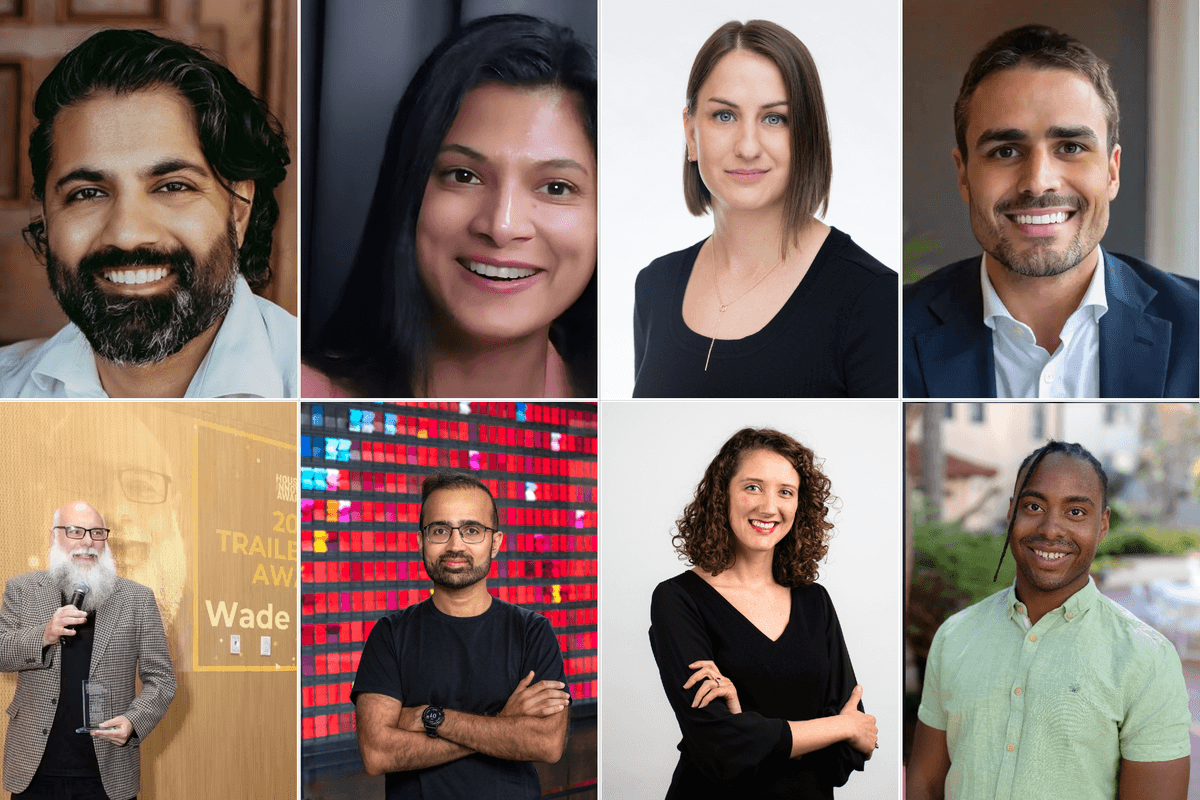
Calling all Houston innovators: The 2026 Houston Innovation Awards, presented by InnovationMap, return this fall to celebrate the best and brightest in the Houston innovation ecosystem right now.

We're asking you to nominate Houston's top innovators and startups for this year's awards. Nominations are open now through August 27 and can be made on behalf of yourself, your organization, and other influential leaders in the local innovation scene.

The annual awards program recognizes the most innovative individuals and companies in Houston across 10 prestigious categories.

This year's awards will honor the following categories:

  • Minority-founded Business, honoring an innovative startup founded or co-founded by BIPOC or LGBTQ+ representation.
  • Female-founded Business, honoring an innovative startup founded or co-founded by a woman.
  • Energy Transition Business, honoring an innovative startup providing a solution within renewables, climatetech, clean energy, alternative materials, circular economy, and beyond.
  • Health Tech Business, honoring an innovative startup within the health and medical technology sectors.
  • Deep Tech Business, honoring an innovative startup providing technology solutions based on substantial scientific or engineering challenges, including those in the AI, robotics, and space sectors.
  • Startup of the Year (People's Choice), honoring a startup celebrating a recent milestone or success. The winner will be selected by the community via an interactive voting experience.
  • Scaleup of the Year, honoring an innovative later-stage startup that's recently reached a significant milestone in company growth.
  • Incubator/Accelerator of the Year, honoring a local incubator or accelerator that is championing and fueling the growth of Houston startups.
  • Mentor of the Year, honoring an individual who dedicates their time and expertise to guide and support budding entrepreneurs.
  • Trailblazer, honoring an innovator who's made a lasting impact on the Houston innovation community.

You have three weeks to submit nominees, so don't delay — nominate today at this link or fill out the form below. Qualified nominees will receive a formal application to complete, which will be reviewed by our esteemed panel of judges to determine the finalists and winners.

More announcements about the 2026 Houston Innovation Awards are coming soon, including an introduction to this year's panel of judges. Interested in sponsoring the 2026 Houston Innovation Awards? Please contact sales@innovationmap.com.

KBR unveils name, branding for new government services spinoff

new identity

Houston-based KBR Inc.'s new Mission Technology Solutions unit officially has a name.

The previously announced government services spinoff, which until now has been nicknamed SpinCo, will now be known as Trinzic. The company said in a news release that the name was inspired by the word intrinsic, "reflecting essential, built-in capabilities and deep expertise operating in some of the world’s most complex and mission-critical environments."

New York-based firm Siegel + Gale developed the company's new brand. In addition to the new name, the company shares that its new logo will feature a stylized letter N, with brand colors in orange and gray.

“Trinzic represents who KBR Mission Tech has always been at our core: an essential partner bringing innovation and trusted execution to the missions that matter most,” Stuart Bradie, KBR President and CEO, said in the release. “The new Trinzic brand represents both our strong heritage and the tremendous opportunity ahead. Our teams aim to deliver solutions that address some of the world’s most critical national priorities every day, and this new identity captures the purpose-driven culture and mission focus that we expect to continue to define the company moving forward.”

KBR expects the spin-off to be completed in January 2027. At that time, Trinzic will operate as an independent, publicly traded company that will focus on technology and engineering services for the space and national security sectors.

KBR will remain a separate publicly traded company that will focus on sustainable technology and services to support the energy transition. KBR first announced the spinoff plans in October 2025.

Last month, KBR announced two C-suite hires for Trinzic, or what was then known as SpinCo.

Michael LaRouche will serve as Trinzic's inaugural president and CEO. LaRouche is currently CEO of Serco North America, a Virginia-based government services contractor. Nicholas Veasey, current CFO of Virginia-based MAG Aerospace, was named Trinzic's CFO. Bradie will remain chairman, president and CEO of KBR.

Rice lands $19 million grant to build AI-driven quantum materials lab

Quantum Boost

Rice University has received a $19.9 million award from the National Science Foundation to increase the production of quantum and electronic materials by using a combination of artificial intelligence, cloud-based labs and robotics.

The four-year project will create a remote and automated research platform that aims to accelerate discovery and the testing process, according to Rice. The aptly titled project, "Revolutionizing AI-Driven Autonomous Experimentation for Next-Generation Semiconductor Synthesis” (READINESS), will be led by Rice materials scientist Jun Lou, who serves as principal investigator. SUNY Polytechnic Institute and the University of Texas at Austin will collaborate with Rice on the project.

At first, READINESS will focus on two-dimensional materials, oxide semiconductors and diamond thin films that can support emerging technologies, like quantum devices.

READINESS is one of 20 projects selected for the NSF's Programmable Cloud Laboratories Test Bed initiative, which aims to provide more U.S. researchers with access to automated scientific tools.

Additionally, the project aligns with the Department of Energy’s Genesis Mission, which recently selected four projects from Houston universities and companies, including two from Rice. The national initiative aims to unite government, industry, academia and philanthropy to lead to breakthroughs in energy, scientific discovery and national security.

READINESS will offer more advanced lab systems remotely via a cloud interface to assist startups, other research groups, and companies that don’t have the resources, staffing or equipment to produce quantum materials and advanced electronics. READINESS will also allow researchers to simulate experiments via virtual experiments or digital twins before they conduct the physical experiment.

Rice says this will be particularly useful in quantum materials research, which is often met with barriers— like the adjustments of chemical composition, gas flow, pressure, and temperature—that can change the properties of a material.

“This project will give researchers access to capabilities that have traditionally been available only in a handful of laboratories,” David Sholl, executive vice president for research at Rice, said in a news release. “By lowering those barriers, READINESS can accelerate discovery and expand who can participate in cutting-edge materials research.”

Additionally, the project’s AI aspect will offer recommendations for new tests, recognize safety limits and analyze results to assist researchers.

“Responsible AI should complement researchers’ capabilities rather than replace their judgment,” Luay Nakhleh, Dean of Rice’s George R. Brown School of Engineering and Computing, added in the release. “READINESS embodies this principle by combining automated systems with transparency, safeguards and human oversight at critical decision points.”

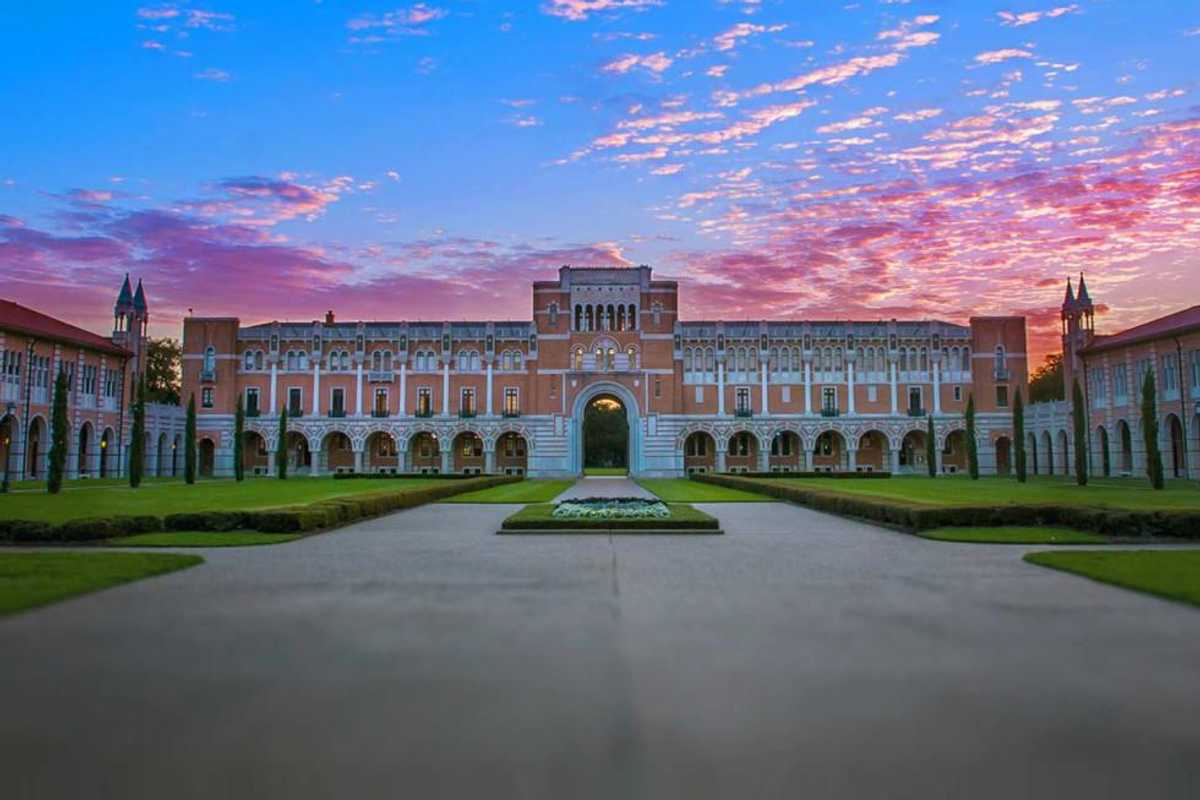
READINESS’ lab will be based out of Rice’s Ralph S. O’Connor Building for Engineering and Science. Partner sites will also contribute equipment, expertise and workforce development programs, according to Rice.

Ultimately, READINESS aims to elevate the speed, reliability and reproducibility of experiments, and to promote access to automated scientific tools for U.S. researchers.

“Our goal is to create a laboratory that researchers from across the country can use to produce advanced electronic and quantum materials on demand,” Lou added in the release. “By integrating robotics, AI and digital twins, we aim to learn from every experiment and shorten the pathway from scientific discovery to practical technology.”