


Photo courtesy of Chill Milkshake and Waffle Bar

Comcast Business (CB) powers businesses of every size with fast and reliable phone, mobile, internet, cybersecurity, and television services. Houston’s local CB team also stands behind entrepreneurs and small businesses, knowing they’re the heart of thriving communities: driving growth, sparking innovation, and creating jobs close to home.

Magnolia hometown favorite Chill Milkshake and Waffle Bar was the site of Comcast Business’ latest road trip to treat customers to a cool and refreshingly free treat, picking up the tab for several hours for nearly 200 customers.
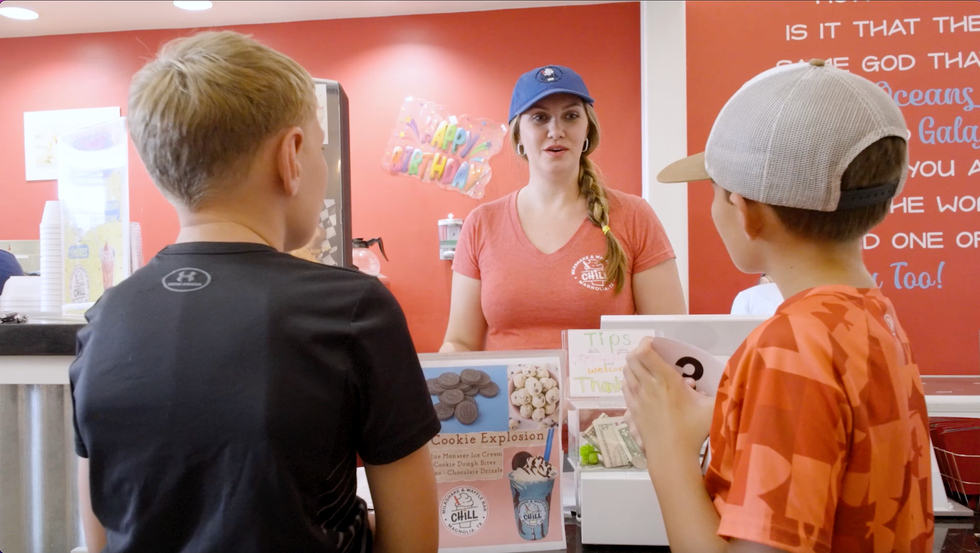
Chill Milkshake and Waffle Bar, Magnolia Surprise! Your order is free.Photo courtesy of Comcast Business

“We aren’t just about products and services, we are about building partnerships in our community and playing a supporting role, it means the world to us,” says Heather Orrico, vice president of Comcast Business in Texas.

Chill Milkshakes and Waffle Bar, located at 6606 FM 1488 Rd., Suite 110 in Magnolia, opened in December 2020 and has been a Comcast Business customer for the last two years.

Who would’ve thought you’d need WiFi to serve milkshakes and waffles? Technology runs almost every part of the business.

“In a world where people rarely carry cash anymore, we have to be able to process payments electronically and promptly. Otherwise, the day stops. Nobody wants that,” says owner Jeanie Rosett. “We count on WiFi to efficiently complete transactions and guest payments, process online orders, and keep our music lively.”

It's no surprise that Chill’s array of flavors and dedication to making the perfect milkshake (along with waffles and sandwiches) have earned them the title of best milkshake in Texas by USA Today, followed by ranking sixth-best milkshake in the nation by Travel + Leisure.

Chill’s family environment creates a space where everybody can hang out, or the kids can come on their own and parents feel they are safe. “Good WiFi keeps them connected,” says store manager Laura Mabery. “We also have people who stop in with their laptop, have a hotdog and a shake while continuing to work. We live in a world that needs to be connected! You can do that at Chill-Magnolia.”
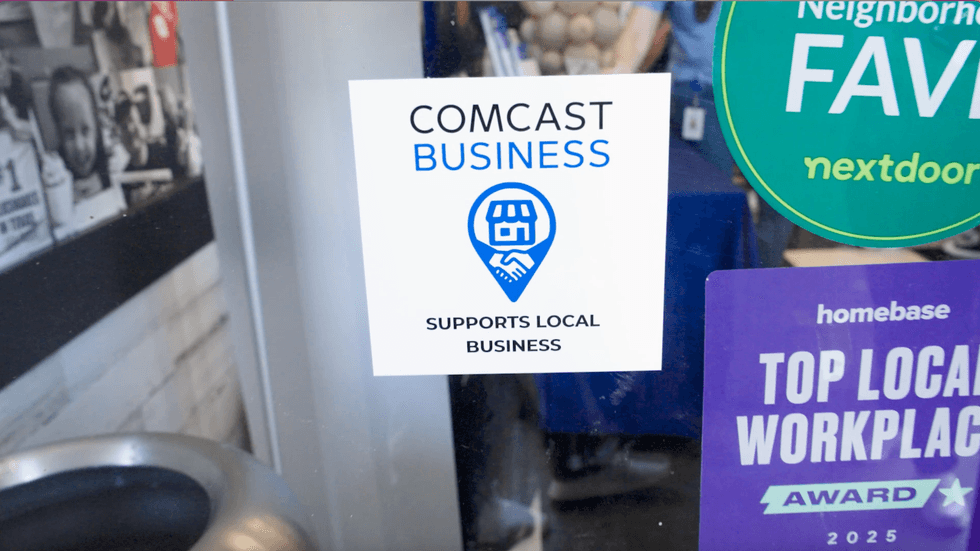
Comcast Business A sticker in the window lets everyone know.Photo courtesy of Comcast Business

While Mabery and Rosett appreciate the upgrade in customer service and reliability that was missing from their previous service provider, they were honored and pleasantly surprised to be selected for the recent Comcast Business “take over.”

“It's reassuring to know that our internet needs are taken care of, but that Comcast Business also supports us as a hometown commodity,” says Mabery. “And a free Chill milkshake...what's not to love about that?"
Ad Placement 300x100
Ad Placement 300x600

CultureMap Emails are Awesome

Houston researcher builds radar to make self-driving cars safer

eyes on the road

A Rice University researcher is giving autonomous vehicles an “extra set of eyes.”

Current autonomous vehicles (AVs) can have an incomplete view of their surroundings, and challenges like pedestrian movement, low-light conditions and adverse weather only compound these visibility limitations.

Kun Woo Cho, a postdoctoral researcher in the lab of Rice professor of electrical and computer engineering Ashutosh Sabharwal, has developed EyeDAR to help address such issues and enhance the vehicles’ sensing accuracy. Her research was supported in part by the National Science Foundation.

The EyeDAR is an orange-sized, low-power, millimeter-wave radar that could be placed at streetlights and intersections. Its design was inspired by that of the human eye. Researchers envision that the low-cost sensors could help ensure that AVs always pick up on emergent obstacles, even when the vehicles are not within proper range for their onboard sensors and when visibility is limited.

“Current automotive sensor systems like cameras and lidar struggle with poor visibility such as you would encounter due to rain or fog or in low-lighting conditions,” Cho said in a news release. “Radar, on the other hand, operates reliably in all weather and lighting conditions and can even see through obstacles.”

Signals from a typical radar system scatter when they encounter an obstacle. Some of the signal is reflected back to the source, but most of it is often lost. In the case of AVs, this means that "pedestrians emerging from behind large vehicles, cars creeping forward at intersections or cyclists approaching at odd angles can easily go unnoticed," according to Rice.

EyeDAR, however, works to capture lost radar reflections, determine their direction and report them back to the AV in a sequence of 0s and 1s.

“Like blinking Morse code,” Cho added. “EyeDAR is a talking sensor⎯it is a first instance of integrating radar sensing and communication functionality in a single design.”

After testing, EyeDAR was able to resolve target directions 200 times faster than conventional radar designs.

While EyeDAR currently targets risks associated with AVs, particularly in high-traffic urban areas, researchers also believe the technology behind it could complement artificial intelligence efforts and be integrated into robots, drones and wearable platforms.

“EyeDAR is an example of what I like to call ‘analog computing,’” Cho added in the release. “Over the past two decades, people have been focusing on the digital and software side of computation, and the analog, hardware side has been lagging behind. I want to explore this overlooked analog design space.”

12 winners named at CERAWeek clean tech pitch competition in Houston

top teams

Twelve teams from around the country, including several from Houston, took home top honors at this year's Energy Venture Day and Pitch Competition at CERAWeek.

The fast-paced event, held March 25, put on by Rice Alliance, Houston Energy Transition Initiative and TEX-E, invited 36 industry startups and five Texas-based student teams focused on driving efficiency and advancements in the energy transition to present 3.5-minute pitches before investors and industry partners during CERAWeek's Agora program.

The competition is a qualifying event for the Startup World Cup, where teams compete for a $1 million investment prize.

PolyJoule won in the Track C competition and was named the overall winner of the pitch event. The Boston-based company will go on to compete in the Startup World Cup held this fall in San Francisco.

PolyJoule was spun out of MIT and is developing conductive polymer battery technology for energy storage.

Rice University's Resonant Thermal Systems won the second-place prize and $15,000 in the student track, known as TEX-E. The team's STREED solution converts high-salinity water into fresh water while recovering valuable minerals.

Teams from the University of Texas won first and second place in the TEX-E competition, bringing home $25,000 and $10,000, respectively. The student winners were:

Companies that pitched in the three industry tracts competed for non-monetary awards. Here are the companies named "most-promising" by the judges:

Track A | Industrial Efficiency & Decarbonization

Track B | Advanced Manufacturing, Materials, & Other Advanced Technologies

  • First: Licube, based in Houston
  • Second: ZettaJoule, based in Houston and Maryland
  • Third: Oleo

Track C | Innovations for Traditional Energy, Electricity, & the Grid

The teams at this year's Energy Venture Day have collectively raised $707 million in funding, according to Rice. They represent six countries and 12 states. See the full list of companies and investor groups that participated here.

---

This article originally appeared on our sister site, EnergyCapitalHTX.com.