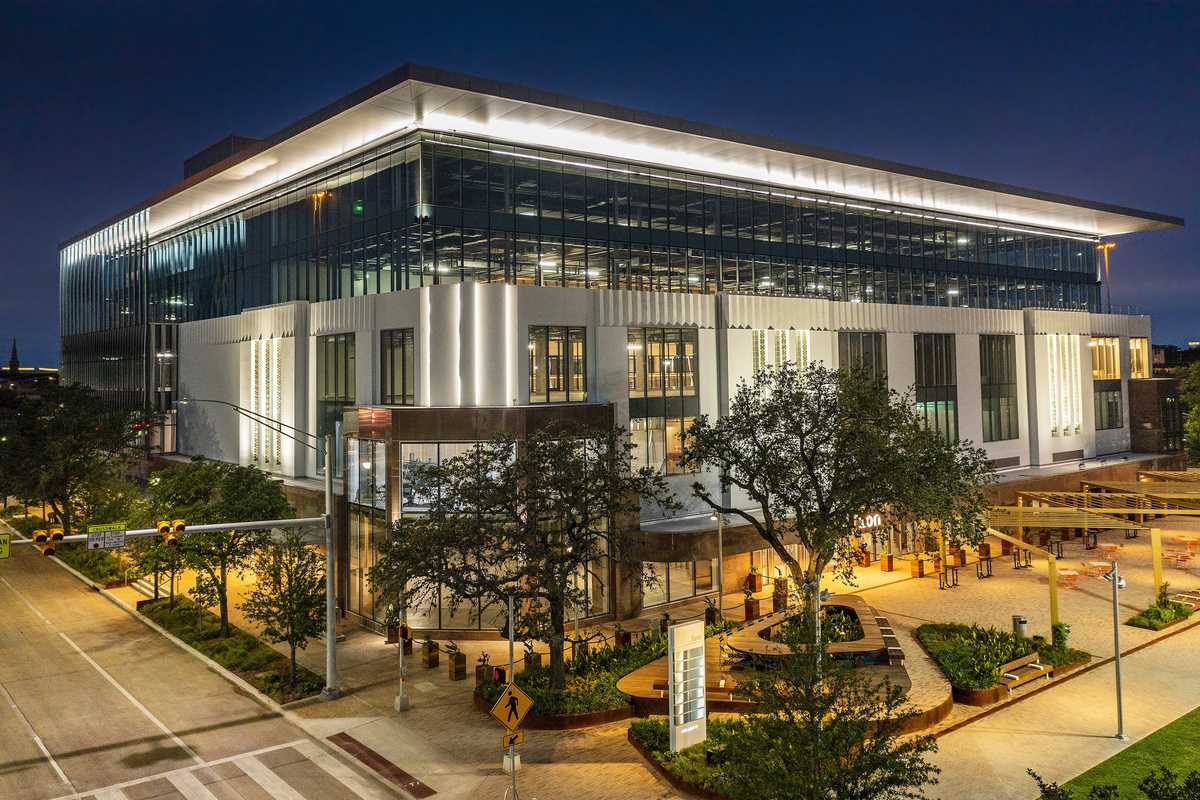
Don't miss these March events — from CERAWeek to the Ion's Mardi Gras block party. Image via houston.org

Editor's note: March is here, and that means the return of some of Houston’s signature innovation events, as well as insightful talks and a Mardi Gras block party. Here are the Houston business and innovation events you can't miss in March and how to register. Please note: this article might be updated to add more events.

March 5 – SheSpace Women’s Day Open House

Connect with like-minded women during a free day of coworking at SheSpace. And while you're there, take a break and enjoy a floral arranging class, complimentary breakfast, pop-up shops, happy hour and raffle prizes. Space is limited.

The event is Wednesday, March 5, from 9 a.m.–7 p.m. Click here to register.

March 5 — Science and the American Presidency

Hear from former presidential science advisors—Kelvin Droegemeier who served under President Trump, Neal Lane who served under President Clinton and Alondra Nelson who served under President Biden—as they discuss their experiences leading the White House Office of Science and Technology Policy and how science is used to address issues from climate change and public health to national security and economic competitiveness. An exhibit inside Baker Hall will complement the event. The Baker Institute Science and Technology Policy Program and Rice Innovation will host the talk.

This event is Wednesday, March 5, from 5:30–8 p.m. at James A. Baker Hall. Click here to register.

March 6 — Ion Block Party - Mardi Gras Edition 

Let the good times roll this week while networking with potential collaborators, mentors and investors at the Ion. Food and drink will be available while supplies last and the Ion will provide drink tickets for one free drink at Second Draught upon check-in.

This event is Thursday, March 6, from 4–7 p.m. at the Ion. Click here to register.

March 10-14 — CERAWeek 2025

The foremost annual gathering in the energy sector returns to Houston March 10-14, 2025. Themed "Moving Ahead: Energy strategies for a complex world," CERAWeek 2025 will focus on the challenges ahead for energy security, supply, and climate ambitions. More than 10,000 participants from over 2,050 companies across 80 countries will convene in Houston for this ambitious event. CERAWeek comprises three platforms: the Executive Conference, the Innovation Agora, and Partner Programs. We'll dive into comprehensive CERAWeek recommendations in future articles.

This event begins Monday, March 10. Click here to register.

March 11 — Energy Venture Day at the Ion

Preview pitches from 40-plus energy ventures competing at CERAWeek's Energy Venture Day and Pitch Competition, co-hosted by the Rice Alliance, Ion, HETI, and TEX-E. This free, fast-paced pitch event offers an alternative to the CERAWeek event, which requires an Agora pass.

This event is Tuesday, March 11, from 9 a.m.–2:30 p.m. Click here to register.

March 13 — Code4Y'allMeetup

Connect with fellow coders at Code4Y’all's meetup at the Ion. Andrew Baines, Founder of No Experience Jobs, will present "How I Built a Job Board to Help Entry-Level Tech Talent (And What I Learned)." Hear from Baines and learn lessons from job seekers.

This event is Thursday, March 13, from 6–7 p.m. Click here to register.

March 13-14 — Veterans Business Battle

Hear pitches from veterans and entrepreneurs as they compete for $5 million in investments at Rice Businesses' 11th annual Veterans Business Battle. This year, the two-day event will also feature a Small Business Expo which invites Houston-based, veteran-owned businesses to participate in education, networking, and the opportunity to showcase their business.

This event begins Thursday, March 13, at 11:30 a.m. at McNair Hall on Rice's campus. Click here to register.

March 17 — Women in Innovation 

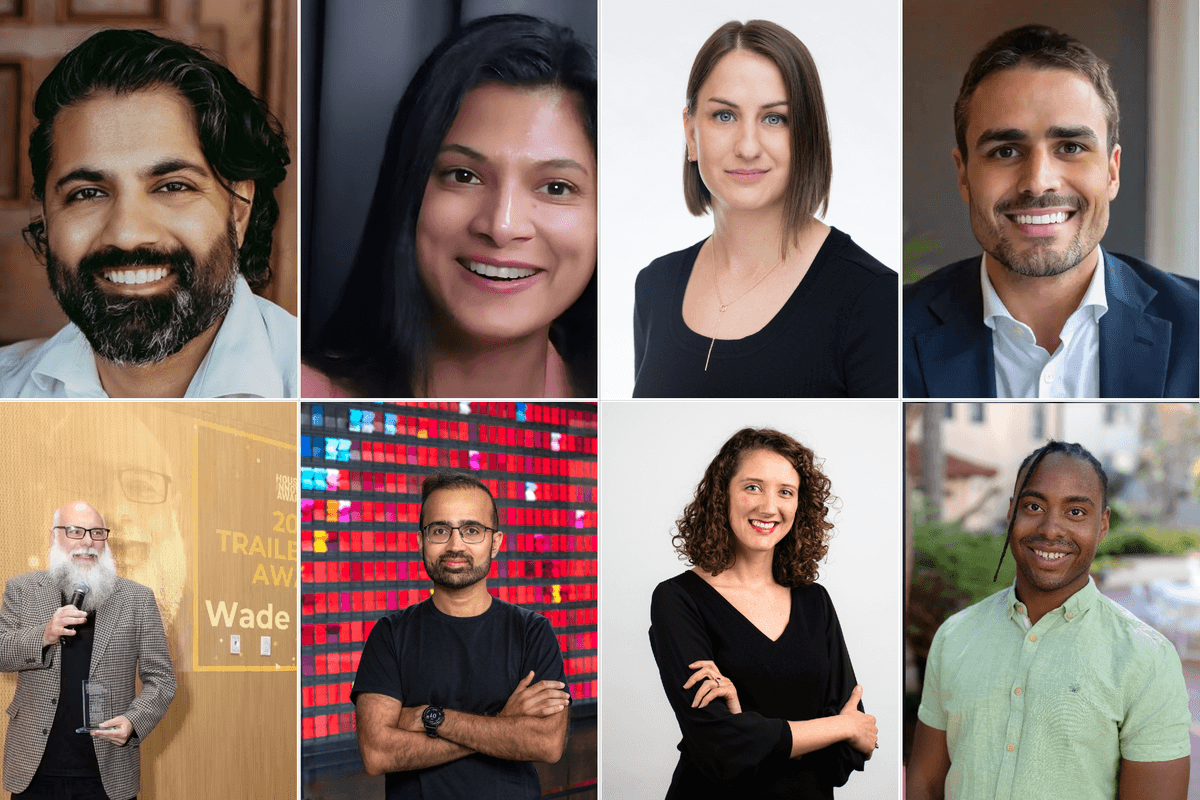
Celebrate Women's History Month with an engaging panel discussion hosted by the University of Houston's Division of Energy and Innovation. UH's Tanu Chatterji, Stacey Gorniak and Chrysa Latrick will discuss the achievements of trailblazing women across various industries, as well as share challenges and experiences. Lunch will be provided.

This event is Monday, March 17, from noon–1 p.m. at UH's Faculty Cafe. Find more information here.

March 24-28 — H-Town Roundup 2025

Celebrate innovation, entrepreneurship and collaboration this month during Houston Exponential's H-Town Roundup. During the fifth-annual free event series, previously known as Houston Tech Rodeo, attendees can expect insightful talks, workshops and networking events at venues across the city like the Ion, Greentown Labs, University of Houston and more.

This event begins Monday, March 24. See the full schedule of events here.

​March 27 — NASA Tech Talks

Every fourth Thursday of the month, NASA experts, including longtime engineer Montgomery Goforth, present on technology development challenges NASA’s Johnson Space Center and the larger aerospace community are facing and how they can be leveraged by Houston’s innovation community. Stick around after for drinks and networking at Second Draught.

This event is Thursday, March 27, from 6-7 p.m. at the Ion. Register here.

Ad Placement 300x100
Ad Placement 300x600

CultureMap Emails are Awesome

Houston unicorn closes $421M to fuel first phase of flagship energy project

Heating Up

Houston geothermal unicorn Fervo Energy has closed $421 million in non-recourse debt financing for the first phase of its flagship Cape Station project in Beaver County, Utah.

Fervo believes Cape Station can meet the needs of surging power demand from data centers, domestic manufacturing and an energy market aiming to use clean and reliable power. According to the company, Cape Station will begin delivering its first power to the grid this year and is expected to reach approximately 100 megwatts of operating capacity by early 2027. Fervo added that it plans to scale to 500 megawatts.

The $421 million financing package includes a $309 million construction-to-term loan, a $61 million tax credit bridge loan, and a $51 million letter of credit facility. The facilities will fund the remaining construction costs for the first phase of Cape Station, and will also support the project’s counterparty credit support requirements.

Coordinating lead arrangers include Barclays, BBVA, HSBC, MUFG, RBC and Société Générale, with additional participation from Bank of America, J.P. Morgan and Sumitomo Mitsui Trust Bank, Limited, New York Branch.

“As demand for firm, clean, affordable power accelerates, EGS (Enhanced Geothermal Systems) is set to become a core energy asset class for infrastructure lenders,” Sean Pollock, managing director, project Finance at RBC Capital Markets, said in a news release. “Fervo is pioneering this step change with Cape Station, a vital contribution to American energy security that RBC is proud to support.”

The oversubscribed financing marks Cape Station’s shift from early-stage and bridge funding to a long-term, non-recourse capital structure, according to the news release.

“Non-recourse financing has historically been considered out of reach for first-of-a-kind projects,” David Ulrey, CFO of Fervo Energy, said in a news release. “Cape Station disrupts that narrative. With proven oil and gas technology paired with AI-enabled drilling and exploration, robust commercial offtake, operational consistency, and an unrelenting focus on health and safety, we have shown that EGS is a highly bankable asset class.”

Fervo continues to be one of the top-funded startups in the Houston area. The company has raised about $1.5 billion prior to the latest $421 million. It also closed a $462 million Series E in December.

According to Axios Pro, Fervo filed for an IPO that would value the company between $2 billion and $3 billion in January.

---

This article first appeared on EnergyCapitalHTX.com.

Houston food giant Sysco to acquire competitor in $29 billion deal

Mergers & Acquisitions

Sysco, the nation's largest food distributor, will acquire supplier Restaurant Depot in a deal worth more than $29 billion.

The acquisition would create a closer link between Sysco and its customers that right now turn to Restaurant Depot for supplies needed quickly in an industry segment known as “cash-and-carry wholesale.”

Sysco, based in Houston, serves more than 700,000 restaurants, hospitals, schools, and hotels, supplying them with everything from butter and eggs to napkins. Those goods are typically acquired ahead of time based on how much traffic that restaurants typically see.

Restaurant Depot offers memberships to mom-and-pop restaurants and other businesses, giving them access to warehouses stocked with supplies for when they run short of what they've purchased from suppliers like Sysco.

It is a fast growing and high-margin segment that will likely mean thousands of restaurants will rely increasingly on Sysco for day-to-day needs.

Restaurant Depot shareholders will receive $21.6 billion in cash and 91.5 million Sysco shares. Based on Sysco’s closing share price of $81.80 as of March 27, 2026, the deal has an enterprise value of about $29.1 billion.

Restaurant Depot was founded in Brooklyn in 1976. The family-run business then known as Jetro Restaurant Depot, has become the nation's largest cash-and-carry wholesaler.

The boards of both companies have approved the acquisition, but it would still need regulatory approval.

Shares of Sysco Corp. tumbled 13% Monday to $71.26, an initial decline some industry analysts expected given the cost of the deal.

Houston researcher builds radar to make self-driving cars safer

eyes on the road

A Rice University researcher is giving autonomous vehicles an “extra set of eyes.”

Current autonomous vehicles (AVs) can have an incomplete view of their surroundings, and challenges like pedestrian movement, low-light conditions and adverse weather only compound these visibility limitations.

Kun Woo Cho, a postdoctoral researcher in the lab of Rice professor of electrical and computer engineering Ashutosh Sabharwal, has developed EyeDAR to help address such issues and enhance the vehicles’ sensing accuracy. Her research was supported in part by the National Science Foundation.

The EyeDAR is an orange-sized, low-power, millimeter-wave radar that could be placed at streetlights and intersections. Its design was inspired by that of the human eye. Researchers envision that the low-cost sensors could help ensure that AVs always pick up on emergent obstacles, even when the vehicles are not within proper range for their onboard sensors and when visibility is limited.

“Current automotive sensor systems like cameras and lidar struggle with poor visibility such as you would encounter due to rain or fog or in low-lighting conditions,” Cho said in a news release. “Radar, on the other hand, operates reliably in all weather and lighting conditions and can even see through obstacles.”

Signals from a typical radar system scatter when they encounter an obstacle. Some of the signal is reflected back to the source, but most of it is often lost. In the case of AVs, this means that "pedestrians emerging from behind large vehicles, cars creeping forward at intersections or cyclists approaching at odd angles can easily go unnoticed," according to Rice.

EyeDAR, however, works to capture lost radar reflections, determine their direction and report them back to the AV in a sequence of 0s and 1s.

“Like blinking Morse code,” Cho added. “EyeDAR is a talking sensor⎯it is a first instance of integrating radar sensing and communication functionality in a single design.”

After testing, EyeDAR was able to resolve target directions 200 times faster than conventional radar designs.

While EyeDAR currently targets risks associated with AVs, particularly in high-traffic urban areas, researchers also believe the technology behind it could complement artificial intelligence efforts and be integrated into robots, drones and wearable platforms.

“EyeDAR is an example of what I like to call ‘analog computing,’” Cho added in the release. “Over the past two decades, people have been focusing on the digital and software side of computation, and the analog, hardware side has been lagging behind. I want to explore this overlooked analog design space.”