
Here’s what not to miss in June and how to register. Photo via cleanpower.org

Editor's note: The FIFA World Cup comes to Houston this month, joined by major energy conferences and a lineup of fan-favorite, recurring events. Here’s what not to miss and how to register. Please note: this article may be updated to add more events.


June 1-4 — CLEANPOWER 2026 Conference and Exhibition

CLEANPOWER unites policymakers, experts, and corporate leaders to solve the challenges that none can solve alone. This must-attend, four-day conference is packed with cutting-edge discussions about wind, solar, storage, and transmission; dealmaking; networking; and fun.

This event begins June 1 at the George R. Brown Convention Center. Register here.

June 2 — Humans of Healthcare

Houston Methodist Center for Innovation will present its quarterly speaker series, Humans of Healthcare. The series will feature a panel of experts who will share about their career paths and discuss the nuances of the health care industry. This month's session will focus on today’s nursing landscape, the industry’s expectations of nurses and what career paths are possible in the field.

The event is Tuesday, June 2, from 5-6:30 p.m. at the Ion. Register here.

June 9 — Greentown Go Make Kickoff

Head to the Ion to celebrate the Greentown Go Make 2026 cohort. The open-innovation program with Shell Catalysts & Technologies and Technip Energies focuses on catalytic solutions for industrial decarbonization and the energy transition. Hear pitches from the founders and network with a select group of startups while enjoying food and drink.

This event is Tuesday, June 9, from 5:30-8 p.m. Register here.

June 9-10 — Texas Brain Economy Summit

The Center for Houston’s Future and UTMB are bringing the Texas Brain Economy Summit back to Houston this summer to continue to position the region as a global leader in brain health. Expect to hear from leaders of global institutions, including the World Economic Forum, U.S. Chamber of Commerce, McKinsey Health Institute, Global Brain Economy Initiative, Davos Alzheimer’s Collaborative, Business Collaborative for Brain Health (UsAgainstAlzheimer’s), Rice University, Memorial Hermann, MD Anderson and many others. Read InnovationMap's full preview of the event here.

This event begins Tuesday, June 9. Purchase tickets here.

June 10 — MIT Future of Healthcare Technology Forum

The MIT Club of South Texas will host an in-person forum to explore how innovation, government and policy are changing the healthcare industry. The event will feature MIT alumni and Houston healthcare leaders, including Dr. Tim Boone, dean of the Texas A&M School of Engineering Medicine; Cynthia Reinhart-King, chair of bioengineering at Rice University; Dr. Tony Lin, CEO and chairman emeritus of Kelsey-Seybold Clinic; and others.

This event is Wednesday, June 10, from 5:15-8:30 p.m. at the TAMU EnMed Building. Register here.

June 11 — Goals & Gigawatts: Houston Energy & Climate Week The Power of & Kickoff Party

Come watch the Mexico City FIFA opening match while celebrating energy and innovation at the Goals & Gigawatts Kickoff Party. The event will feature food, drinks, and a showcase on Houston Energy & Climate Week. Learn what to expect and how to get involved in HECW before closing the night with a DJ and karaoke.

This event is Thursday, June 11, from 1:30-6:30 p.m. Find more information here.

June 16-17 — Energy Projects Conference & Expo

The Energy Projects Conference & Expo (EPC Show) is the largest event in North America for professionals working at the heart of major energy projects. The essential event for engineering, construction, commissioning, operations and maintenance across multiple energy sectors brings together five leading conferences under one roof. Conference subjects span LNG exporting, hydrogen and ammonia, midstream, petrochem and refining, and sustainable aviation fuels.

This event begins June 16 at George R. Brown Convention Center. Register here.

June 25 – NASA Tech Talk

Every fourth Thursday of the month, NASA experts, including longtime engineer Montgomery Goforth, present on technology development challenges NASA’s Johnson Space Center and the larger aerospace community are facing, and how they can be leveraged by Houston’s innovation community. Stick around after for drinks and networking at Second Draught.

This event is Thursday, June 25, from 6-7 p.m. at the Ion. Register here.
Ad Placement 300x100
Ad Placement 300x600

CultureMap Emails are Awesome

Texas-based CrowdStrike to acquire Zscaler in mega $44 billion deal

Tech Talk

CrowdStrike is buying cloud security company Zscaler in an all-stock deal worth about $43.9 billion, the companies said November 23, in a major acquisition that combines two of the cybersecurity industry's biggest names.

The all-stock deal arrives after a string of high-profile hacks hit banks, supermarket fridges and crypto platforms, forcing the White House to shake up its cybersecurity leadership and raising alarms with officials around the world.

Cybersecurity experts have warned that artificial intelligence is being used to turbocharge cyberattacks by making it quicker and easier to find software flaws.

“Security used to be about keeping the adversary out," George Kurtz, CEO of Austin-based CrowdStrike, said in a statement. “Today, safety is required to let AI in.”

Reports of advanced artificial intelligence models deploying agents working on their own to break into other organizations have also raised alarms.

“In the AI era, Zero Trust security has become non-negotiable, and AI agents are rapidly becoming the new weakest link," Zscaler CEO Jay Chaudhry said.

CrowdStrike's focus has been on so-called endpoint security, with services to protect laptops, mobile devices and desktop computers. Santa Clara, California-based Zscaler, meanwhile, specializes in cloud-based network protection.

Zscaler shareholders will get 1.135 shares of CrowdStrike for each Zscaler share they own, under the deal's terms, which represent a 34% premium to Zscaler's closing price on Friday.

Shares of CrowdStrike tumbled more than 7% before the opening bell Monday. Shares of Zscaler rose 20%.

Existing CrowdStrike shareholders will own about 84.1% of the combined company, while existing Zscaler shareholders will hold the remaining 15.9%.

CrowdStrike and Zscaler were already working together in a partnership that included 2,000 shared customers. The deal would expand the combined company's market by more than $185 billion by 2029.

The transaction is expected to close in the second half of CrowdStrike's fiscal 2028 year, which begins in February.

Texas officially bids to make Houston home of U.S. Space Academy

space race

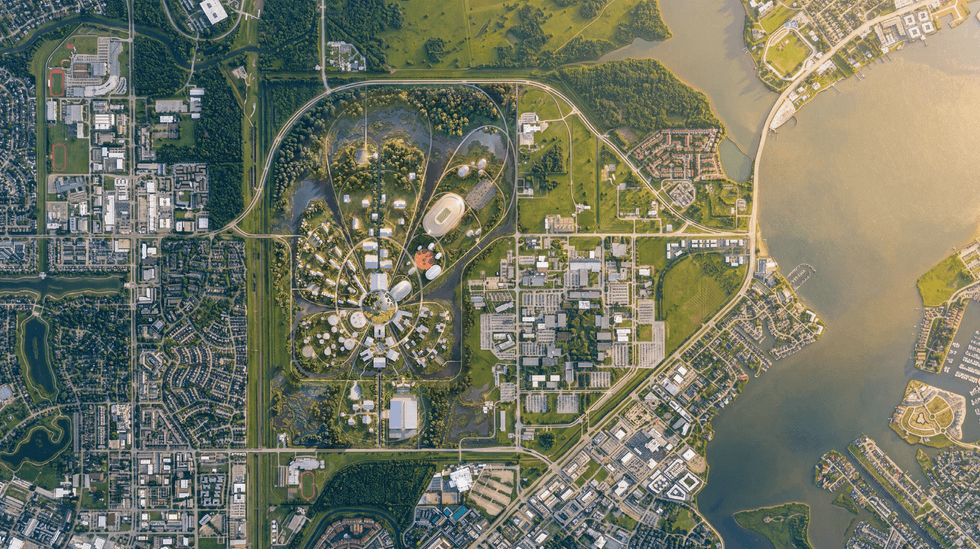
Texas has officially submitted its proposal to have Houston be the home of the United States Space Academy (USSA).

“Texas has long been home to critical training missions for our nation’s military and for advancing human spaceflight,” Gov. Greg Abbott said in a news release. “Our universities, research institutions, and commercial space industry give the United States an extraordinary foundation for educating its next generation of space leaders.”

The Texas Space Commission (TSC) confirmed Texas filed an official response to NASA’s Request for Information (RFI) for the new academy. NASA’s plans include groundbreaking on the USSA in 2027, with enrollment planned for the inaugural class of 300 students in 2028 and a goal of transitioning to a permanent campus by 2031.

For students, the learning model could “link classroom and laboratory instruction with supervised research and team projects in spacecraft engineering, robotics, and mission operations,” according to the release. The academy will help students prepare for careers in national security space, civil and commercial careers, and also teach them to apply what they’ve learned to real-world mission trials.

Currently, Houston hosts America’s Mission Control and astronaut corps at NASA’s Johnson Space Center. In addition to JSC, Houston also hosts major aerospace startups, such as Axiom Space, Venus Aerospace and Intuitive Machines, as well as the Houston Spaceport at Ellington Airport and the new Texas A&M University Space Institute.

Texas boasts aerospace, aviation and civilian-defense industries that employ 160,000 workers across 2,200 establishments, according to the Texas Economic Development & Tourism Office. In the Houston area alone, there are 500 companies in the aerospace and aviation space. Academically, the state also has universities that are innovating in aerospace, energy, tech and beyond, including Rice University, the University of Houston, the Texas A&M system and the University of Texas system.

In August, President Trump signed an executive order to create the Presidential Commission on the United States Space Academy, which will guide the establishment of the NASA-led federal effort. The following month, Abbot appointed the seven-member team to help bring the USSA to Texas, which is being led by State Rep. Greg Bonnen from Friendswood. The squad also includes Houston ties in former NASA astronaut and current senior vice president of Houston-based Intuitive Machines Jack Fischer, another former NASA astronaut and current director of the Texas A&M Space Institute Nancy Curry-Gregg (a UH graduate), and associate director of the Texas A&M Space Institute Robert Ambrose.

“Houston makes the most sense as the location for this incredible learning ecosystem to teach and train our next generation of spacefaring Americans,” Bonnen added in a news release. “Texas offers NASA the opportunity to educate students where human spaceflight is practiced every day. Nowhere else in the world can a student walk from their classroom to Mission Control or the Astronaut Corps Office, much less any of the many companies building hardware for payloads. NASA and the White House have an amazing proposal from Texas to consider.”

The state legislature will convene in January regarding the efforts of the Texas Space Commission.

“I fully support establishing the proposed United States Space Academy in the Lone Star State to prepare future generations for interstellar travel through rigorous education, world-class training, and commitment to public service, “ Governor-elect Gina Hinojosa added in a statement. “ As I am preparing to take office, my commitment is to carry this effort forward by implementing the well-developed proposal led by State Rep. Greg Bonnen with support from the Texas Space Commission to advance the Academy’s mission.”'

View a video of the plans proposed by the TSC here.

Renderings courtesy Texas Space Commission

Meta selects UTHealth for AI-powered medicine partnership

medical innovation

UTHealth Houston is one of five universities partnering with Meta to utilize AI models on various medical research capacities. Meta announced the partnership late last month.

“Through our collaboration with Meta, we aim to bring next-generation open-weight AI models into healthcare to accelerate scientific discovery and improve lives,” Xiaoqian Jiang, associate vice president for medical AI, chair of the Department of Health Data Science and Artificial Intelligence at McWilliams School of Biomedical Informatics at UTHealth Houston, said in a Meta news blog.

“Our goal is to make the benefits of AI more widely accessible, advancing research and care with rigorous privacy protection,” he added.

The partnership also comes with $250,000 for research funding from Meta. The other four universities in the partnership include Caltech, Ohio State University, Louisiana State University and Indiana University.

As the debate over widespread implementation of AI rages, one area where it has proved useful is in medical research. AI can be extremely useful in summarizing data from recent findings; analyzing large sets of patient or genetic information; and accelerating hypothetical models. With rigorous oversight and careful curation, AI models can significantly speed up medical research.

That’s where Meta's open-weight models like Muse Glimmer and Muse Spark come in. Jiang will be using Muse Glimmer for drug discovery and bioinformatics research, relying on Glimmer’s autonomous, multi-step agentic workflow paradigms to evaluate efficiency and accuracy across healthcare systems.

A major problem in modern healthcare is that patient data is often spread across multiple systems in different formats. Glimmer can streamline this, with Jiang focusing particularly on glioblastoma patients.

Glioblastoma is an aggressive form of brain tumor that has roughly a 10 percent survival rate over five years. Because it expands microscopically through the brain in fast-growing branches, tumors can spread quickly and require whole teams to treat. Analyzing data across providers and testing facilities in a rapid, concise way is essential to research and can be made far easier with AI modeling.

Projects from other selected universities focus on using AI for disease detection, improving surgical outcomes and making healthcare more accessible. Read about them here.