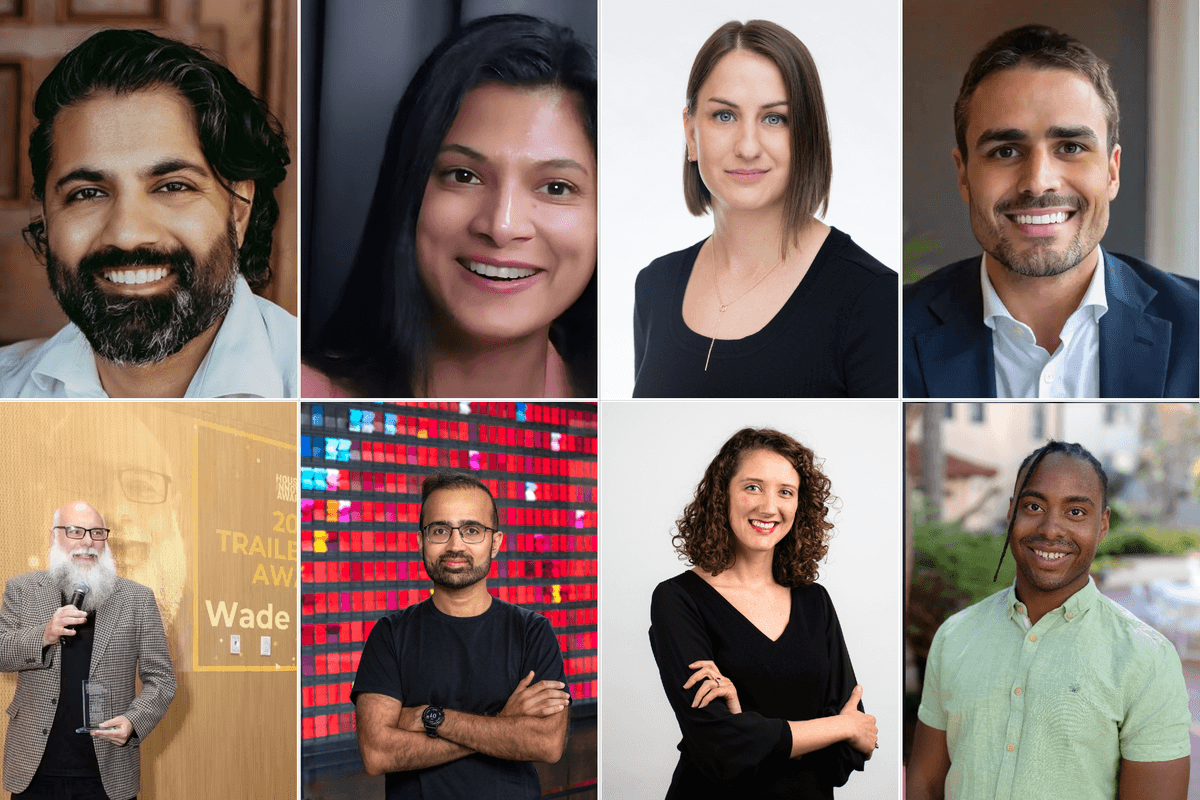
U.S. Secretary of the Interior Doug Burgum and U.S. Secretary of Energy Chris Wright will return to CERAWeek this month, along with dozens of energy executives and innovators. Photos courtesy CERAWeek.

CERAWeek returns this month, March 23-27, and will once again bring leading energy executives and government officials to Houston.

The 44th annual event will again host U.S. Secretary of Energy Chris Wright and U.S. Secretary of the Interior Doug Burgum.

Wright will participate in a plenary session focused on energy policy with Daniel Yergin, conference chair and vice chairman of S&P Global, on March 23. The following day, he will be featured in the Celebrating 10 Years of U.S. LNG reception with Jack Fusso, president and CEO, of Cheniere Energy. Both events are part of the Executive Conference track.

Burgum will participate in a leadership dialogue plenary session with Yergin on March 25. It is also part of the Executive Conference track. Burgum is also chairman of the National Energy Dominance Council, established by President Trump in 2025.

Top energy executives, many of whom are based in Houston, will also be featured prominently at the week-long event. Other speakers include:

  • Bill Blevins, director of grid coordination for the Electric Reliability Council of Texas (ERCOT)
  • Trevor Best, CEO of Syzygy Plasmonics
  • Marie Contour Carrere, executive director of the Rice Sustainability Institute
  • Ryan DuChanois, co-founder and CEO of Solidec
  • Reginald DesRoches, president of Rice University
  • Georgina Campbell Flatter, CEO of Greentown Labs
  • Jim Fitterling, chair and CEO of Dow Inc.
  • Vicki Hollub, CEO of Occidental Petroleum Corp.
  • Renu Katon, chancellor and president of the University of Houston
  • Ryan Lance, chairman and CEO of ConocoPhillips
  • Olivier Le Peuch, CEO of SLB
  • Patrick Pouyanné, chairman and CEO of TotalEnergies SE
  • Adrian Tromel, chief innovation officer and interim VP for Innovation at Rice University
  • Bobby Tudor, founder and CEO of Artemis Energy Partners and chairman of HETI
  • Wael Sawan, CEO of Shell plc
  • Lorenzo Simonelli, chairman and CEO of Baker Hughes Co.
  • Mike Wirth, chairman and CEO of Chevron Corp.
  • Jeremy Pitts, managing director of Activate Houston
  • And many others

This year, CERAWeek will center around the theme of Convergence and Competition: Energy, Technology and Geopolitics.

"Change is inescapable," Yergin said in a news release. "The global energy landscape—and to a large extent the entire global economy—is being fundamentally reshaped by the dual forces of convergence and competition. The race for AI is fusing the energy and technology industries like never before, bringing into sharp relief the need to align energy expansion with sustainable economic growth."

"Yet, the potential for collaboration and innovation is increasingly matched by the risk for collision and conflict in a world marked by geopolitical rivalry, tariffs and fragmented supply chains," he continued. "Reconciling an increasingly complex world with the growing demand for energy that is stable, secure and affordable is a complex reality that CERAWeek 2026 will tackle when global energy leaders meet in Houston."

Key topics of discussion will include:

  • Politics, Economics, Trade and Supply Chains
  • Policy, Regulations and Stakeholders
  • Oil Value Chain
  • Power, Renewables, Generation and Grid
  • AI and Digital
  • Minerals and Mining
  • Electrification Technologies
  • Investment and Financing
  • Chemicals and Materials
  • Business Strategies
  • The Innovation Ecosystem
  • Managing Emissions
  • Low-Carbon Fuels and Mobility
  • Climate and Sustainability
  • Workforce Strategy

The CERAWeek Innovation Agora track, which is the program's deeper dive into technology and innovation, will feature thought leadership on "AI, decarbonization, low carbon fuels, cybersecurity, hydrogen, nuclear, mining and minerals, mobility, automation and more," according to the release.

Agora Hubs will return this year and be divided into three zones: new energies, carbon and climate, and AI. The hubs will feature amphitheater-style sessions and panels. Agora Pods will allow energy startups to showcase their ideas in 20- to 30-minute presentations.

Additionally, CERAWeek will introduce a new program this year on Friday, March 27. Known as Look Forward, it will focus on economics, politics and technology.

See the full agenda for the week here. Find more information and register for the event here.

---

This article originally appeared on our sister site, EnergyCapitalHTX.com.

Ad Placement 300x100
Ad Placement 300x600

CultureMap Emails are Awesome

Houston lab explores how AI bots can help the elderly

AI for aging

The University of Houston’s Empathetic Lifespan AI & Robotics for Aging (ELARA) Lab is currently conducting research into how AI bots may be able to help the elderly live more social and independent lives through several ongoing initiatives.

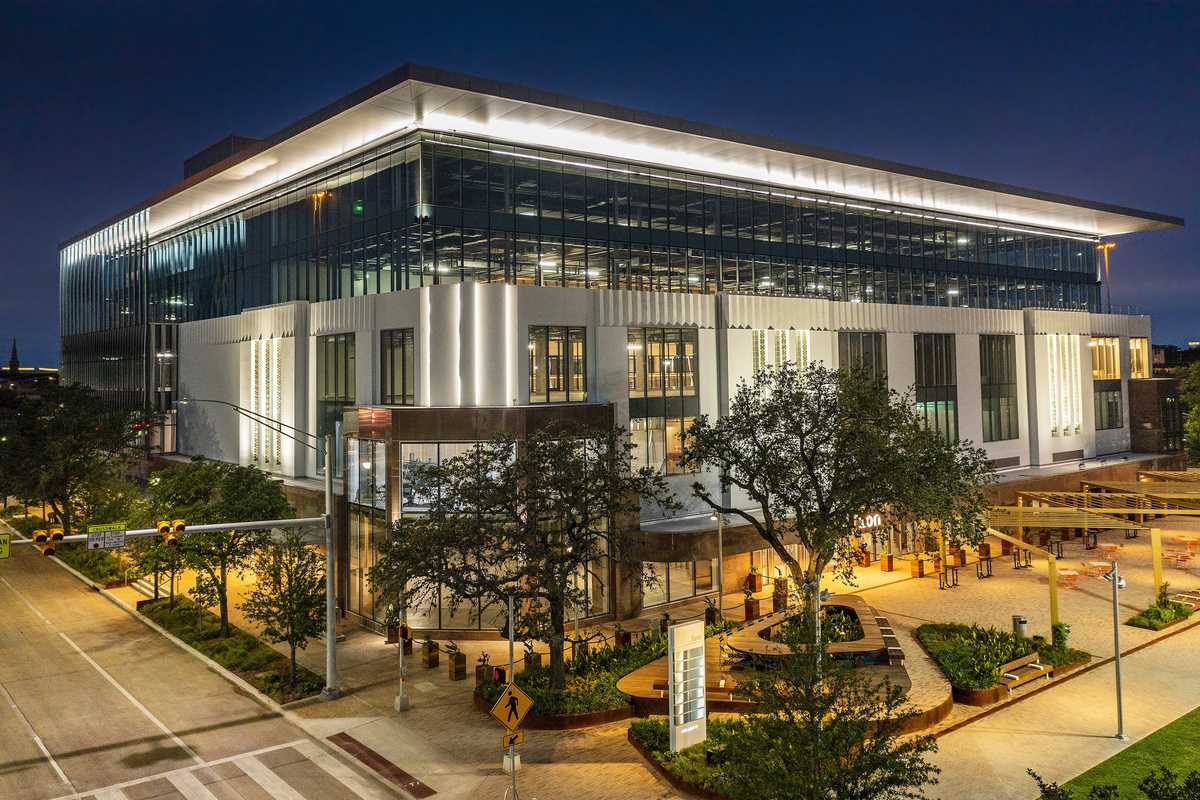
The lab officially launched last month as part of the Gerald D. Hines College of Architecture & Design under the leadership of Assistant Professor Chorong Park. Part of the lab’s mission is tackling ongoing problems with aging, such as dealing with disabilities and social isolation. Researchers’ current work is focused on designing a new AI companion bot specifically tailored to the needs of older people.

“We need to take all the needs of older adults seriously,” Park said in a news release. “They won't use the robot if they don't feel at ease or if they feel they are being constantly watched.”

The field testing of new AI bots in this population hopes to overcome several traditional obstacles in technology use among the elderly. A study by Park shows that many older people have a fear of overt surveillance when using advanced AI. There is also ageism to consider. Most new technologies are designed with younger and employed buyers in mind, not retirees who may need help remembering daily tasks or accessing important information.

“The more older adults are excluded from technology development, the worse those technology gaps will become,” Park said. “AI and the majority of technologies are created for younger people, so my research method integrates older adults directly into the design process.”

ELARA recently collaborated with the Mamie George Community Center in Richmond, Texas, to track seniors’ response to desktop AI bots like Emo and Cupboo. Researchers also had participants use air-dry modeling clay to create their ideal robotic companion.

While the eventual AI bot may be able to help the elderly feel less isolated and more supported, there are concerns to consider. A study published in the Asian Journal of Psychology charted the development of delusional thinking in a 72-year-old woman who became convinced the empathic-response bot was in love with her. The rise of “AI psychosis” has the potential to exacerbate mental health problems, particularly in socially isolated people, which a quarter of Americans over the age of 65 are.

ELARA’s research is focused on creating “pet-like” AI models with enhanced trust cues. If it can overcome the dangers of socially isolated people relying on AI for companionship, it could be a big step forward for independent aging.

SpaceX IPO set to be biggest ever and could make Elon Musk a trillionaire

IPO News

SpaceX says it plans to raise up to $75 billion when it goes public this month, setting the stage for the largest-ever stock market debut and putting Elon Musk on course to becoming the world's first trillionaire.

The company, formally known as Space Exploration Technologies Corp., said Wednesday it will sell 555.6 million shares at $135 a piece in an initial public offering. The estimated proceeds would easily top the $26 billion raised by oil giant Saudi Aramco in 2019. The offering would also give SpaceX a market value of $1.77 trillion. Only six companies in the S&P 500 are currently worth more, with Nvidia tops at $5.2 trillion.

Besides the size of the offering and the expected proceeds, SpaceX's amended prospectus updates details about how much control of the company Musk will have. As SpaceX's CEO, chief technical officer and chairman, Musk's voting power will come primarily through his ownership of 5.22 billion Class B shares, which give the holder 10 votes for every share held. According to the filing, Musk would have 82.4% of the voting power in the company.

Forbes currently values Musk's net worth at $826 billion and his stake in SpaceX at $542 billion. The estimated value of his SpaceX holdings was based on an overall value for the company of $1.25 trillion. Based on those numbers, a $1.77 trillion valuation for SpaceX would boost Musk's net worth by $223 billion, making him a trillionaire. However, much of Musk's worth is in stock that he has yet to cash in.

Even as it makes a bid for a blockbuster market debut, SpaceX is currently losing billions of dollars a year. The filing shows that the company lost $2.6 billion from operations last year on $18.7 billion in revenue, and the losses kept piling up at the start of this year, too.

Fantastical plans

Time will tell how SpaceX fares on the market. Musk's plans for the company are as fantastical as the money he hopes raise in the sale.

Colorful, even frightening in parts, the IPO document strikes a contrast with the typically dry, technical prose in IPO documents, detailing plans to use proceeds from the sale to help put men on the moon again and perhaps even Mars. In one section, it talks of a need to build "a permanent human colony" on the red planet with "at least one million inhabitants" as existential threats loom that could consign man to "the same fate as the dinosaurs."

Musk has almost equally ambitious plans for his other publicly traded company, Tesla. His goal is to transform the maker of electric vehicles into a producer of robotaxis and humanoid robots. Dan Ives of Wedbush Securities wrote in a research note that he expects Tesla and SpaceX to merge next year.

AI plays a key role

Key to the success of both companies — and any merged entity — is artificial intelligence. In its IPO filing, SpaceX says it sees potential revenue from AI of up to $26.5 trillion. But that depends on another lofty Musk ambition — putting data centers in space, which is not technologically possible at the moment.

Transforming his space company into a primarily AI-focused company will be a challenge for Musk, who started xAI in 2023 with 11 other co-founders who have all since left. Some were recruited away by rivals.

Its main AI product, the chatbot Grok, is "less impressive than anything that we see from any other major player in the space, whether that's OpenAI, or Anthropic, or (Google's) Gemini," said IDC analyst Arnal Dayaratna.

Dayaratna said that doesn't mean SpaceX doesn't have potential as a major AI player, thanks in part to its computing partnership with Anthropic and Musk's recent deal that gave SpaceX the rights to buy AI coding tool Cursor for $60 billion later this year. Folding in Cursor's capabilities would give SpaceX access to the coveted business customers now using Anthropic's Claude or OpenAI's ChatGPT.

SpaceX plans to use the net proceeds from the IPO to fund the expansion of infrastructure for its AI and rocket businesses, and to beef up the constellation of satellites that power Starlink Mobile, among other investments.

The company plans to list on the Nasdaq under the symbol "SPCX" and could begin trading as soon as the end of next week.

And SpaceX isn't the only colossal market debut investors are now bracing for. Earlier this week, Anthropic submitted a confidential filing with the U.S. Securities and Exchange Commission to officially start its own IPO clock.

OpenAI has not yet reported filing the initial SEC paperwork, but an IPO from the ChatGPT maker is widely expected.

"This listing represents the first major test for public markets after years of muted IPO activity with SpaceX paving the way for AI giants Anthropic and OpenAI to follow soon after," Ives wrote.

___

Associated Press Technology Writer Matt O'Brien contributed.

New UH survey reveals concerns over AI data center growth in Houston

data findings

A new report out of the University of Houston shows that area residents remain wary of the long-term effects of operating data centers.

The recent survey from the University of Houston’s latest SPACE City Panel, conducted by the Center for Public Policy at the Hobby School of Public Affairs, shows that while 85 percent of Houston-area residents use AI, nearly 63 percent oppose the construction of AI data centers within 1 mile of their homes.

Respondents’ concerns centered around data centers’ high energy demand and the area’s power grid reliability. According to the survey, 32 percent of residents who oppose local data center projects would be more likely to support the centers if they relied on renewable energy over fossil fuels.

“Respondents understand that AI can bring economic and educational benefits, but they are also concerned about the physical infrastructure needed to fuel AI, especially data centers,” Soran Mohtadi, post-doctoral fellow at the Hobby School and a researcher on the report, said in a news release. “This physical infrastructure demands more electricity and water, leading to environmental impacts.”

Experts estimate that 6.5 gigawatts of data center capacity will be added to the Texas grid by 2030. And Houston’s data center capacity is predicted to more than double by 2028.

The Electric Reliability Council of Texas also projects electricity demand could reach 218 gigawatts by 2031, which would be more than double the record peak set in August 2023. Data centers are expected to account for 86 gigawatts of that new demand.

Survey respondents also said they are concerned about the state's future water supply, given the large amounts of water that data centers need to stay cool.

In terms of who’s responsible for that issue, 57.6 percent of respondents said they put the onus on Texas lawmakers, while 31.5 percent say tech companies should be responsible.

Additionally, more than 75 percent of respondents believed that data center developers and technology companies—not residents—should bear the cost of infrastructure upgrades to support data centers.

“Every decision legislators make has implications on residents’ everyday lives and local infrastructure now and in the future,” Maria P. Perez Arguelles, lead researcher on the report and research assistant professor at the Hobby School, added in the news release. “This issue is going to become more important in years to come, so this is just the beginning.”

Read the full report here.