Two climatetech startups are joining a new program from Greentown Labs and Browning the Green Space. Photo via greentownlabs.com

A new accelerator focused on BIPOC-led energy tech startups named its inaugural cohort, and two Houston-based companies made the cut.

The new program — Advancing Climatetech and Clean Energy Leaders Program, or ACCEL — is an initiative led by Greentown Labs and Browning the Green Space that was originally announced in November. The program was established to provide access to funding, networking connections, resources, and more to BIPOC-led startups working on a climatetech solution.

The program is supported by the Massachusetts Clean Energy Center, or MassCEC, a state economic development agency, and the Boston-based Barr Foundation, a Boston-based foundation. Each of the selected startups will receive a $25,000 grant, incubation at Greentown, mentorship from Greentown and BGS’s networks, and access to a curriculum curated by VentureWell, a nonprofit with deep expertise in the climatetech space.

“We are thrilled and eager to support this exceptional cohort of startup leaders as they tackle some of our world’s biggest climate challenges,” says Kevin T. Taylor, CFO and interim CEO at Greentown Labs, in a news release. “Through partnerships with Browning the Green Space and VentureWell—and with the support from MassCEC and the Barr Foundation—we look forward to offering intentional mentorship, training, and networking opportunities to help these BIPOC-led startups thrive.”

The co-located program will host startups at each of the two Greentown Labs locations in the Houston and Boston areas. The inaugural cohort includes:

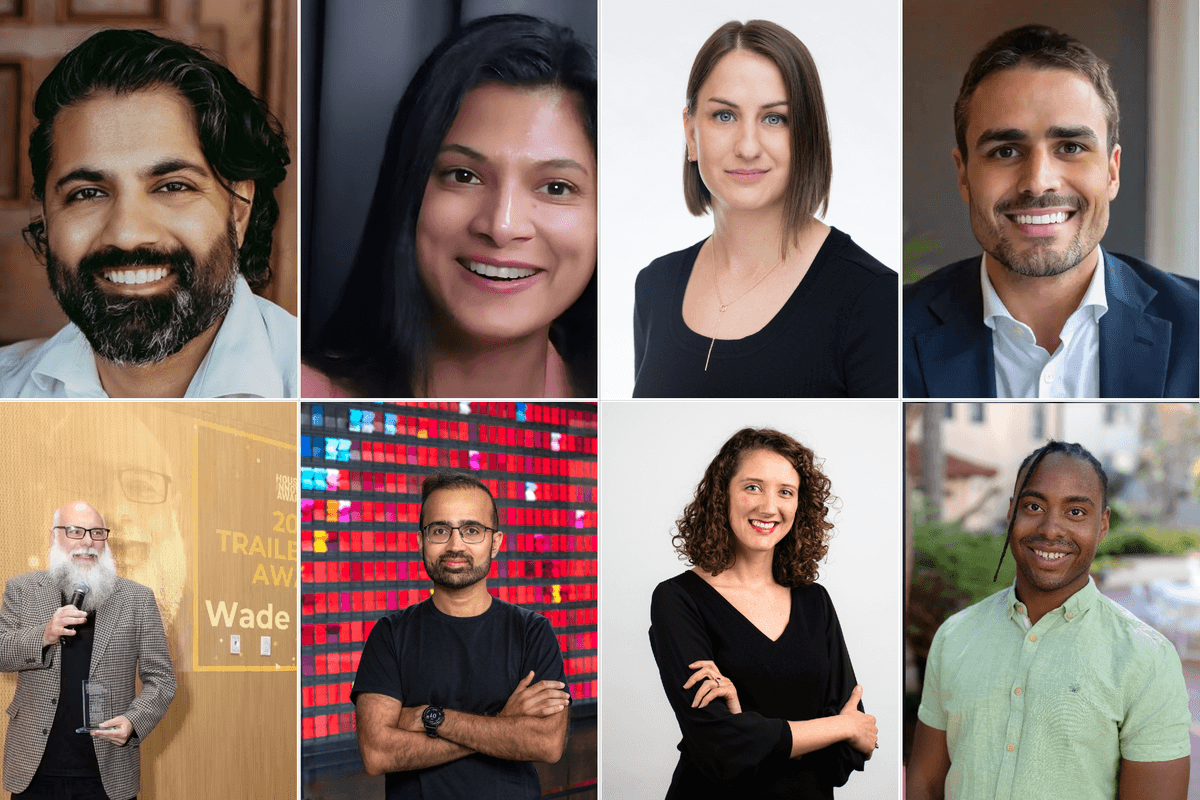
  • Active Surfaces, based in Salem, Massachusetts, unlocks dual land-use applications through its ultra-thin-film, flexible solar technology. Its co-founders are Shivam Bhakta and Richard Swartwout.
  • Houston-based DrinKicks is a sneaker-themed consumer-products company that is focused on repurposing food waste and recycled materials into sustainable goods such as shoes, sports equipment, and clothing, all while educating consumers on the power of the circular economy. The company was co-founded by Kristeen Reynolds, Michael Fletcher, and Kristen Lee.
  • EarthBond, headquartered in Cambridge, Massachusetts, leverages group financing and carbon accounting to lower costs and risk in the energy transition of Nigeria's $14B fuel-based, off-grid generator market. Chidalu Onyenso founded the business.
  • Amherst, Massachusetts-based florrent is a bio-based materials and energy storage company providing solutions to address critical bottlenecks to the global decarbonization and electrification of utilities, transportation, and buildings. Its co-founders are Jose LaSalle, Joe Hastry, and Alexander Nichols. florrent is a current Greentown member.
  • frakktal, founded in Houston by Jhana Porter, is a B2B materials company developing bio-based polymer processes for the replacement of fossil-fuel-based feedstocks across industries. The company is a current Greentown member.
  • SpadXTech from Worcester, Massachusetts, is contributing to the reduction of CO2 emissions impacting several industries such as packaging, textiles, transportation, filtration, and construction through the manufacturing of its core and versatile material platform technology. Its co-founders are Lina M. González and Connor Crawford.

“We are inspired by and excited to support the wealth of innovation and fresh perspectives on climate solutions offered by our inaugural ACCEL cohort of startup leaders,” said Kerry Bowie, executive director and president of Browning the Green Space. “Through this partnership with Greentown Labs we are able to build critical support infrastructure for entrepreneurs of color and accelerate the equitable development and distribution of climate solutions across all communities.”

The program will officially kick off at an event on February 23 at Greentown’s Boston location.

Ad Placement 300x100
Ad Placement 300x600

CultureMap Emails are Awesome

Persona AI teams with Under Armour to protect next-gen robots

Future Fabrics

Houston-based Persona AI has cemented a partnership with sportswear manufacturer Under Armour to provide materials to protect future robots operating in dangerous conditions.

Through the partnership, Persona AI and Under Armour will launch a research initiative to explore whether advanced performance textiles can improve the durability and resilience of humanoid robots operating in harsh industrial environments.

“This is an opportunity to apply our innovation expertise in a new context,” Kyle Blakely, senior vice president of innovation, design studio, development, and testing at Under Armour, said in a news release. “Robotics presents a fascinating new design challenge, and we aim to play a leading role in shaping performance solutions for these environments. As humanoid systems take on more physically demanding roles, we see real potential to create new market opportunities, and we’re exploring how concepts like thermal management, abrasion resistance, and flexibility translate beyond sport."

Founded in June 2024 by former NASA engineer Nicolaus Radford and former Figure AI CTO Jerry Pratt, Persona AI has quickly risen to be a top name in the development of humanoid robotic systems. Radford previously was the principal investigator at NASA’s Dexterous Robotics Lab before becoming CEO of Nauticus Robotics. While at NASA, he was the chief engineer behind Robotnaut 2, the first humanoid robot on the International Space Station.

Persona AI raised $25 million in preseed funding to develop humanoid robots designed to operate in shipyards and other industrial sites. The company has inked partnerships with HD Korea Shipbuilding & Offshore Engineering, HD Hyundai Robotic, and Korean manufacturing firm Vazil Company to create and deploy humanoid robots for complex welding tasks in shipyards.

These environments often involve exposure to dangerous chemicals, harsh weather and other potential hazards. The partnership between Persona AI and Under Armour will combine the clothing manufacturer’s development of resilient but flexible materials with the humanoid design of Persona AI.

Though best known for its sportswear, Under Armour produces a wide range of specialist fabrics and clothing, including an entire line used by the U.S. military. The company’s track record of developing high-performance fabrics built to withstand war zones and desert conditions makes it a strong partner in Persona AI’s latest endeavor.

“We chose to work with Under Armour because of their track record of innovation with these types of performance materials,” Radford said. “As we develop humanoids for intense and potentially hazardous environments, this collaboration helps us understand how advanced materials can enhance long-term reliability, thereby informing solutions to better protect workers in the field.”

Global summit spotlights Houston's growing role in brain health, innovation

where to be

The Center for Houston’s Future and UTMB are bringing the Texas Brain Economy Summit back to Houston this summer to continue to position the region as a global leader in brain health.

The summit, held June 9-10 at the Texas Medical Center's Helix Park, will bring together more than 500 executives, researchers, policymakers and innovators from around the world to discuss the global brain economy.

Attendees can expect to hear from leaders of global institutions, including the World Economic Forum, U.S. Chamber of Commerce, McKinsey Health Institute, Global Brain Economy Initiative, Davos Alzheimer’s Collaborative, Business Collaborative for Brain Health (UsAgainstAlzheimer’s), Rice University, Memorial Hermann, MD Anderson and many others.

Day 1 of the conference will focus on "Enabling Human Flourishing & Economic Growth." Day 2 will focus on "Scaling Innovation & AI Solutions in the Brain Economy."

Keynotes will be delivered by:

  • Lexi Branson, vice president of health policy at the U.S. Chamber of Commerce
  • Kana Enomoto, director of the McKinsey Health Institute
  • Megan Henshall, founder of Google Experience Institute (Xi)
  • Ryan Howard, co-lead of Google Experience Institute (Xi)
  • Dr. Hani Jneid, John Sealy Distinguished Centennial Chair in Cardiology and vice president of cardiovascular operations at UTMB
  • Steve Kean, president and CEO of the Greater Houston Partnership
  • Dan Patrick, Lieutenant Governor of Texas
  • Jochen Reiser, president of UTMB
  • Thomas Seitz, senior partner of the McKinsey Health Institute

Other significant speakers include:

  • Rym Ayadi, founder and president of the Euro-Mediterranean Economists Association (EMEA) and co-founder of the Brain Capital Alliance
  • Arthur Evans, CEO and executive vice president of the American Psychological Association
  • David Gow, president and CEO of the Center for Houston’s Future (Gow is the founder and chairman of Gow Media, InnovationMap's parent company)
  • Bill McKeon, president and CEO of the Texas Medical Center
  • Jeff Merritt, head of urban transformation at the World Economic Forum
  • Joanne Pike, president and CEO of the Alzheimer’s Association
  • George Vradenburg, founding chairman of Davos Alzheimer’s Collaborative and co-founder, chairman and CEO of Us Against Alzheimer’s

The event is supported through Project Metis, which was launched by the Center for Houston’s Future last year. Led by Rice Brain Institute, The University of Texas Medical Branch's Moody Brain Health Institute and Memorial Hermann’s comprehensive neurology care department, the initiative aims to advance the understanding, prevention and treatment of the brain. It was developed on the heels of Texas voters overwhelmingly approving a ballot measure to launch the $3 billion, state-funded Dementia Prevention and Research Institute of Texas (DPRIT).

“Texas voters, by approving the state-funded Dementia Prevention Institute, have shown a strong commitment to brain health, as scientific advances continue daily. [Project Metis] aims to harness the Houston region’s unique strengths: its concentration of leading medical and academic institutions, a vibrant innovation ecosystem, and a history of entrepreneurial leadership in health and life sciences,” Gow said at the time.

Learn more about The Texas Brain Economy Summit and purchase tickets here.

Texas solar power poised to surpass coal for the first time in 2026

Powering Texas

Solar power promises to shine even brighter in Texas this year.

A new forecast from the U.S. Energy Information Administration (EIA) indicates that for the first time, annual power generation from utility-scale solar will surpass annual power generation from coal across the territory covered by the Electric Reliability Council of Texas (ERCOT).

Solar generation is expected to reach 78 billion kilowatt-hours in 2026 in the ERCOT grid, compared with 60 billion kilowatt-hours for coal, the EIA forecast says. The ERCOT grid supplies power to about 90 percent of Texas, including the Houston area.

“Utility-scale solar generation has been increasing steadily in ERCOT as solar capacity additions help meet rapid electricity demand growth,” the forecast says.

Although natural gas remains the dominant source of electricity generation in ERCOT, accounting for an average 44 percent of electricity generation from 2021 to 2025, solar’s share of the generation mix rose from four percent to 12 percent. During the same period, coal’s share dropped from 19 percent to 13 percent.

EIA predicts about 40 percent of U.S. solar capacity, or 14 billion kilowatt-hours, added in 2026 will come from Texas.

Although EIA expects annual solar generation to exceed annual coal generation in 2026, solar surpassed coal in ERCOT on a monthly basis for the first time in March 2025, when solar generation totaled 4.33 billion kilowatt-hours and coal’s totaled 4.16 billion kilowatt-hours. Solar generation continued to exceed that of coal until August of that year.

“In 2026, we estimate that solar exceeded coal for the first time in March, and we forecast generation from solar installations in ERCOT will continue to exceed that from coal until December, when coal generation exceeds solar,” says EIA. “We expect solar generation to exceed that of coal for every month in 2027 except January and December.”

For 2027, EIA forecasts annual solar generation of 99 billion kilowatt-hours in the ERCOT grid, compared with 66 billion kilowatt-hours of annual coal generation.

In April, ERCOT projected almost 368 billion kilowatt-hours of demand in ERCOT’s territory by 2032. ERCOT’s all-time peak demand hit 85.5 billion kilowatt-hours in August 2023.

“Texas is experiencing exceptional growth and development, which is reshaping how large load demand is identified, verified, and incorporated into long-term planning,” ERCOT President and CEO Pablo Vegas said. “As a result of a changing landscape, we believe this forecast to be higher than expected … load growth.”

---

This article first appeared on EnergyCapitalHTX.com.