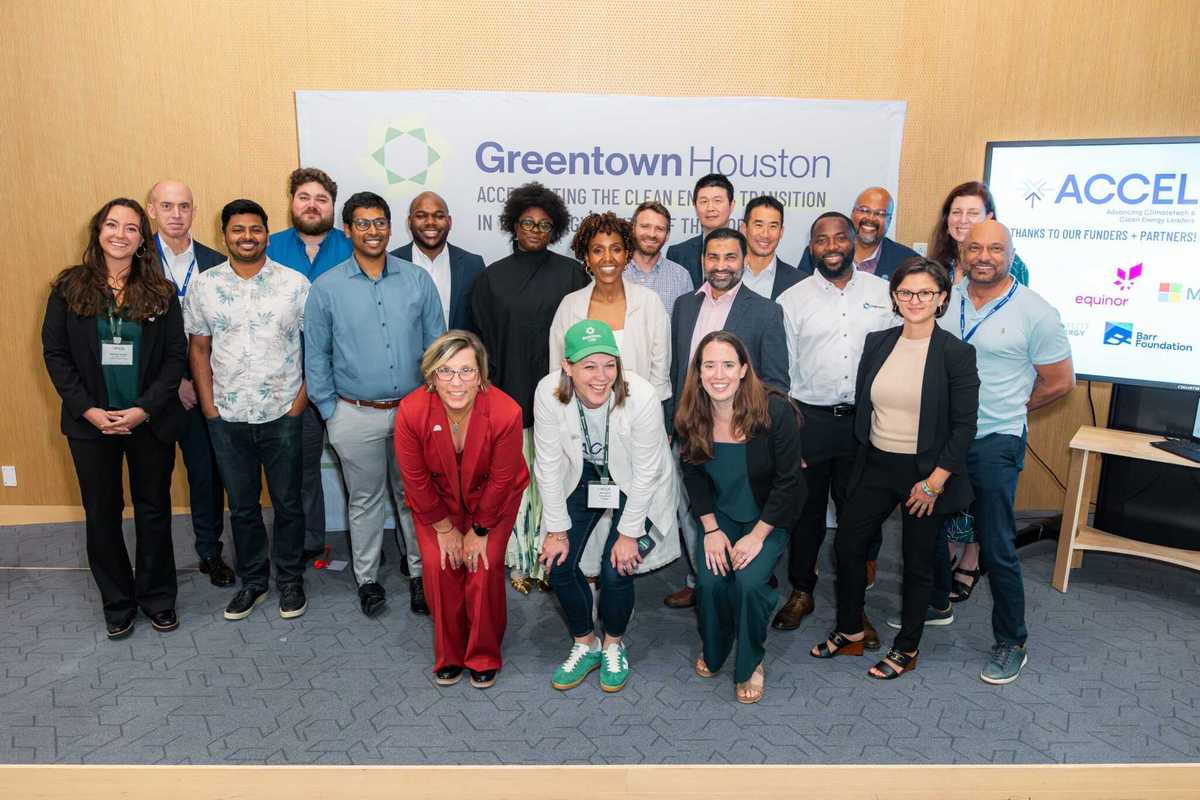
Quantum Power Systems took home the top TEX-E prize at this year's Energy Venture Day pitch competition during CERAWeek. Photo via LinkedIn

Twelve teams from around the country, including several from Houston, took home top honors at this year's Energy Venture Day and Pitch Competition at CERAWeek.

The fast-paced event, held March 25, put on by Rice Alliance, Houston Energy Transition Initiative and TEX-E, invited 36 industry startups and five Texas-based student teams focused on driving efficiency and advancements in the energy transition to present 3.5-minute pitches before investors and industry partners during CERAWeek's Agora program.

The competition is a qualifying event for the Startup World Cup, where teams compete for a $1 million investment prize.

PolyJoule won in the Track C competition and was named the overall winner of the pitch event. The Boston-based company will go on to compete in the Startup World Cup held this fall in San Francisco.

PolyJoule was spun out of MIT and is developing conductive polymer battery technology for energy storage.

Rice University's Resonant Thermal Systems won the second-place prize and $15,000 in the student track, known as TEX-E. The team's STREED solution converts high-salinity water into fresh water while recovering valuable minerals.

Teams from the University of Texas won first and second place in the TEX-E competition, bringing home $25,000 and $10,000, respectively. The student winners were:

Companies that pitched in the three industry tracts competed for non-monetary awards. Here are the companies named "most-promising" by the judges:

Track A | Industrial Efficiency & Decarbonization

Track B | Advanced Manufacturing, Materials, & Other Advanced Technologies

  • First: Licube, based in Houston
  • Second: ZettaJoule, based in Houston and Maryland
  • Third: Oleo

Track C | Innovations for Traditional Energy, Electricity, & the Grid

The teams at this year's Energy Venture Day have collectively raised $707 million in funding, according to Rice. They represent six countries and 12 states. See the full list of companies and investor groups that participated here.

---

This article originally appeared on our sister site, EnergyCapitalHTX.com.
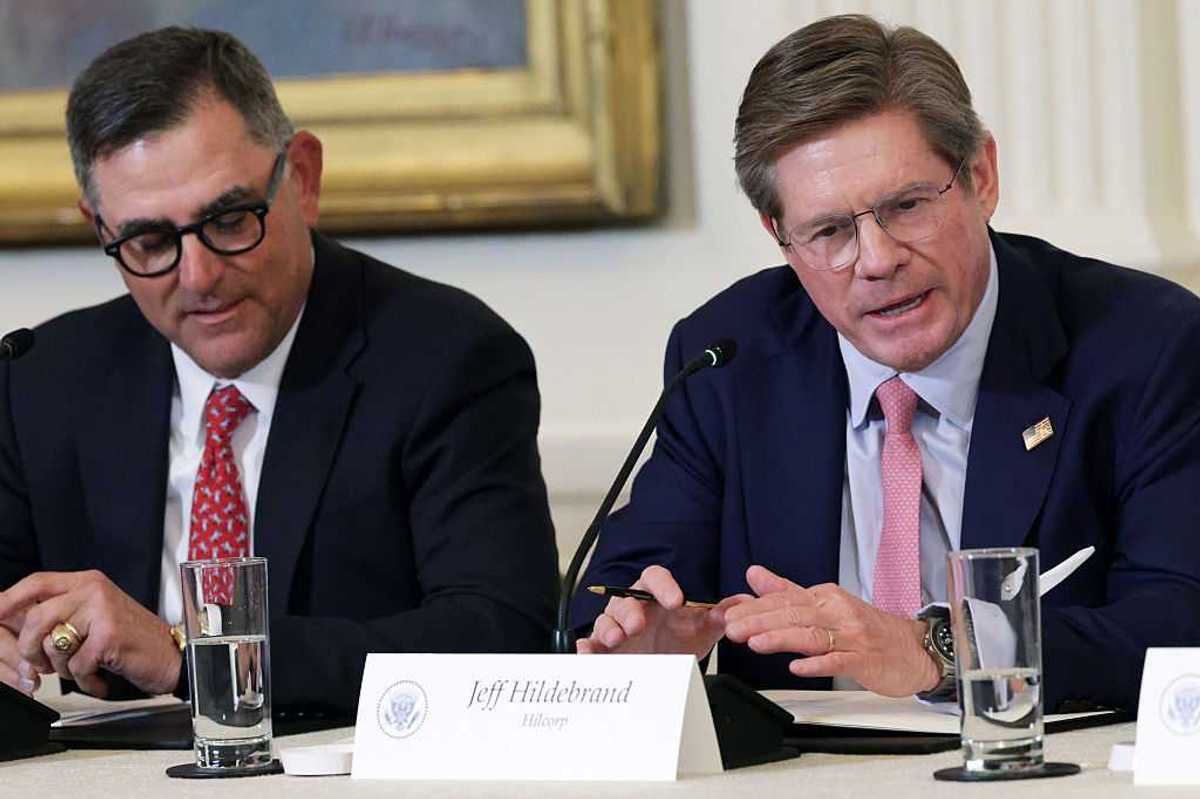
U.S. Secretary of the Interior Doug Burgum and U.S. Secretary of Energy Chris Wright will return to CERAWeek this month, along with dozens of energy executives and innovators. Photos courtesy CERAWeek.

Key energy leaders to converge in Houston for CERAWeek 2026

where to be

CERAWeek returns this month, March 23-27, and will once again bring leading energy executives and government officials to Houston.

The 44th annual event will again host U.S. Secretary of Energy Chris Wright and U.S. Secretary of the Interior Doug Burgum.

Wright will participate in a plenary session focused on energy policy with Daniel Yergin, conference chair and vice chairman of S&P Global, on March 23. The following day, he will be featured in the Celebrating 10 Years of U.S. LNG reception with Jack Fusso, president and CEO, of Cheniere Energy. Both events are part of the Executive Conference track.

Burgum will participate in a leadership dialogue plenary session with Yergin on March 25. It is also part of the Executive Conference track. Burgum is also chairman of the National Energy Dominance Council, established by President Trump in 2025.

Top energy executives, many of whom are based in Houston, will also be featured prominently at the week-long event. Other speakers include:

  • Bill Blevins, director of grid coordination for the Electric Reliability Council of Texas (ERCOT)
  • Trevor Best, CEO of Syzygy Plasmonics
  • Marie Contour Carrere, executive director of the Rice Sustainability Institute
  • Ryan DuChanois, co-founder and CEO of Solidec
  • Reginald DesRoches, president of Rice University
  • Georgina Campbell Flatter, CEO of Greentown Labs
  • Jim Fitterling, chair and CEO of Dow Inc.
  • Vicki Hollub, CEO of Occidental Petroleum Corp.
  • Renu Katon, chancellor and president of the University of Houston
  • Ryan Lance, chairman and CEO of ConocoPhillips
  • Olivier Le Peuch, CEO of SLB
  • Patrick Pouyanné, chairman and CEO of TotalEnergies SE
  • Adrian Tromel, chief innovation officer and interim VP for Innovation at Rice University
  • Bobby Tudor, founder and CEO of Artemis Energy Partners and chairman of HETI
  • Wael Sawan, CEO of Shell plc
  • Lorenzo Simonelli, chairman and CEO of Baker Hughes Co.
  • Mike Wirth, chairman and CEO of Chevron Corp.
  • Jeremy Pitts, managing director of Activate Houston
  • And many others

This year, CERAWeek will center around the theme of Convergence and Competition: Energy, Technology and Geopolitics.

"Change is inescapable," Yergin said in a news release. "The global energy landscape—and to a large extent the entire global economy—is being fundamentally reshaped by the dual forces of convergence and competition. The race for AI is fusing the energy and technology industries like never before, bringing into sharp relief the need to align energy expansion with sustainable economic growth."

"Yet, the potential for collaboration and innovation is increasingly matched by the risk for collision and conflict in a world marked by geopolitical rivalry, tariffs and fragmented supply chains," he continued. "Reconciling an increasingly complex world with the growing demand for energy that is stable, secure and affordable is a complex reality that CERAWeek 2026 will tackle when global energy leaders meet in Houston."

Key topics of discussion will include:

  • Politics, Economics, Trade and Supply Chains
  • Policy, Regulations and Stakeholders
  • Oil Value Chain
  • Power, Renewables, Generation and Grid
  • AI and Digital
  • Minerals and Mining
  • Electrification Technologies
  • Investment and Financing
  • Chemicals and Materials
  • Business Strategies
  • The Innovation Ecosystem
  • Managing Emissions
  • Low-Carbon Fuels and Mobility
  • Climate and Sustainability
  • Workforce Strategy

The CERAWeek Innovation Agora track, which is the program's deeper dive into technology and innovation, will feature thought leadership on "AI, decarbonization, low carbon fuels, cybersecurity, hydrogen, nuclear, mining and minerals, mobility, automation and more," according to the release.

Agora Hubs will return this year and be divided into three zones: new energies, carbon and climate, and AI. The hubs will feature amphitheater-style sessions and panels. Agora Pods will allow energy startups to showcase their ideas in 20- to 30-minute presentations.

Additionally, CERAWeek will introduce a new program this year on Friday, March 27. Known as Look Forward, it will focus on economics, politics and technology.

See the full agenda for the week here. Find more information and register for the event here.

---

This article originally appeared on our sister site, EnergyCapitalHTX.com.
Ad Placement 300x100
Ad Placement 300x600

CultureMap Emails are Awesome

UH lands $4M NIH grant to study early signs of autoimmune disease

NIH funding

The University of Houston recently received a $4 million National Institutes of Health grant to support a 10-year longitudinal study to identify the earliest biological markers of autoimmune disease.

Led by Chandra Mohan, the Hugh Roy and Lillie Cranz Cullen Endowed Professor of Biomedical Engineering, the study aims to examine what causes Systemic Autoimmune Rheumatic Diseases (SARDs) and to identify targets for future treatments. The study will be carried out in collaboration with Dr. Karen Costenbader at Harvard Medical School, Boston.

SARDs include conditions like rheumatoid arthritis, systemic lupus erythematosus, Sjögren’s syndrome and systemic sclerosis—all are considered chronic diseases currently without a cure. Autoimmune diseases affect over 30 million people globally, according to UH.

SARDs occur when the body’s immune system attacks healthy, non-threatening tissues and organs. According to UH, in these diseases, the body often attacks nuclear antigens, creating anti-nuclear autoantibodies, which can be early detection signs for SARDs in more than 50 percent of patients, Mohan says.

Researchers will study blood samples and environmental exposure over the 10 years to better understand anti-nuclear autoantibodies.

“Collectively, these studies will help identify the genetic, environmental and cellular factors that are operative at the two steps of SARD development, namely the emergence of anti-nuclear autoantibodies and disease onset,” Mohan said in a news release. “ More importantly, these studies will highlight functional molecular pathways and mechanisms that may be operative at each step."

Mohan predicts that looking at SARDs’ shared characteristics, rather than each disease individually, could help identify more treatment methods.

“Individual SARDs have been examined in silos without an attempt to discern shared underlying features at the molecular level,” he added in the release. “Current understanding of the initial (and likely shared) origins of SARDs is only rudimentary but urgently needed to develop means for prevention and treatment.”

Earlier this year, UH also received an $11 million NIH grant to conduct a first-of-its-kind study of early language development in children ages 18 to 24 months. Read more here.

New Texas Stock Exchange officially begins trading in Dallas

Welcome to Y'all Street

Two-step aside, New York Stock Exchange and Nasdaq. The Dallas-based Texas Stock Exchange, nicknamed Y’all Street, just kicked off live trading with five stocks — and lots of Lone Star ambition.

“The Texas Stock Exchange aims to revitalize competition for [stock] issuers, establish the premier venue for listings, and create a world-class trading platform for all market participants,” the exchange says in a fact sheet.

The exchange — whose Texas-influenced nickname is a nod to New York City’s Wall Street — has collected at least $275 million in investments. The roughly 90 financial backers of TXSE include Bank of America, BlackRock, Charles Schwab, Citadel Securities, Dell Family Office, Fortress, Goldman Sachs, and JPMorgan Chase.

Representatives of TXSE couldn’t be reached for comment. On its website, the exchange calls itself “the most well-capitalized equities exchange to ever be approved” by the U.S. Securities and Exchange Commission (SEC).

Not to be outdone, NYSE has launched Dallas-based NYSE Texas and Nasdaq has expanded its presence in Dallas.

Y’all Street adds to Dallas-Fort Worth’s rising status as a major hub for financial services, with The Wall Street Journal naming North Texas the country’s second biggest financial hub after New York City.

“A homegrown national exchange means more jobs, more investment, and more growth opportunities for businesses and communities across the Lone Star State,” Gabriela von zur Muehlen, senior vice president and chief policy officer at the Texas Association of Business, told The Texas Tribune.

Bulent Temel, an associate professor of practice in economics at the University of Texas at San Antonio, told Texas Standard that TXSE “is going to boost the credibility of the Texas economy.”

Texas’ estimated gross domestic product (GDP), a yardstick for the size of an economy, climbed to a record-setting $2.9 trillion in 2025, making it the state with the second highest GDP after California. DFW’s estimated GDP in 2023 stood at $744.6 billion, eclipsing the GDP of many countries.

“The center of gravity for American capitalism is now headquartered in the Boom Belt,” Abbott proclaimed in April, referring to an 11-state region (including Texas) in the South and Southeast that’s seeing tremendous economic and population growth. “The Texas Stock Exchange is the natural extension of that capitalism. It ensures that capital markets will reflect the quadrant that is driving American growth.”

---

This article originally appeared on CultureMap.com.