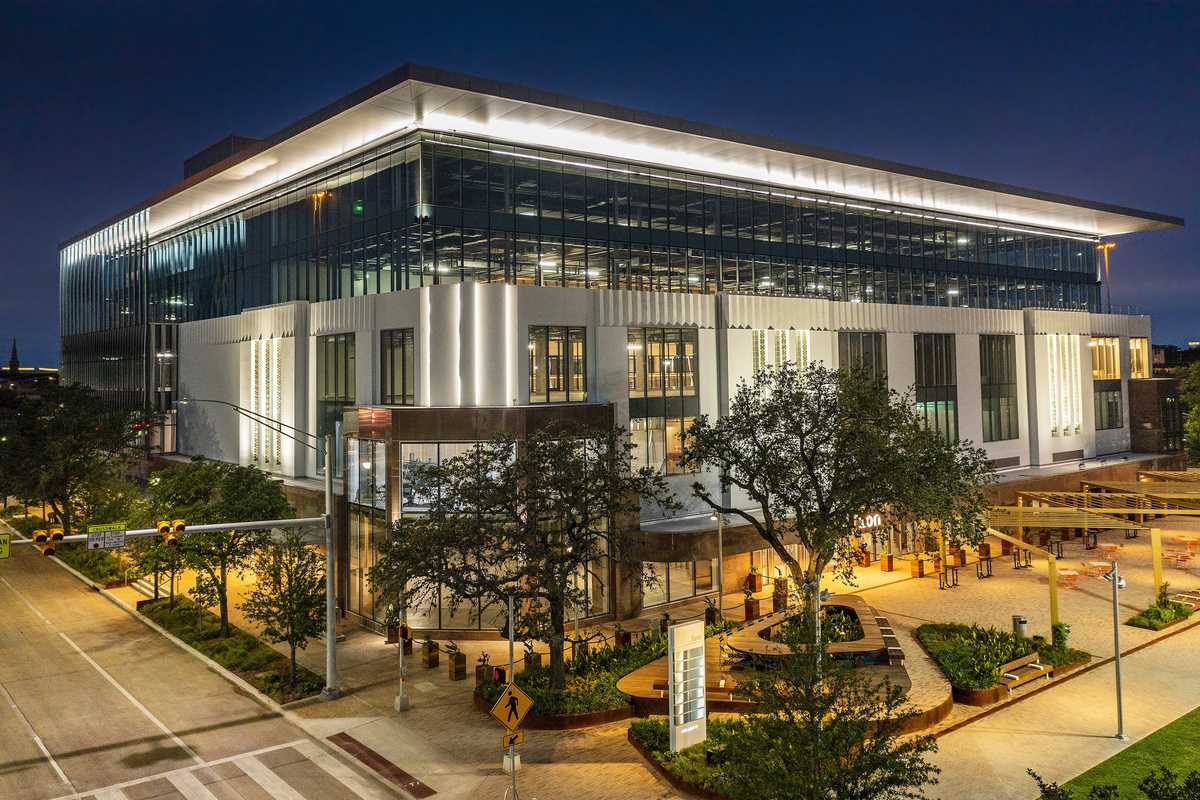
Graphic courtesy of ConnectSmart

As Houstonians transition back to the office, navigating the city’s complex traffic landscape can feel overwhelming. Fortunately, Houston ConnectSmart, a free app designed specifically for the greater Houston area, is here to make that return easier on your schedule, your wallet, and even the planet.

Unlike national navigation apps, ConnectSmart is built with local commuters in mind. It offers features tailored to Houston’s unique traffic patterns, such as real-time alerts about road closures, construction zones, and flooding. The app also integrates live traffic camera feeds and notifies users about adverse weather conditions, helping them adjust their routes efficiently and avoid delays.

ConnectSmart goes beyond basic navigation. It’s the only local app that keeps commuters fully informed with proactive, real-time trip alerts. These alerts tell users exactly when to leave, flag incidents on their routes, and provide alternative paths to ensure the smoothest possible drive. Additionally, through the Tow and Go program, users stranded on eligible freeways can access no-cost towing to a safe location.

For those looking to save money, time, and the planet, ConnectSmart also shines as a carpooling tool.

With its Carpool feature, users can coordinate rides with colleagues or friends, making use of HOV lanes and cutting down on the number of single-occupancy vehicles on the road. Whether you're a driver or a rider, the app allows you to customize your commute by setting pick-up points, schedules, and drop-off locations. If plans change, Trip Protection ensures you won’t be stranded, offering compensation for a backup ride home in the event of a last-minute cancellation.

Carpooling with ConnectSmart doesn’t just ease stress — it also lightens your environmental footprint and reduces the wear and tear on your vehicle. The app even provides real-time parking information for garages, lots, and street spaces, making the end of your commute as hassle-free as the journey itself.

For employers, ConnectSmart offers an Employer Commute Suite that enables organizations to set up private carpool groups for staff. This feature fosters a more connected, sustainable workplace culture and helps businesses support employees in managing their daily commutes.

Whether you're driving solo or looking to share a ride, Houston ConnectSmart brings a smarter, more sustainable way to get around the Bayou City. Download the app for free from the App Store or Google Play, and start your commute with confidence, convenience, and community in mind.

For more information about setting up an Employer Commute Suite, contact ConnectSmart today and take the first step toward transforming how your organization gets to work.


Ad Placement 300x100
Ad Placement 300x600

CultureMap Emails are Awesome

Report: These 10 jobs earn the biggest salary premiums in Texas

A move to Texas bolsters earnings for some, and a new SmartAsset study has revealed the top professions where the median annual earnings in the Lone Star State exceed the national median.

The report, "When it Pays to Work in Texas — and When It Doesn’t," published in April, analyzed over 700 occupations to determine which have the biggest "Texas premium" — meaning jobs where the price-adjusted median annual pay in Texas most exceeds the national median for the same occupation — and which jobs have the biggest “Texas penalty,” where the statewide median annual pay falls furthest below the national median. Salaries were sourced from the U.S. Bureau of Labor Statistics (BLS) and adjusted for regional price parity.

According to the report's findings, geoscientists have the biggest "Texas premium" and make a $159,903 median annual salary. Texas' salary for geoscientists is 61 percent higher than the national median for the same position (after adjusting for regional price parity).

"Texas’s large petroleum industry helps explain why employers in the state retain so many geoscientists," the report's author wrote. "In fact, the Lone Star State is home to more geoscientists than any other state except California."

There are more than 3,600 geoscientists working in Texas, SmartAsset said.

These are the remaining top 10 occupations with the biggest "Texas premiums" (salaries are price-adjusted):

  • No. 2 – Commercial pilots: $167,727 median Texas earnings; 37 percent higher than the national median
  • No. 3 – Sailors: $67,614 median Texas earnings; 36 percent higher than the national median
  • No. 4 – Aircraft structure assemblers: $83,519 median Texas earnings; 35 percent higher than the national median
  • No. 5 – Ship captains: $108,905 median Texas earnings; 27 percent higher than the national median
  • No. 6 – Nursing instructors (postsecondary): $100,484 median Texas earnings; 26 percent higher than the national median
  • No. 7 – Tax preparers: $63,321 median Texas earnings; 25 percent higher than the national median
  • No. 8 – Chemists: $104,241 median Texas earnings; 24 percent higher than the national median
  • No. 9 – Health instructors (postsecondary): $128,680 median Texas earnings; 22 percent higher than the national median
  • No. 10 – Engineering instructors (postsecondary): $129,030 median Texas earnings; 22 percent higher than the national media

The careers where Texas workers earn less

SmartAsset said an editor is the Texas profession where workers earn the furthest below the median for the same occupation elsewhere in the U.S. Not to be confused with film and video editors, BLS defines editors as those who "plan, coordinate, revise, or edit written material" and "may review proposals and drafts for possible publication."

The study found editors make a price-adjusted median wage of $29,710, which is 61 percent lower than the national median for the same position, and there are nearly 8,200 editors in Texas.

It's worth noting that the salaries for editors may be skewed by the fact that there are not major publications in rural areas of Texas, and other professions may also have financial deviations for similar reasons.

Several healthcare jobs also appear to have the worst penalties in Texas compared to elsewhere in the country. Home health aides are the second-worst paying professions in the state, making a median wage of $24,161.

"More home health aides work in Texas than in nearly any other state, with only California and New York employing more," the report said. "However, the more than 300,000 Texans in this occupation earn median annual pay that is about 31 percent below the national median, after adjusting for regional price parity.

SmartAsset clarified that pay penalties are not consistent "across the board" for other healthcare occupations in Texas.

"For physical therapy assistants, occupational therapy assistants, and postsecondary nursing instructors, Texas may be an especially strong place to work, with these occupations offering 'Texas premiums' of between 17 percent and 26 percent," the study said.

These are the remaining top 10 occupations where median annual earnings in Texas fall furthest below the national median for the same occupation:

  • No. 3 – Cardiovascular technicians: $49,382 median Texas earnings; 27 percent lower than the national median
  • No. 4 – Semiconductor processing technicians: $38,295 median Texas earnings; 25 percent lower than the national median
  • No. 5 – Tutors: $30,060 median Texas earnings; 25 percent lower than the national median
  • No. 6 – Control and valve installers: $56,496 median Texas earnings; 24 percent lower than the national median
  • No. 7 – Mental health social workers: $46,109 median Texas earnings; 23 percent lower than the national median
  • No. 8 – Clinical psychologists: $74,449 median Texas earnings; 22 percent lower than the national median
  • No. 9 – Producers/directors: $65,267 median Texas earnings; 22 percent lower than the national median
  • No. 10 – Interpreters/translators: $46,953 median Texas earnings; 21 percent lower than the national median

---

This article originally appeared on CultureMap.com.

Houston rises in 2026 ranking of best U.S. cities to start a business

Best for Biz

Houston has reaffirmed its commitment to a business-friendly environment and now ranks as the 26th best large U.S. city for starting a business in 2026. The city jumped up eight places after ranking 34th last year.

WalletHub's annual report compared 100 U.S. cities based on 19 relevant metrics across three key dimensions: business environment, access to resources, and costs. Factors that were analyzed include five-year business survival rates, job growth comparisons from 2020 and 2024, population growth of working-age individuals aged 16-64, office space affordability, and more.

Florida cities locked out the top five best places in America for starting a new business: Tampa, Orlando, Jacksonville, Hialeah, and St. Petersburg.

Houston's business environment ranked as the 19th best in the country, and the city ranked 51st in the "business costs" category. However, the city lagged behind in the "access to resources" ranking, coming in at No. 72 overall. This category examined metrics such as Houston's working-age population growth, the share of college-educated individuals, financing accessibility, the prevalence of investors, venture investment amounts per capita, and more.

"From the Gold Rush and the Industrial Revolution to the Internet Age, periods of innovation have shaped our economy and driven major societal progress," the report's author wrote. "However, the past few years have been particularly challenging for business owners in the U.S., due to factors such as the COVID-19 pandemic, the Great Resignation and high inflation."

Earlier this year, WalletHub declared Texas the third-best state for starting a business in 2026, and several Houston-area cities have seen robust growth after being recognized among the best career hotspots in the U.S. Entrepreneurial praise has also been extended to five local companies that were named the most innovative companies in the world, and six powerhouse female innovators that made Inc. Magazine's 2026 Female Founders 500 list.

Texas cities with strong environments for new businesses
Multiple cities in the Dallas-Fort Worth Metroplex can claim bragging rights as the best Texas locales for starting a new business. Dallas ranked highest overall — appearing 11th nationally — and Irving landed a few spots behind in the 16th spot. Arlington (No. 23), Fort Worth (No. 30), Plano, (No. 35), and Garland (No. 65) followed behind.

Only six other Texas cities earned spots in the report: Austin (No. 24), Lubbock (No. 36), Corpus Christi (No. 39), San Antonio (No. 64), El Paso (No. 67), and Laredo (No. 76).

Austin tied with Boise, Idaho and Fresno, California for the highest average growth in the number of small businesses nationally, while Corpus Christi and Laredo topped a separate list of the U.S. cities with the most accessible financing.

---

This article originally appeared on CultureMap.com.

Houston humanoid robotics startup taps Amazon veteran to lead manufacturing

new hire

Persona AI, a Houston-based startup that’s developing AI-powered humanoid robots for manufacturers and other businesses, has hired Brian Davis as head of global manufacturing.

Davis previously guided teams at Amazon Robotics and Dell Technologies. During his tenure at Amazon Robotics and Dell, both companies saw major increases in manufacturing volumes within a four-year period. Davis oversaw manufacturing, supply chain, logistics, quality assurance and real estate.

“Davis steps into this role [at Persona AI] as industrial enterprises face an urgent and accelerating challenge: a structural shortage of capacity for welding, fabrication, and heavy maintenance in dynamic environments, precisely the high-value, high-risk tasks where humanoid robots can deliver the greatest impact,” according to a company news release.

Davis comes aboard as Persona AI, founded in 2024, seeks to meet demand generated by deals with HD Hyundai and POSCO Group to make humanoids for shipyards and steel plants, and by a pilot program with the State of Louisiana.

“Now is the perfect time to accelerate our production capabilities as we rapidly close the gap between what’s possible in the lab versus what’s driving real commercial value,” Davis says.

“Building industrial-rated humanoid robots and production-deployable AI is only one piece of the puzzle,” he adds. “Producing humanoids at scale will require systematic supply chain management, stringent quality control, and building the playbook for safe, high-volume manufacturing. That’s what I’m here to build.”

Last year, Persona AI raised more than more than $10 million in pre-seed funding. The company also named a new head of commercial strategy in March.