
Texas Southern has opened its 20,000-square-foot Flight Academy hangar. Photo courtesy TSU.

The vehicles may not have “student driver” stickers on them, but Texas Southern University has moved a dozen planes into its new training facility at the Houston Spaceport, opening the way for student flyers to use the facility.

TSU previously reached a deal with Houston Airports and the City of Houston in 2023 to house its prospective Flight Academy at Ellington Field. At the time, TSU had a small fleet of nine planes for student use, but a $5.5 million investment from the city greatly expanded the space available.

The Flight Academy includes a 20,000-square-foot hangar that serves as a TSU satellite campus. The school now has a fleet of 12 Cirrus SR20 aircraft that were acquired last year through state and alumni funding. An additional 4,500 square feet is used as classroom and office space. An 8,000-gallon fuel tank will support flight training operations.

TSU first launched its Aviation Science Management program in 1986 and added a professional pilot program in 2016. The school is now part of the United Airlines pipeline program and has also forged relationships with Delta and Southwest.

“I want to commend Texas Southern University and Houston Airports for their leadership and partnership in advancing aviation education right here in our city,” Houston City Councilwoman Dr. Carolyn Evans-Shabazz in a press release.

“It connects our students to high-paying, high-demand careers in aviation and aerospace. This is how we grow a city in the right way—by investing in workforce development, aligning education with industry and making sure our residents are prepared to lead in the industries of tomorrow. Houston is already a global leader in aerospace and projects like this strengthen that position even further, especially here at Ellington, where innovation and opportunity continue to take flight.”

The City of Houston signed an agreement to continue funding the academy for five years.
Ad Placement 300x100
Ad Placement 300x600

CultureMap Emails are Awesome

New report reveals potential developers, future uses for iconic Astrodome

8th wonder

A new report identifies the Astrodome as a good fit for an adaptive reuse project. Written by consulting firm WT Partnership for the Astrodome Conservancy, the report demonstrates significant interest in preserving the historic stadium as a year-round venue that complements the property’s existing tenants, the Houston Texans and the Houston Livestock Show & Rodeo.

Announced in August, the RFI generated more than 600 responses from interested parties. Of those, WT Partnership identified 11 submissions for more detailed analysis, including from CityCentre developer Midway; Houston-based real estate development firm DC Partners; Space Center Houston; and Triple Five Worldwide Group, the company behind the Mall of America in Minnesota and American Dream in New York City.

“Most respondents saw this development as a preservation-anchored, mixed-use destination centered on three complementary demand drivers: experiential entertainment and cultural programming, hospitality and food/beverage activation, and strategic commercial tenancy,” the report states.

For example, DC Partners, the company behind The Allen development that includes the Thompson Hotel and Mexican steakhouse Toca Madera, proposed creating a space-themed museum, attractions, and hotel concept called “Space City.” According to the report, the almost $1 billion project would be almost completely funded by tax credits and various investment and debt vehicles. Harris County would only contribute $40 million.

“The Astrodome was born from the kind of vision and imagination that made Houston a city known for doing what others thought impossible” Astrodome Conservancy executive director Beth Wiedower Jackson said in a statement. “When it opened, there was nothing else like it in the world. That same spirit of innovation can guide us in finding a financially feasible new purpose for this remarkable building. The private-sector interest reflected in this report show that the possibilities are very real.”

Along with submitting the report to the Harris County Commissioners Court, the conservancy is asking elected officials to establish a task force that could evaluate potential private sector partners and begin creating a plan to move forward.

Since its closure in 2003, the Astrodome has remained vacant, except for its brief use as a shelter following Hurricane Katrina in 2007. A debate has ranged about what to do with the property ever since.

Demolition has been previously estimated at about $55 million (likely more in today’s dollars), but its status on the National Register of Historic Places makes that virtually impossible. Meanwhile, Harris County pays hundreds of thousands of dollars a year to maintain the building.

“Doing nothing is not a viable option,” Wiedower Jackson added. “The longer we wait, the greater the risk of losing the interest and momentum this process has generated. We now have credible private-sector entities bringing forward development concepts, expertise and potential investment. We owe it to the people of Harris County to take the next step and determine which of these opportunities can become reality.”

---

This article first appeared on CultureMap.com.

Texas-based CrowdStrike to acquire Zscaler in mega $44 billion deal

Tech Talk

CrowdStrike is buying cloud security company Zscaler in an all-stock deal worth about $43.9 billion, the companies said November 23, in a major acquisition that combines two of the cybersecurity industry's biggest names.

The all-stock deal arrives after a string of high-profile hacks hit banks, supermarket fridges and crypto platforms, forcing the White House to shake up its cybersecurity leadership and raising alarms with officials around the world.

Cybersecurity experts have warned that artificial intelligence is being used to turbocharge cyberattacks by making it quicker and easier to find software flaws.

“Security used to be about keeping the adversary out," George Kurtz, CEO of Austin-based CrowdStrike, said in a statement. “Today, safety is required to let AI in.”

Reports of advanced artificial intelligence models deploying agents working on their own to break into other organizations have also raised alarms.

“In the AI era, Zero Trust security has become non-negotiable, and AI agents are rapidly becoming the new weakest link," Zscaler CEO Jay Chaudhry said.

CrowdStrike's focus has been on so-called endpoint security, with services to protect laptops, mobile devices and desktop computers. Santa Clara, California-based Zscaler, meanwhile, specializes in cloud-based network protection.

Zscaler shareholders will get 1.135 shares of CrowdStrike for each Zscaler share they own, under the deal's terms, which represent a 34% premium to Zscaler's closing price on Friday.

Shares of CrowdStrike tumbled more than 7% before the opening bell Monday. Shares of Zscaler rose 20%.

Existing CrowdStrike shareholders will own about 84.1% of the combined company, while existing Zscaler shareholders will hold the remaining 15.9%.

CrowdStrike and Zscaler were already working together in a partnership that included 2,000 shared customers. The deal would expand the combined company's market by more than $185 billion by 2029.

The transaction is expected to close in the second half of CrowdStrike's fiscal 2028 year, which begins in February.

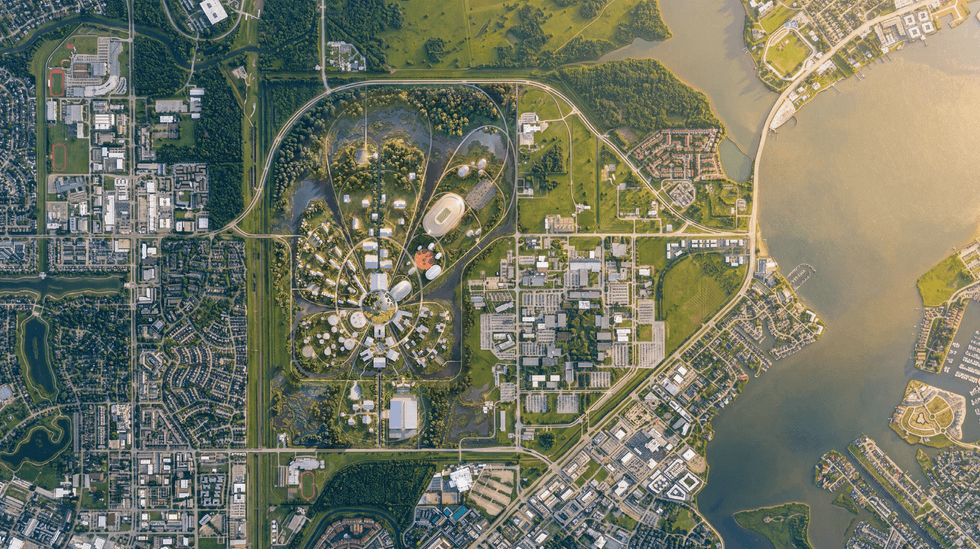
Texas officially bids to make Houston home of U.S. Space Academy

space race

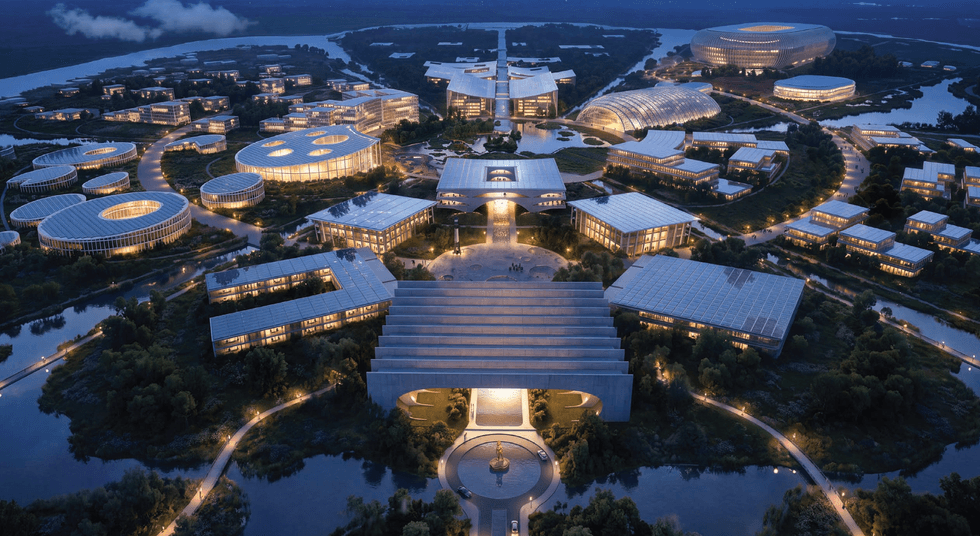
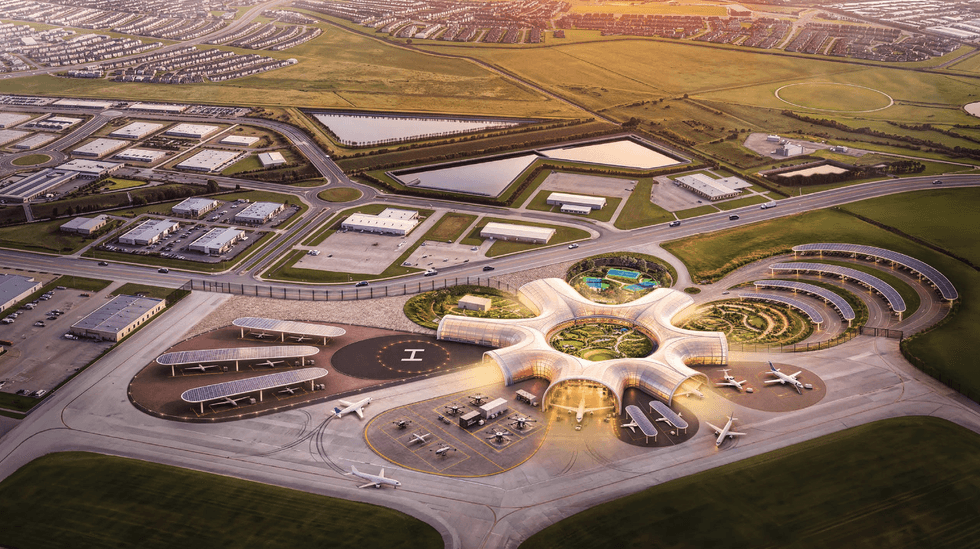
Texas has officially submitted its proposal to have Houston be the home of the United States Space Academy (USSA).

“Texas has long been home to critical training missions for our nation’s military and for advancing human spaceflight,” Gov. Greg Abbott said in a news release. “Our universities, research institutions, and commercial space industry give the United States an extraordinary foundation for educating its next generation of space leaders.”

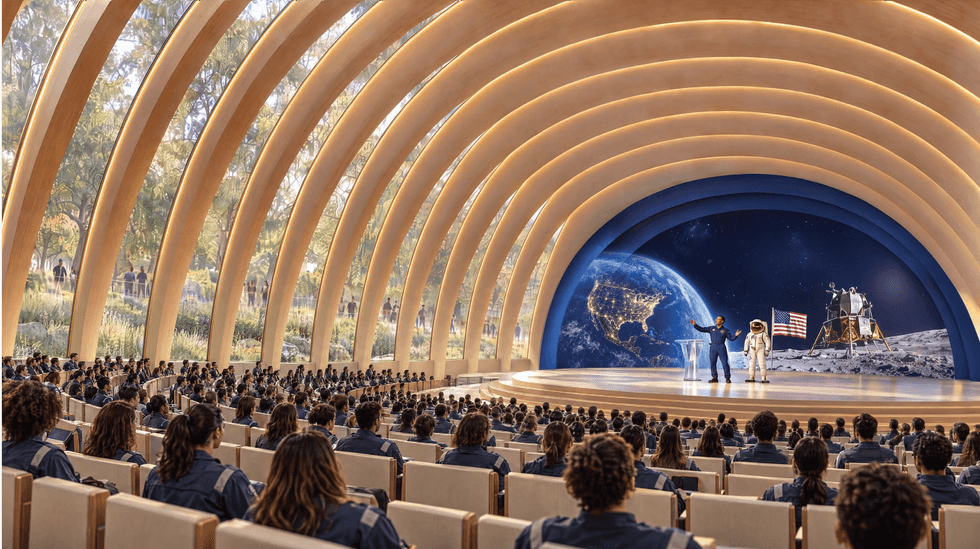
The Texas Space Commission (TSC) confirmed Texas filed an official response to NASA’s Request for Information (RFI) for the new academy. NASA’s plans include groundbreaking on the USSA in 2027, with enrollment planned for the inaugural class of 300 students in 2028 and a goal of transitioning to a permanent campus by 2031.

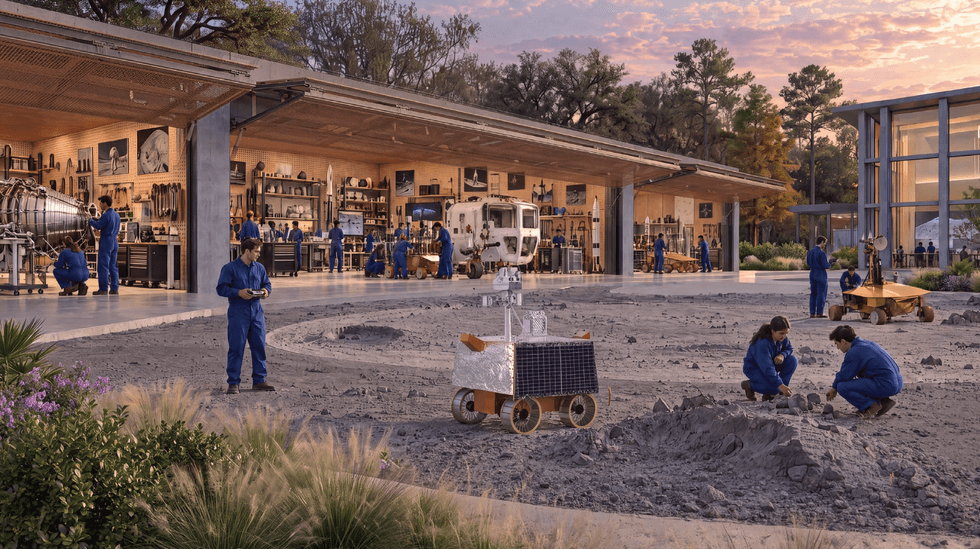
For students, the learning model could “link classroom and laboratory instruction with supervised research and team projects in spacecraft engineering, robotics, and mission operations,” according to the release. The academy will help students prepare for careers in national security space, civil and commercial careers, and also teach them to apply what they’ve learned to real-world mission trials.

Currently, Houston hosts America’s Mission Control and astronaut corps at NASA’s Johnson Space Center. In addition to JSC, Houston also hosts major aerospace startups, such as Axiom Space, Venus Aerospace and Intuitive Machines, as well as the Houston Spaceport at Ellington Airport and the new Texas A&M University Space Institute.

Texas boasts aerospace, aviation and civilian-defense industries that employ 160,000 workers across 2,200 establishments, according to the Texas Economic Development & Tourism Office. In the Houston area alone, there are 500 companies in the aerospace and aviation space. Academically, the state also has universities that are innovating in aerospace, energy, tech and beyond, including Rice University, the University of Houston, the Texas A&M system and the University of Texas system.

In August, President Trump signed an executive order to create the Presidential Commission on the United States Space Academy, which will guide the establishment of the NASA-led federal effort. The following month, Abbot appointed the seven-member team to help bring the USSA to Texas, which is being led by State Rep. Greg Bonnen from Friendswood. The squad also includes Houston ties in former NASA astronaut and current senior vice president of Houston-based Intuitive Machines Jack Fischer, another former NASA astronaut and current director of the Texas A&M Space Institute Nancy Curry-Gregg (a UH graduate), and associate director of the Texas A&M Space Institute Robert Ambrose.

“Houston makes the most sense as the location for this incredible learning ecosystem to teach and train our next generation of spacefaring Americans,” Bonnen added in a news release. “Texas offers NASA the opportunity to educate students where human spaceflight is practiced every day. Nowhere else in the world can a student walk from their classroom to Mission Control or the Astronaut Corps Office, much less any of the many companies building hardware for payloads. NASA and the White House have an amazing proposal from Texas to consider.”

The state legislature will convene in January regarding the efforts of the Texas Space Commission.

“I fully support establishing the proposed United States Space Academy in the Lone Star State to prepare future generations for interstellar travel through rigorous education, world-class training, and commitment to public service, “ Governor-elect Gina Hinojosa added in a statement. “ As I am preparing to take office, my commitment is to carry this effort forward by implementing the well-developed proposal led by State Rep. Greg Bonnen with support from the Texas Space Commission to advance the Academy’s mission.”'

View a video of the plans proposed by the TSC here.

Renderings courtesy Texas Space Commission