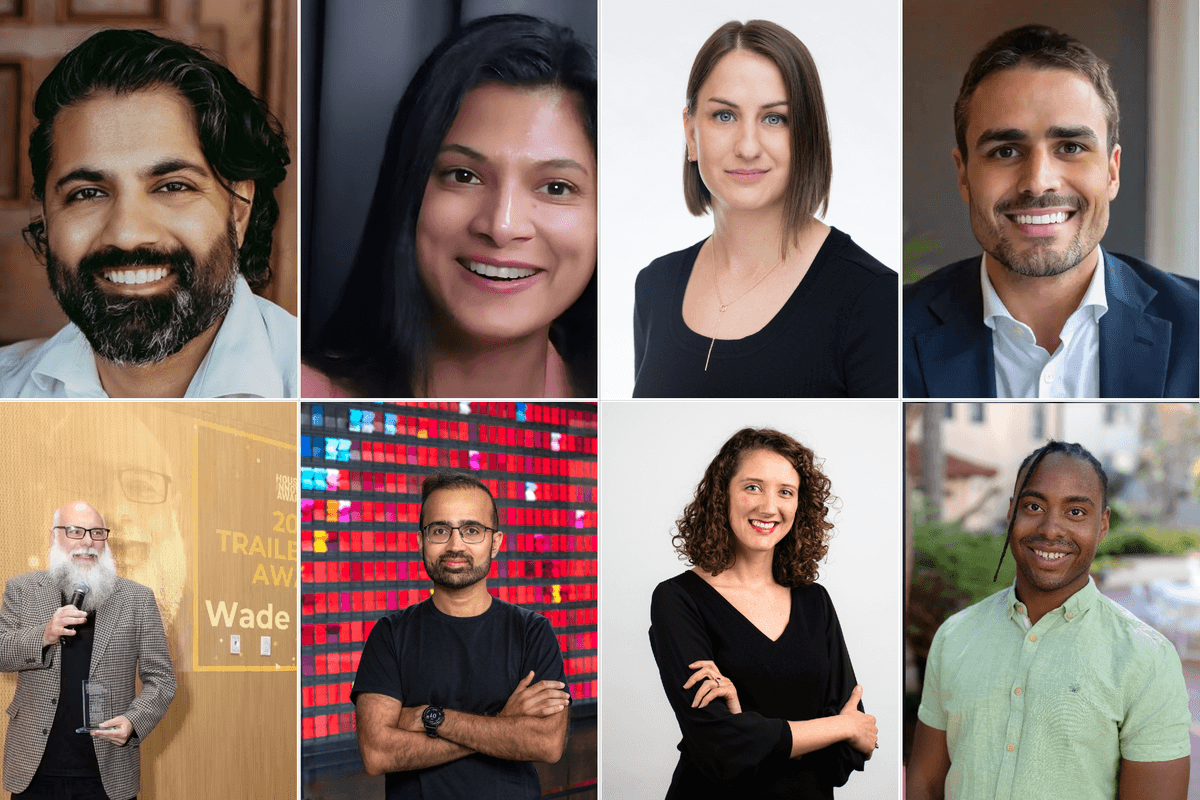
Houston-based Mati Carbon won the global XPRIZE Carbon Removal competition, funded by The Musk Foundation. Photo via LinkedIn.

Houston-based Mati Carbon has won the $50 million grand prize in the XPRIZE Carbon Removal competition, backed by Elon Musk’s charitable organization, The Musk Foundation.

Mati was selected in 2024 as one of 20 global finalists. The company removes carbon through its Enhanced Rock Weathering (ERW) program that works with agricultural farms in Africa and India.

The 3-year-old startup accelerates the natural process of rock weathering (ERW) by applying pulverized basalt to croplands of partnered smallholder farmers, free of charge. Mati says the farmers it partners with are some of the most vulnerable to the impacts of climate change.

“Winning this XPRIZE competition is an incredible honor and a definitive validation of our research and development, and building out the infrastructure needed to impact millions of farmers while delivering verifiable carbon dioxide removal at a gigaton scale,” Mati Carbon Founder and CEO Shantanu Agarwal, said in a news release. “I couldn’t be prouder, not just of the Mati team, but of our collaborators, research partners and the thousands of smallholder farmers who let us be part of their lives. This XPRIZE recognition will allow us to collaborate with local partners to accelerate the use of enhanced rock weathering across the Global South.”

Mati reports that it plans to use the award to “scale its efforts working with smallholder farmers worldwide.” Apart from the XPRIZE funding, Mati plans to grow its model through the sale of CDR credits. According to the company, it counts Shopify, Stripe, and H&M among its early carbon credit buyers.

“Mati Carbon’s deployments bolster farmers’ livelihoods through improved soil health, reduced agricultural inputs, and increased income at zero cost to them. Mati Carbon’s team has developed a scientifically rigorous approach to monitoring and verification, and excelled across each of XPRIZE’s prize evaluation criteria – operational, sustainability, and cost metrics – giving the XPRIZE judges the highest confidence in Mati Carbon’s solution’s long-term scalability,” the XPRIZE judges wrote.

Houston-based Vaulted Deep took home the second-runner-up prize in the competition and $8 million for its organic waste storage process. The company provides permanent carbon storage by injecting nonhazardous organic waste deep underground. It spun off with $8 million in seed funding from Advantek Waste Management Services in 2023.

"Our approach is grounded in geomechanical injection techniques that have been safely deployed globally for decades by our team and predecessors," Omar Abou-Sayed, co-founder and executive chairman of Vaulted, said in a separate release. "XPRIZE recognized that this is a proven approach—already in use, delivering impact, and built on the kind of reliability the industry needs to scale responsibly."

Launched in 2021, the four-year XPRIZE Carbon Removal competition challenged global innovators to deploy scalable solutions for removing carbon dioxide from the atmosphere and oceans. More than 1,300 teams from 88 countries competed. XPRIZE finalists were required to remove at least 1,000 tonnes of CO2 over a one-year demonstration period.

French company NetZero took home the first-runner-up prize of $15 million, and London-based UNDO came in as third-runner-up with a $5 million prize.

Since the announcement of the XPRIZE Carbon Removal competition, the Musk-led Department of Government Efficiency has cut climate funding for agencies, projects and research. While the Musk Foundation sponsored the XPRIZE event, it is not affiliated with the California-based organization, according to the Associated Press.

---

This story originally appeared on our sister site, EnergyCapitalHTX.com.

editsharetrending_upeditsharetrending_up

Ad Placement 300x100
Ad Placement 300x600

CultureMap Emails are Awesome

10+ can't-miss Houston business and innovation events in February

where to be

Editor's note: February may be short, but its event calendar isn’t. From recurring monthly favorites to the return of annual celebrations and summits, here's what not to miss and how to register. Please note: this article may be updated to include additional event listings.

Feb. 2 — Entrepreneurship Roundtable with OPEN

Join founders, builders and innovators as they explore what it takes to create, scale and sustain meaningful ventures. This event, hosted by Open Houston, will be moderated by Faisal Bhutto, president and CEO of Houston-based end-to-end IT and cybersecurity company Alykas.

This event is Monday, Feb. 2, from 11 a.m.-1 p.m. at the Ion. Register here.

Feb. 3 — Tech+Tequila Talk: Tax Equity: Aligning Incentives for Founders, Investors & Philanthropy

Hear from guest speaker Cesar de la Cerda, founder and CIO of EnvisionVest, at the latest installment of Tech and Tequila Talk. The event will focus on using the tax code as a powerful fundraising tool.

This event takes place Tuesday, Feb. 3, from 5-7 p.m. at the Ion. Register here.

Feb. 5 — Ion Block Party Mardi Gras

Let the good times roll while networking with potential collaborators, mentors and investors at the Ion. Food and drink will be available, and the Ion will provide drink tickets for one free drink at Second Draught upon check-in.

This event is Thursday, Feb. 5, from 4-7 p.m. at the Ion. Register here.

Feb. 10 — Mercury Fund Day at the Ion

The Ion and Houston's Mercury Fund will host this special event, previously known as Software Day. The event will feature a panel that dives into how Mercury is pushing the boundaries of what’s possible with agentic AI and blockchain. A select group of early-stage software startups will also participate in office hours before the panel. Afterwards, all attendees can network during happy hour at Second Draught.

This event is Tuesday, Feb. 10, from 3:30-7:30 p.m. Register here.

Feb. 11-12 – In-Space Physical AI Workshop

Rice Nexus is bringing together industry leaders, government agencies and academia to explore the cutting edge of AI in space exploration. Matt Ondler, president of Aegis Aerospace, will present the keynote address. Other industry leaders from NASA Johnson Space Center, Intuitive Machines, Microsoft and Rice University and other organizations will participate. The event will close with the Inaugural Space Galette Reception hosted by the Consulate General of France in Houston and the Rice Space Institute.

This event begins Wednesday, Feb. 11, at the Ion. Register here.

Feb. 12 — State of the City

Houston First Corporation and the Greater Houston Partnership will host Mayor John Whitmire’s State of the City luncheon. Whitmire will share an update on his administration’s progress since taking office and highlight his top priorities that will continue to elevate Houston and its economy.

This event is Thursday, Feb. 12, from 11 a.m.-1:30 p.m. at the Hilton Americas-Houston. Register here.

Feb. 12 — Positioning Houston as the Brain Capital of the World

David Gow, CEO of the Center for Houston's Future, will present "Positioning Houston as the Brain Capital of the World" at the University of Houston Honors College Leadership Forum. Gow will share how Project Metis aims to establish Houston as a global hub for brain health research, innovation and economic development.

This event is Thursday, Feb. 12, from 7:30-9:30 a.m. at The Junior League of Houston. Register here.

Feb. 13 — From Research to Enterprise: Immigration & Innovation

Innov8 Hub will host an in-person seminar as part of its Startup Resources Series, focused on the intersection of immigration law, entrepreneurship and technology commercialization. The session will feature guest speakers Mario Cantu, Shilpa Ghurye and Vikesh Patel of KM&D PLLC, who will share insights for founders and innovators navigating legal pathways while building and scaling technology-driven ventures.

The event is Friday, Feb. 13, from 1-2 p.m. at the Innovation Center at UH Technology Bridge, Building 4. Register here.

Feb. 18-20 — TMC AI Summit

UTHealth Houston and Texas Children’s Hospital are bringing back the TMC AI Summit for its third year. This event is focused on translating advanced AI innovations into practical, real-world solutions for the biomedical and healthcare industries. It will be broken up into three tracks and will feature poster and oral presentations, workshops and tutorials, industry talks and student research showcases.

The event begins Wednesday, Feb. 18, at the Duncan Neurological Research Institute. Register here.

Feb. 26 — Transition on Tap

Greentown Labs’ signature networking event returns in February to foster conversations and connections within Houston's climate and energy transition ecosystem. Entrepreneurs, investors, students, philanthropists and more are invited to attend, meet colleagues, discuss solutions and engage with the growing community.

The event begins Monday, Feb. 26, from 5:30-7:30 p.m. at Greentown Labs. Register here.

Feb. 26 — NASA Tech Talk

Every fourth Thursday of the month, NASA experts, including longtime engineer Montgomery Goforth, present on technology development challenges NASA’s Johnson Space Center and the larger aerospace community are facing, and how they can be leveraged by Houston’s innovation community. Stick around after for drinks and networking at Second Draught.

This event is Thursday, Feb. 26, from 6-7 p.m. at the Ion. Register here.

Houston maritime startup raises $43M to electrify vessels, opens new HQ

Maritime Mission

A Houston-based maritime technology company that is working to reduce emissions in the cargo and shipping industry has raised VC funding and opened a new Houston headquarters.

Fleetzero announced that it closed a $43 million Series A financing round this month led by Obvious Ventures with participation from Maersk Growth, Breakthrough Energy Ventures, 8090 Industries, Y Combinator, Shorewind, Benson Capital and others. The funding will go toward expanding manufacturing of its Leviathan hybrid and electric marine propulsion system, according to a news release.

The technology is optimized for high-energy and zero-emission operation of large vessels. It uses EV technology but is built for maritime environments and can be used on new or existing ships with hybrid or all-electric functions, according to Fleetzero's website. The propulsion system was retrofitted and tested on Fleetzero’s test ship, the Pacific Joule, and has been deployed globally on commercial vessels.

Fleetzero is also developing unmanned cargo vessel technology.

"Fleetzero is making robotic ships a reality today. The team is moving us from dirty, dangerous, and expensive to clean, safe, and cost-effective. It's like watching the future today," Andrew Beebe, managing director at Obvious Ventures, said in the news release. "We backed the team because they are mariners and engineers, know the industry deeply, and are scaling with real ships and customers, not just renderings."

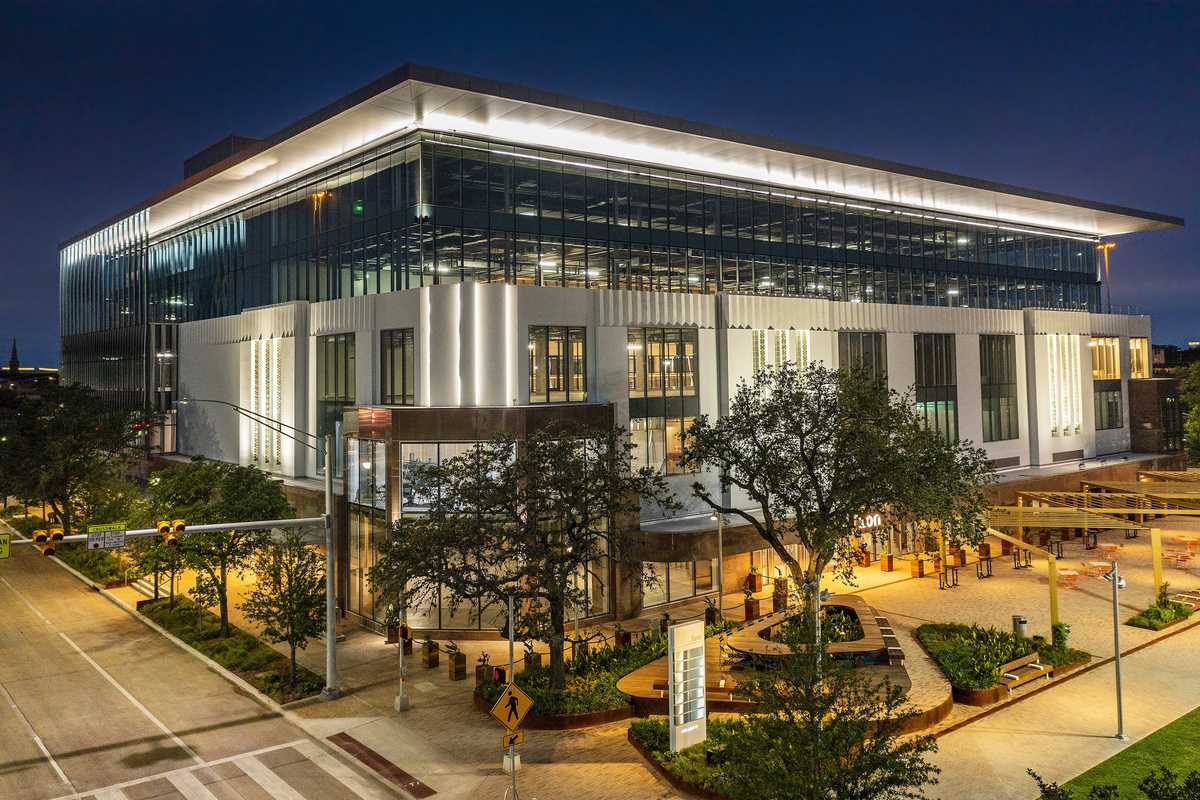
Fleetzero also announced that it has opened a new manufacturing and research and development facility, which will serve as the company's new headquarters. The facility features a marine robotics and autonomy lab, a marine propulsion R&D center and a production line with a capacity of 300 megawatt-hours per year. The company reports that it plans to increase production to three gigawatt-hours per year over the next five years.

"Houston has the people who know how to build and operate big hardware–ships, rigs, refineries and power systems," Mike Carter, co-founder and COO of Fleetzero, added in the release. "We're pairing that industrial DNA with modern batteries, autonomy, and software to bring back shipbuilding to the U.S."

---

This article originally appeared on EnergyCapitalHTX.com.