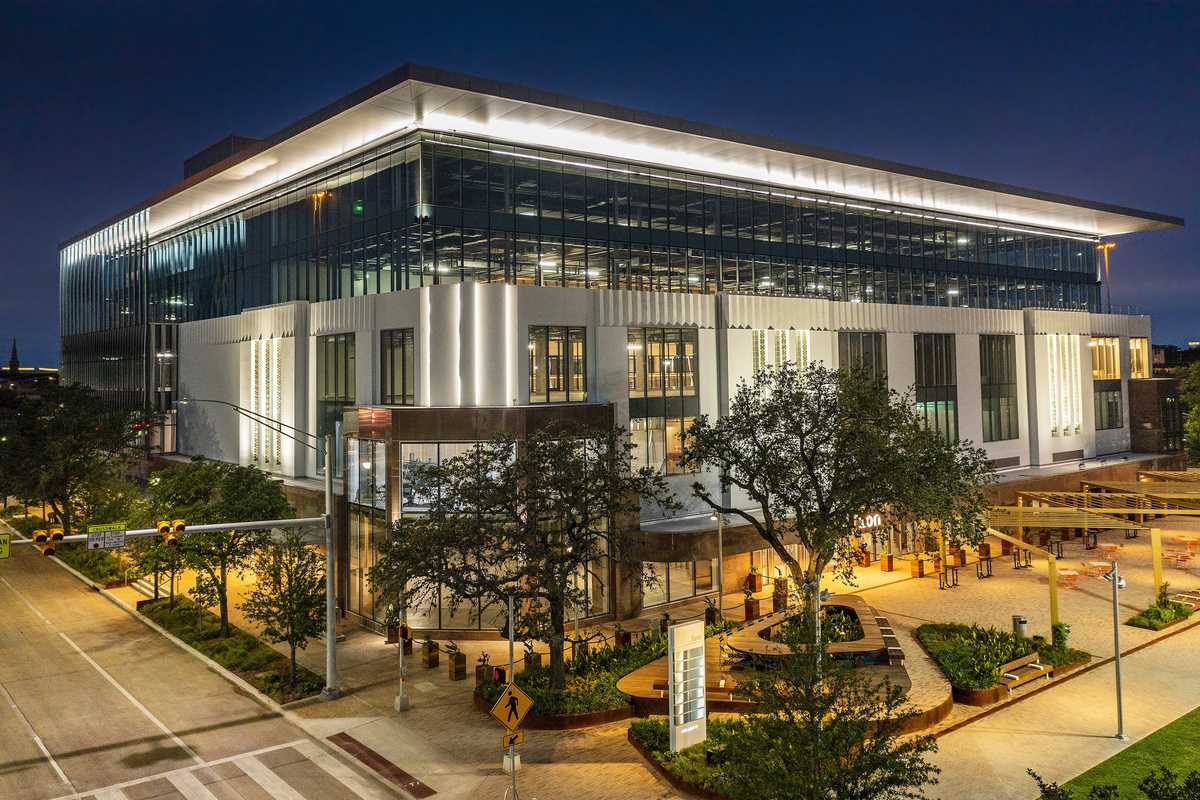
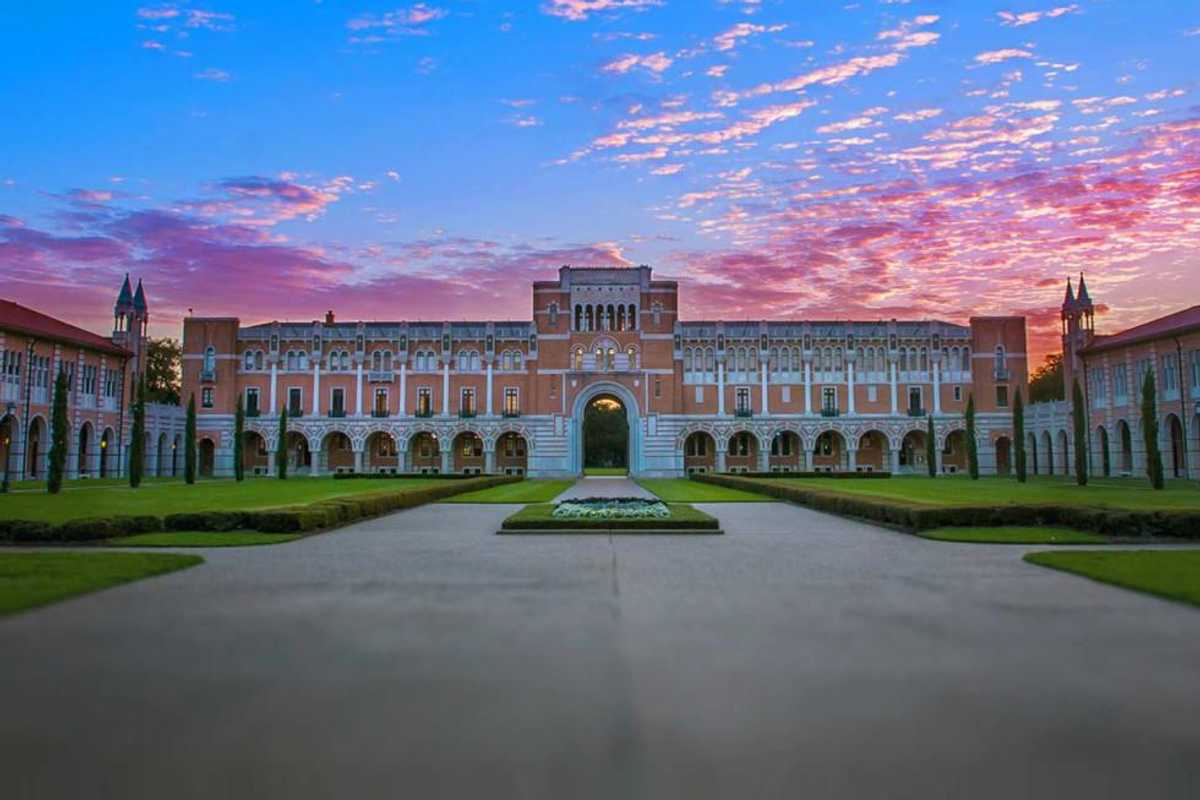
Houston Methodist will name its forthcoming 26-story hospital facility the Brockman Centennial Tower. Rendering courtesy Houston Methodist

Houston Methodist has received the largest gift in the health system's history to establish new funds for neurological, neuroscience, and women’s health research and treatment.

The $110 million gift comes from Houston-based The Brockman Medical Research Foundation, which supports education and research in the science, medicine and healthcare fields. In response, Houston Methodist announced that it will name its forthcoming 26-story hospital facility the Brockman Centennial Tower.

The tower’s entrance will be named the Anna Margaret Bellows Centennial Hall to honor Anna Margaret Bellows, a young camper who died during the Camp Mystic flooding last summer.

“This extraordinary gift accelerates discovery and transforms how care is delivered,” Dr. Marc Boom, president and CEO of Houston Methodist, said in a news release. “We are grateful to The Brockman Medical Research Foundation for its incredible generosity and vision that will help change the lives of generations of patients. Naming Centennial Tower in recognition of this gift reflects the scale of this commitment and its impact on the future of neuroscience, neurological care and women’s health.”

The gift will be divided into two parts:

  • $100 million will go toward creating an innovation fund within the Houston Methodist Academic Institute and the Houston Methodist Neurological Institute
  • $10 million will be devoted to Houston Methodist's Department of Obstetrics and Gynecology

“This tremendous gift will accelerate translational research that broadens our understanding of neurological and other diseases,” Dr. Jenny Chang, president and CEO of the Houston Methodist Academic Institute, added in the release. “It will allow us to leverage state-of-the-art platforms to detect, diagnose and deliver therapeutics, keeping patient care at the center of our mission.”

The Brockman Centennial Tower is expected to open next year in the Texas Medical Center. Spanning more than 1 million square feet, it will house 400 patient beds, an expanded emergency department, new operating rooms and a rooftop garden. It will be connected to Houston Methodist's flagship Paula and Joseph C. “Rusty” Walter III Tower, which opened in 2018. The Centennial Tower was estimated to cost $1.4 billion when announced in 2022.

In addition to the news of the Brockman gift, Houston Methodist also announced this month that it has launched the Houston Methodist Center for Cell and Gene Therapy and tapped an internationally recognized scientist as its leader.

The new center is focused on discovering and developing innovative and cost-effective therapies for a variety of congenital and acquired diseases, including cancer, HIV and cardiovascular disease.

Dr. Malcolm Brenner has been named as the center's inaugural leader and will assume the role starting in October. He will work alongside scientists and support staff from Baylor College of Medicine and Texas Children's Hospital.

Brenner is a professor of pediatrics, medicine, molecular and human genetics and translational biology at Baylor College of Medicine. He is known for making early advances in using bone marrow transplantation as a form of cell therapy and in engineered immune-cell treatments for cancer and infections, according to a release from Houston Methodist.

“Malcolm Brenner is a pioneer in the field of cell and gene therapy and is uniquely qualified to lead Houston Methodist’s research efforts in this field,” Chang added. “His vision and leadership will play a pivotal role in advancing our work in this space.”

Ad Placement 300x100
Ad Placement 300x600

CultureMap Emails are Awesome

Houston VC funding nears $1B in first half of 2026, report says

by the numbers

Despite a weak second quarter, venture capital funding for Houston-area startups approached $1 billion in the first half of 2026, the region’s highest first-half total since 2022, according to the latest PitchBook-NVCA Venture Monitor.

This year’s first-half total of $962.4 million represented a nearly 8 percent increase over last year’s first-half total of $891.7 million. Dating back to 2016, this year’s first-half haul lags behind only 2021 and 2022 for the most first-half funding.

Houston’s year-over-year VC jump of 73 percent in the first quarter of 2026 more than made up for the year-over-year drop of 34 percent in the second quarter of 2026, according to the report.

Deal count tells a more encouraging story: Houston startups closed 102 deals in the first half, up from 93 a year earlier and the region’s busiest first half since 2022. However, the average deal size shrank, as no single funding source dominated the total.

Keep in mind that PitchBook and NVCA routinely revise quarterly numbers upward to reflect deals that were reported after a previous quarter’s data was published. So, in the case of Houston, numbers initially reported for the first quarter of 2026 may not match newly reported numbers.

Perhaps the most notable Houston-area deal announced in the first half of this year was Cart.com’s $180 million growth equity investment, led by Springcoast Partners. Cart.com is an e-commerce platform and logistics provider.

PitchBook-NVCA data shows Houston’s VC activity is growing modestly, delivering better numbers in the first half of 2026 versus 2024 and 2025, but it still sits below the highs of 2021 and 2022. This is one sign that so far in 2026, the national VC boom isn’t benefiting non-hub markets like Houston the way it’s boosting some hub markets, especially Silicon Valley and New York City.

Nationwide, AI dominated VC funding in the first half of this year. The sector made up 86 percent of VC from January through June. The report notes that the markets have still struggled to unlock IPOs, with SpaceX being the biggest exception, and few M&A deals outside health care have been significant.

14 climatech startups join Greentown Houston in first half of 2026

green team

Climatech incubator Greentown Labs reports that 14 startups have joined its Houston community so far this year.

The companies are among 30 new startups to have joined Greentown Houston and Greentown Boston in 2026. Four of the companies are headquartered in Houston.

The startups are working on a range of "hydrogen-powered heavy-duty transport to AI-driven grid interconnection," according to Greentown.

The local startups that joined Greentown Houston include:

  • Houston-based Focis AI, which transforms industrial laser scans into structured asset intelligence to automatically identify, classify and map components in refineries and plants
  • Houston-based Iron Lattice, which develops next-generation memory technology for AI and high-performance computing that improves energy efficiency, endurance and scalability while remaining compatible with existing semiconductor manufacturing
  • Houston-based Orbital Arc, which is developing a new ion engine designed to improve the efficiency and scalability of spacecraft propulsion from low Earth orbit to deep space
  • Houston-based Sustain Energy LLC, which delivers cleaner, lower-cost fuel to industrial customers in pipeline-absent, underserved markets, cutting their energy costs and emissions with no infrastructure investment on their end

Other startups from around the world joined the Houston incubator in the same time period, including:

  • Ankara-based AIS Field, which develops robotic, AI-assisted non-destructive inspection systems, including submersible tank and boiler crawlers
  • San Francisco-based Armada AI, which builds rapidly deployable modular and edge data centers that run on local, stranded, or renewable power
  • San Francisco-based Armeta, which turns complex engineering drawings and legacy documentation into structured, usable data
  • Pittsburgh-based Atlas Robotics, which develops a Physical AI platform that powers autonomous material-handling robots and AI-guided forklifts
  • Ghana-based Cocoa Potash, which transforms high-emissions agricultural waste from cocoa, coconut, and palm-nut into organic potash, fertilizer and renewable energy
  • Israel-based Criaterra, which produces low-carbon, cement-free building materials
  • Italy-based ETAK, which manufactures modular reactors that convert solid waste into clean syngas
  • Kenya-based FelixFusion, which uses its Felix platform to model every grid connection point, including capacity, upgrade costs, and constraints
  • San Diego-based Gemini Energy, which builds next-generation fuel cells for data-center power
  • Tokyo-based Hibot, which develops robotic systems for inspecting and maintaining infrastructure in hazardous, hard-to-access environments
  • Austin-based Sheetak, which designs and manufactures thermoelectric coolers, generators, and assemblies for solid-state cooling and energy harvesting
  • The Netherlands-based ToPerform, which makes AI-powered, non-intrusive fouling sensors that monitor pipelines around the clock and predict the optimal cleaning time

Another 16 startups joined Greentown's Boston incubator. See the full list of new members here.

More than 100 startups joined Greentown last year, according to an end-of-year reflection shared by Greentown CEO Georgina Campbell Flatter. Read more about them here.

---

This article originally appeared on our sister site, EnergyCapitalHTX.com.

$12M pharmaceutical manufacturing facility to be built in Sugar Land

coming soon

A nearly $12 million drug manufacturing facility is coming to Sugar Land.

City leaders in Sugar Land recently approved a $1.3 million performance-based incentive for DeliverIt Group, a Sugar Land-based provider of specialty pharmacy, infusion therapy and clinical care services, for the development of the 60,000-square-foot facility.

The facility, which will be registered with the U.S. Food and Drug Administration (FDA), will compound medication. The process of drug compounding combines, mixes or alters ingredients to create a medication tailored to a certain patient. A compounded drug is created when an FDA-approved drug can’t meet a patient’s needs.

The facility, which will employ 55 people, will expand DeliverIt’s offerings from specialty pharmacy and infusion services to advanced pharmaceutical manufacturing. In a press release, the City of Sugar Land says the facility reinforces the suburb’s status as a hub for life sciences and health care innovation.

DeliverIt, founded in 2010, already employs about 60 people.

The $1.3 million incentive, to be distributed over the course of 10 years, is being funded through the Sugar Land Development Corporation’s 4A sales tax program.

“The addition of a pharmaceutical manufacturing operation of this caliber reflects the type of targeted growth we want to see in Sugar Land,” Jennifer Alexander, business development manager for the City of Sugar Land, said in a news release. “Our focus on smart, strategic investment means supporting life sciences innovators in ways that maximize existing assets while driving long-term community prosperity.”

The current size of the U.S. drug-compounding market is estimated at $7.42 billion, and it’s projected to climb to $12.79 billion by 2035, according to Towards Healthcare Research and Consulting.

Drug compounding is gaining momentum due to increases in personalized medicine and personal treatment approaches, with growth being supported by aging populations and the rise of chronic illnesses, Towards Healthcare says.