


Bebop the robot, owned by Dallas-based Elite Event Robotics. Photo courtesy of Elite Event Robotics/Instagram

Two major airlines based in Texas are drawing a hard line between human and humanoid: American Airlines and Southwest Airlines won’t permit human-like or animal-like robots to board flights as passengers.

Fort Worth-based American and Dallas-based Southwest recently adopted bans on robotic passengers after two incidents in which human-like robots joined flesh-and-blood passengers on Southwest flights.

In May, Aaron Mehdizadeh, owner of The Robot Studio rental company in Dallas, was heading from Las Vegas to Dallas Love Field with 3.5-foot-tall Stewie, according to CBS News Texas. Rather than shipping Stewie as cargo, Mehdizadeh bought the robot its own seat using a type of ticket often purchased for fragile items such as wedding dresses and equipment.

But because Stewie was technically a carry-on item, the robot wasn’t supposed to occupy a seat, according to eWeek. Crew members wound up disconnecting Stewie’s battery and relocating the robot to a window seat before takeoff.

Mehdizadeh pushed back on Southwest’s stance regarding the battery, telling CBS News Texas that Stewie’s power supply is a standard battery that’s similar to one for a laptop.

Stewie isn’t the only robot making mischief in the skies. In May, a 70-pound, human-like robot named Bebop caused a stir on a Southwest flight from Oakland, California, to San Diego.

The robot prompted a nearly one-hour flight delay after crew members realized it violated restrictions on large carry-ons and raised concerns about the battery, San Francisco TV station KGO reported. Dallas-based Elite Event Robotics owns Bebop.

Southwest seized Bebop’s lithium-ion battery, but the airline did let Bebop take the San Diego-bound flight.

Southwest’s new robot policy prohibits human-like or animal-like robots from riding in an airplane cabin or as checked baggage, no matter their size or purpose. All other robots, including toys, must fit in a carry-on size bag and comply with battery restrictions, the airline says.

In a statement sent to CultureMap, a Southwest spokeswoman says the airline “has taken a strong stance on this issue and has led the U.S. airline industry with our battery policy.”

“The robot policy is a further evolution of a [safety] journey we have been on for several months. This move was not in response to any single incident,” the spokeswoman adds. “To eliminate confusion, the policy applies to all similar devices, regardless of size.”

Lithium-ion batteries can overheat, catch on fire, or explode on airplanes.

American’s new robot policy, which took effect Monday, August 17, is similar to Southwest’s. The policy prohibits human-like and animal-like robots from sitting in a purchased seat, being stored in an overhead bin or traveling as checked baggage. The ban applies to U.S., international, and regional flights.

“While there have been no known events involving this type of robot on any American flight, this policy was developed following a comprehensive review of safety risks associated with these devices, including the large lithium-ion batteries that power them,” the airline said in an internal memo obtained by the View From the Wing travel blog.

American gate agents have been told not to allow a passenger accompanied by a robot to board a plane or to let a robot travel as a checked item, the memo say.

If a robot is discovered after check-in, American employees are supposed to follow the Federal Aviation Administration’s “undeclared dangerous goods” procedures. These procedures cover hazardous shipments like lithium-ion batteries, explosives, flammable liquids, and compressed gases that lack required warning labels or shipping documents.

---

This article originally appeared on CultureMap.com.
Ad Placement 300x100
Ad Placement 300x600

CultureMap Emails are Awesome

MD Anderson receives $10M gift to launch pancreatic cancer program

med funding

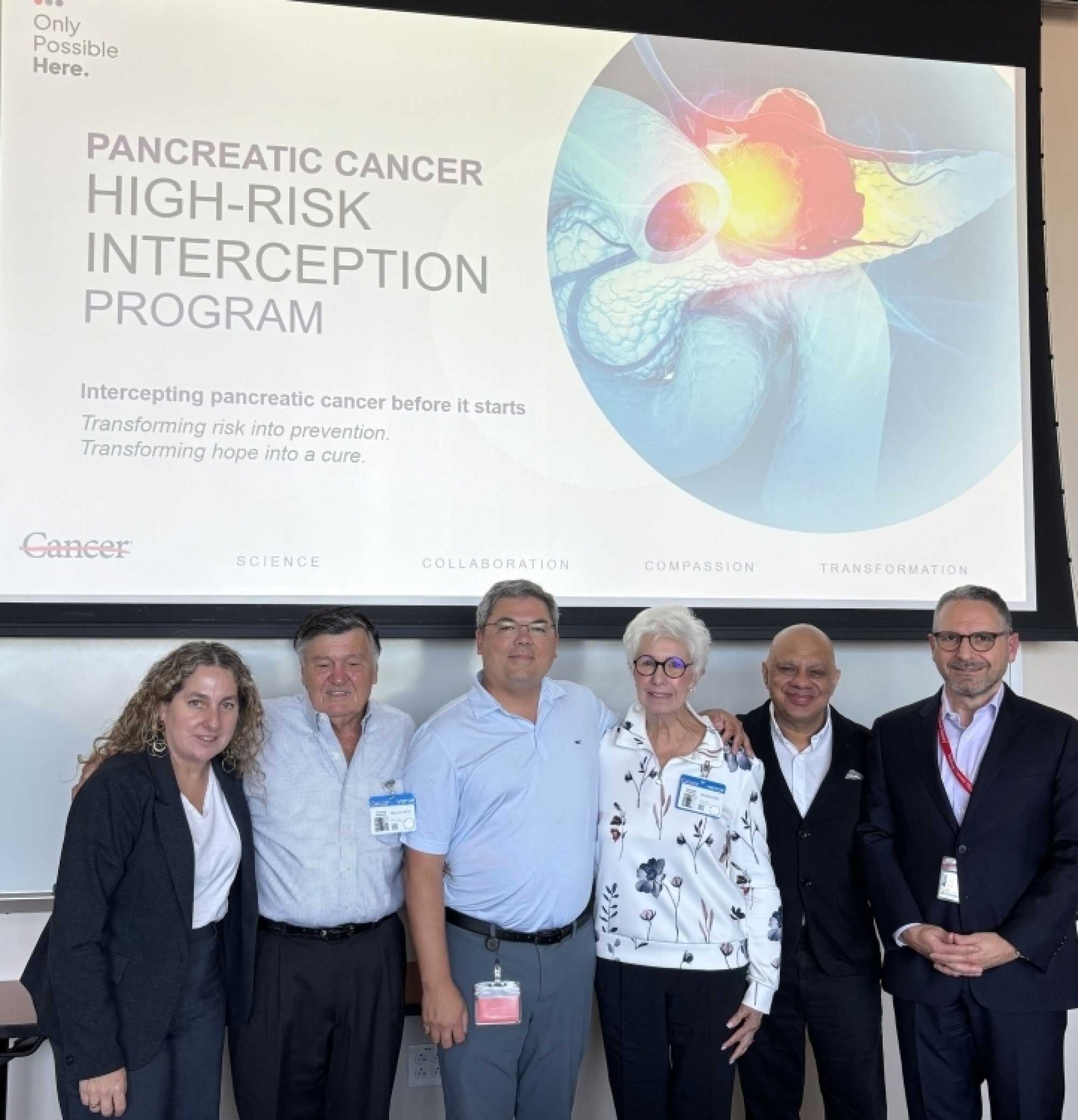
The University of Texas MD Anderson Cancer Center will be getting a significant boost in the fight against pancreatic cancer thanks to a recent gift from longtime supporters Zelma and William Reid. The medical system announced this month that a $10 million donation would help it establish a new Pancreatic Cancer High-Risk Interception Program.

“Philanthropic investments like this create opportunities to accelerate discoveries and pursue bold approaches to some of the most challenging cancers we face,” said Dr. Jeffrey E. Lee, president ad interim of UT MD Anderson, said in a news release. “We are deeply grateful to Zelma and Bill Reid for their generosity and enduring commitment. Their support will help advance innovative research aimed at intercepting pancreatic cancer earlier, when we have the greatest opportunity to improve outcomes for patients.”

Pancreatic cancer is one of the most deadly types of cancer. Despite being relatively rare, it ranks third in total deaths from cancer in the United States. Less than 10 percent of patients diagnosed with pancreatic cancer are still alive five years later.

Dr. Florencia McAllister, William Reid, Dr. Michael P. Kim, Zelma Reid, Dr. Manoop S. Bhutani, and Dr. Matthew H.G. Katz. Photo courtesy MD Anderson

The problem is often detection. The pancreas is located deep in the upper abdomen among many other organs, which can make spotting tumors difficult. Some blood tests can indicate pancreatic cancer, but it is usually not diagnosed until it spreads.

The new Pancreatic Cancer High-Risk Interception Program hopes to assemble new diagnostic techniques and patient screening tools to increase early detection. MD Anderson’s Dr. Michael P. Kim, associate professor of surgical oncology; Dr. Manoop S. Bhutani, professor of gastroenterology and hepatology; and Dr. Florencia McAllister, professor of gastrointestinal medical oncology and genetics, will lead the new program.

The team will rely on advanced imaging, molecular diagnostics, AI-driven assessment, and DNA testing to both create an at-risk patient population profile and hopefully help detect the cancer in its earliest stages. For instance, some of these tools will be able to monitor pancreatic cysts without invasive surgery.

“The ultimate goal is to intercept pancreatic cancer development or to initiate treatment earlier in the disease process, when patients have the best chance for successful outcomes,” Kim added in the release. “This gift will allow us to expand our research efforts, strengthen collaborations across disciplines and accelerate promising strategies to identify and intercept pancreatic cancer before it becomes life-threatening. We are incredibly thankful to the Reids for making this work possible.”

Axiom Space inks partnership to grow semiconductor crystals in orbit

space deal

Down in Webster, Texas, and high above the Earth, Axiom Space and Kansas-based Nitride Global Inc. will grow the next generation of semiconductor crystals in microgravity thanks to a new memorandum of understanding (MOU) signed earlier this month.

“Signing this MOU with Nitride Global reflects the growing commercial interest in producing advanced semiconductor materials in space,” Lucie Low, chief science officer for Axiom Space, said in a news release. “Their leadership in aluminium nitride (AlN) crystal growth and advanced packaging technologies, combined with Axiom Space’s capabilities in orbital infrastructure and mission integration, position us to demonstrate real commercial value in low-Earth orbit (LEO).”

This latest partnership builds on existing collaboration between Axiom and NitrideGlobal and NASA Ames Research Center.

Aluminium nitride crystals are part of the cutting-edge generation of semiconductors essential to emerging high-voltage transistors and also used in various medical technologies. Because of their high thermal stability, they can be used in a variety of environments and applications that have revolutionized everything from electric cars to the grids the cars run on.

However, the crystals are challenging to grow on Earth and face defects and size limitations due to gravity. Growing them in space can enhance their performance, according to NitrideGlobal. Microgravity allows them to grow more uniformly and with fewer defects, potentially resulting in larger, purer and more reliable crystals.

That’s where Axiom Space comes in. The company is developing Axiom Station, a successor to the International Space Station, where new research and manufacturing can be carried out.

“This MOU marks a pivotal milestone in our close partnership with Axiom Space that started as part of the NASA Small Business Innovation Research (SBIR) for AlN growth in space and is now expanding to usher the development of an innovation ecosystem,” Mahyar Khosravi, CEO of Nitride Global Inc., added in the release. “With Axiom Space’s leadership in the in-space manufacturing sector, this partnership will aim to deliver a platform for commercially viable manufacturing of [ultrawide bandgap materials] that will enable the next generation of semiconductor & microelectronics for terrestrial and planetary exploration uses.”

Houston's IAH lands on list of 15 most expensive U.S. airports

Travel Woes

Hold on to those carry-on bags: George Bush Intercontinental Airport is checking in as one of the 15 most expensive airports in the U.S., a new study has revealed.

The analysis from digital commerce and marketing platform ConsumerVoice.org compared the average domestic flight costs at the 50 largest U.S. airports, ranking them from highest to lowest. Flight price data was sourced from the U.S. Department of Transportation’s Bureau of Transportation Statistics (BTS) during the first and second quarters of 2026 and compared with the same period in 2025.

Washington Dulles International Airport in Virginia tops the list as the priciest major airport in the U.S, with domestic flights at IAD costing $534.34 on average. Charlotte Douglas International Airport in North Carolina comes in second place with an average fare cost of $527.79.

IAH lands at No. 13 nationwide, and it's the second most expensive in Texas, the findings show. The typical domestic flight from IAH costs $482.02, and they aren't getting any cheaper. Flights out of IAH are nine percent more expensive than they were a year ago, the report found. The average domestic flight cost $37.80 less in 2025.

Houstonians not only need to be prepared to spend a little extra money when booking their tickets; they'll also need to pack their patience, as IAH also ranks among the worst airports for flight delays and cancellations.

Travelers on a budget can save more on flights out of William P. Hobby Airport, if they're willing to make the drive. Travelers can save about 13 percent on their flights by flying through HOU instead of IAH, but there are other costs to take into consideration.

"Ground transportation, gas, and parking can eat into the difference, so factor these in when choosing the most economical departure airport," the report said.

HOU ranked as the No. 31 most expensive airport on the list with domestic flights coming in at $417.78 on average. Average fares at HOU are also nine percent more expensive than they were last year.

The top 10 priciest major airports in the U.S. are:

  • No. 1 – Washington Dulles International Airport
  • No. 2 – Charlotte Douglas International Airport
  • No. 3 – Detroit metro Wayne County Airport
  • No. 4 – Salt Lake City International
  • No. 5 – Minneapolis-St. Paul International
  • No. 6 – San Francisco International
  • No. 7 – John F. Kennedy International
  • No. 8 – Newark Liberty International
  • No. 9 – Dallas/Fort Worth International
  • No. 10 – Hartsfield-Jackson Atlanta International
---

This article originally appeared on CultureMap.com.