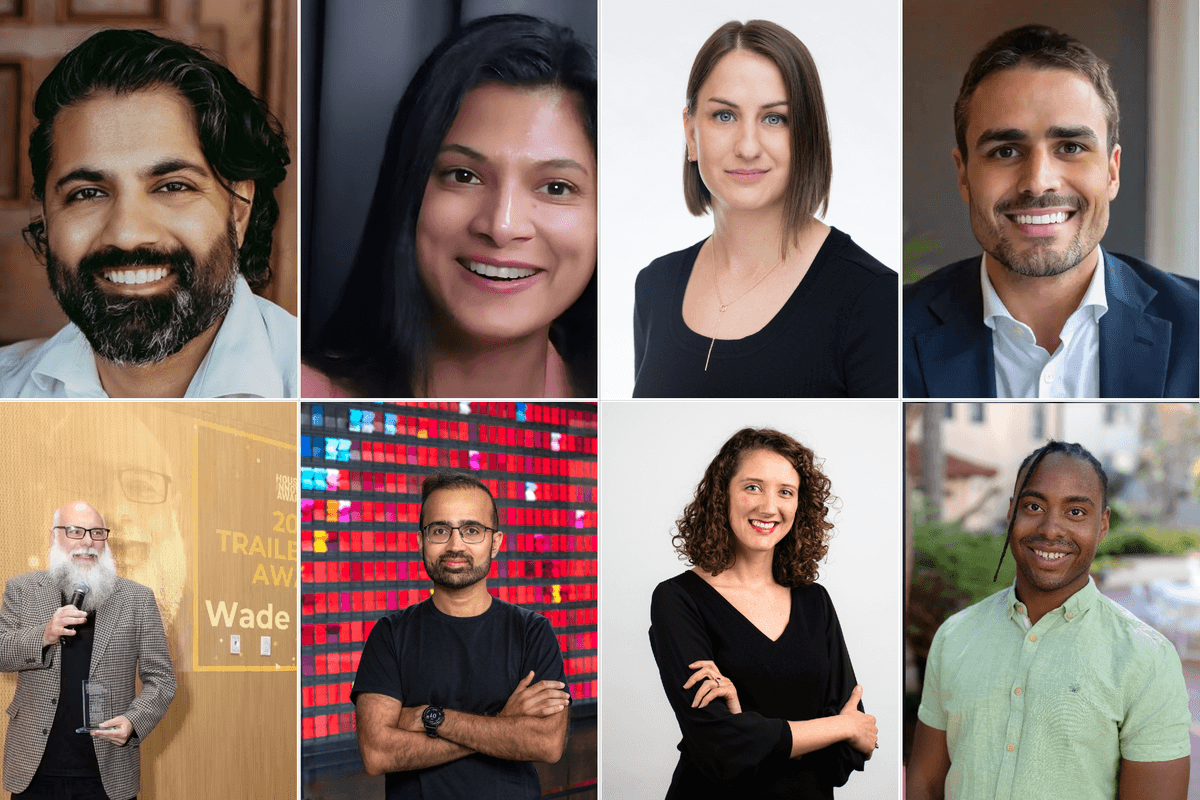
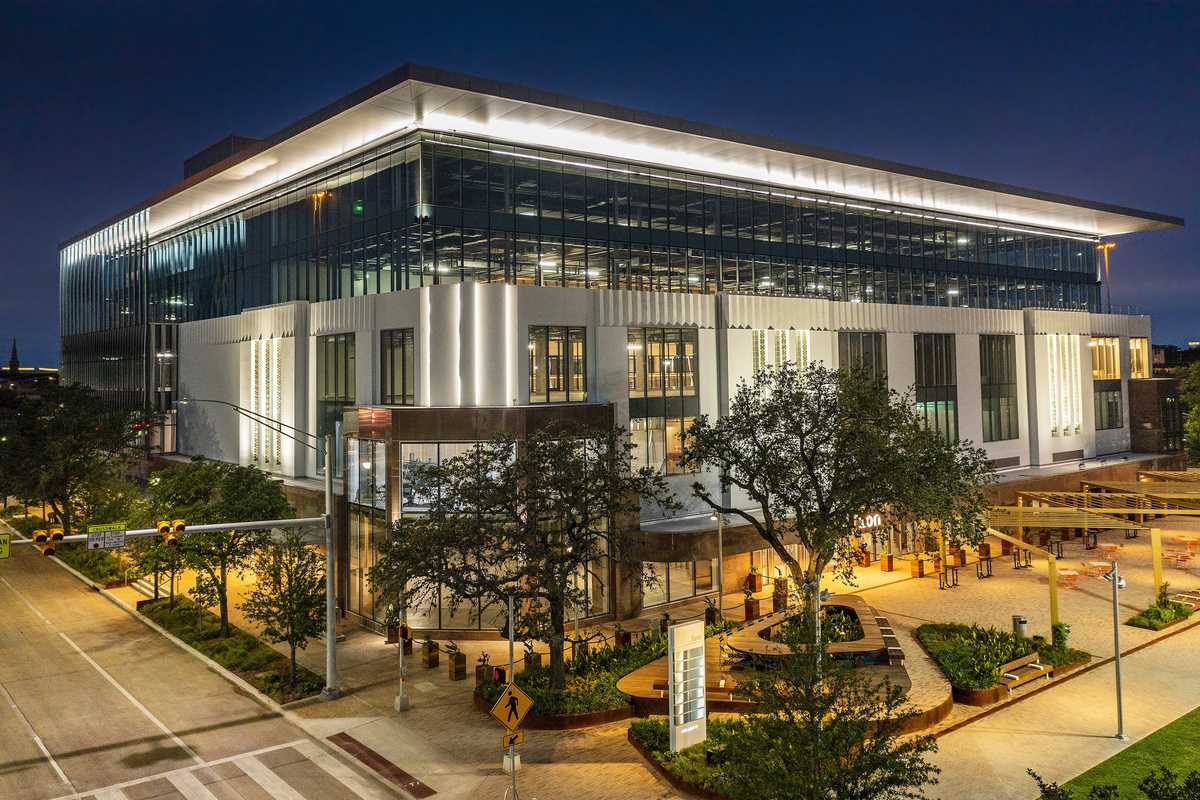
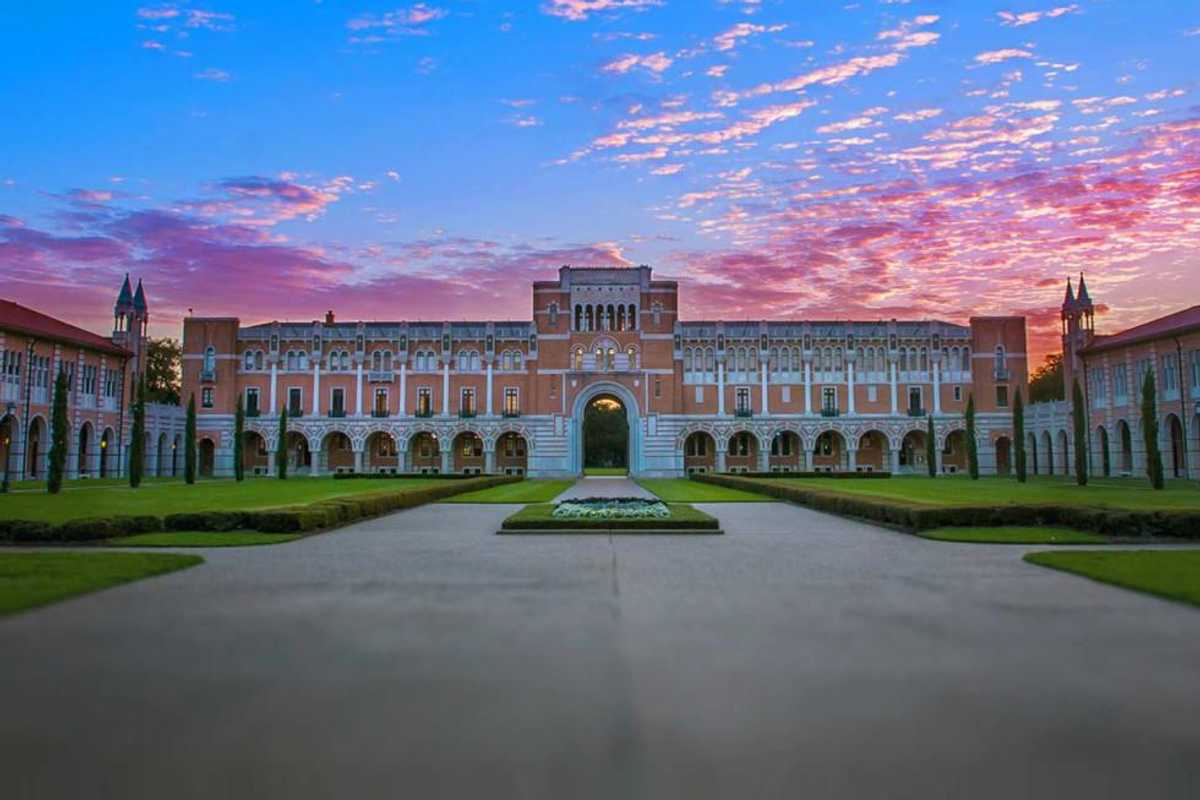
TMCi named its 2024 Accelerator for Cancer Therapeutics cohort.

For the fourth year, Texas Medical Center Innovation has named its annual cohort of Texas health tech innovators working on promising cancer therapeutics.

TMCi named its 2024 Accelerator for Cancer Therapeutics cohort last week, and the 23 Texas researchers and companies selected will undergo a nine-month program that will provide them with mentorship and programming, as well as open doors to potential investors and strategic partners.

“The ACT program provides a bridge to commercialization in Texas by surrounding innovators with strategic mentorship, milestone development, and a network of resources to move their projects forward,” Emily Reiser, associate director of TMC Innovation, says in a news release. "We are excited to welcome this year's cohort and to continue enabling participants to advance their solutions to treat cancer."

The program has accelerated 76 researchers and companies to date, many of which — like March Biosciences and Mongoose Bio — have gone on to secure $130 million in funding from venture capitalists and grant funding.

“Our program has cultivated a dynamic ecosystem where partners, researchers, and inventors, who have been part of the journey since its inception and received various forms of funding, continue to propel their life-saving products and technologies forward," Ahmed AlRawi, program manager of ACT, says in the release. "Our 2024 cohort represents our most diverse cohort to date, including eight companies led by women entrepreneurs. Additionally, we are particularly proud that the cohort includes a blend of new and recurring organizations that have leveraged this opportunity in the past to extend their work and continue the momentum to build off the successes of our previous years.”

The 2024 participants are:

  • Alexandre Reuben of UT-MD Anderson Cancer Center
  • Betty Kim & Jiang Wen of UT-MD Anderson Cancer Center
  • Bin He of Houston Methodist
  • Daniel Kiss & John Cooke of PeakRNA at Houston Methodist
  • Hongjun Liang of Texas Tech-Lubbock
  • Jacob Goell & Isaac Hilton of Mercator Biosciences at Rice University
  • Jay Hartenbach & Matthew Halpert of Diakonos Oncology Corp.
  • Kathryn O’Donnell of UT-Southwestern
  • Maralice Conacci Sorrell of UT-Southwestern
  • Neeraj Saini of UT-MD Anderson Cancer Center
  • Neil Thapar of Barricade Therapeutics Corp.
  • Nina Keshavarzi of Celine Biotechnologies
  • Raphael G. Ognar & Henri Bayle of NKILT Therapeutics Inc.
  • Richard Austin & Michael Abrahamson of Reglagene Inc.
  • Tim Peterson & Joppe Nieuwenhuis of Bioio Inc.
  • Todd Aguilera & Eslam Elghonaimy of UT-Southwestern
  • Venkata Lokesh Battula of Siddhi Therapeutics Inc. at UT-MD Anderson Cancer Center
  • Weei-Chin Lin & Fang-Tsyr Lin of Baylor College of Medicine
  • Yong Li & Dongxiao Feng of Sotla Therapeutics at Baylor College of Medicine
  • Anil Sood & Zhiqiang An of UT-MD Anderson Cancer Center
  • Narendra Kumar & Jayshree Mishra of Texas A&M-College Station
  • Tao Wang of NightStar Biotechnologies Inc. at UT-Southwestern
  • Jian Hu of UT-MD Anderson Cancer Center

Ad Placement 300x100
Ad Placement 300x600

CultureMap Emails are Awesome

5 Houston scientists named winners of prestigious Hill Prizes 2026

prized research

Five Houston scientists were recognized for their "high-risk, high-reward ideas and innovations" by Lyda Hill Philanthropies and the Texas Academy of Medicine, Engineering, Science and Technology (TAMEST).

The 2026 Hill Prizes provide seed funding to top Texas researchers. This year's prizes were given out in seven categories, including biological sciences, engineering, medicine, physical sciences, public health and technology, and the new artificial intelligence award.

Each recipient’s institution or organization will receive $500,000 in direct funding from Dallas-based Lyda Hill Philanthropies. The organization has also committed to giving at least $1 million in discretionary research funding on an ad hoc basis for highly-ranked applicants who were not selected as recipients.

“It is with great pride that I congratulate this year’s Hill Prizes recipients. Their pioneering spirit and unwavering dedication to innovation are addressing some of the most pressing challenges of our time – from climate resilience and energy sustainability to medical breakthroughs and the future of artificial intelligence,” Lyda Hill, founder of Lyda Hill Philanthropies, said in a news release.

The 2026 Houston-area recipients include:

Biological Sciences: Susan M. Rosenberg, Baylor College of Medicine

Rosenberg and her team are developing ways to fight antibiotic resistance. The team will use the funding to screen a 14,000-compound drug library to identify additional candidates, study their mechanisms and test their ability to boost antibiotic effectiveness in animal models. The goal is to move toward clinical trials, beginning with veterans suffering from recurrent infections.

Medicine: Dr. Raghu Kalluri, The University of Texas MD Anderson Cancer Center

Kalluri is developing eye drops to treat age-related macular degeneration (AMD), the leading cause of vision loss globally. Kalluri will use the funding to accelerate studies and support testing for additional ocular conditions. He was also named to the National Academy of Inventors’ newest class of fellows last month.

Engineering: Naomi J. Halas, Rice University

Co-recipeints: Peter J. A. Nordlander and Hossein Robatjazi, Rice University

Halas and her team are working to advance light-driven technologies for sustainable ammonia synthesis. The team says it will use the funding to improve light-driven catalysts for converting nitrogen into ammonia, refine prototype reactors for practical deployment and partner with industry collaborators to advance larger-scale applications. Halas and Nordlander are co-founders of Syzygy Plasmonics, and Robatjazi serves as vice president of research for the company.

The other Texas-based recipients include:

  • Artificial Intelligence: Kristen Grauman, The University of Texas at Austin
  • Physical Sciences: Karen L. Wooley, Texas A&M University; Co-Recipient: Matthew Stone, Teysha Technologies
  • Public Health: Dr. Elizabeth C. Matsui, The University of Texas at Austin and Baylor College of Medicine
  • Technology: Kurt W. Swogger, Molecular Rebar Design LLC; Co-recipients: Clive Bosnyak, Molecular Rebar Design, and August Krupp, MR Rubber Business and Molecular Rebar Design LLC

Recipients will be recognized Feb. 2 during the TAMEST 2026 Annual Conference in San Antonio. They were determined by a committee of TAMEST members and endorsed by a committee of Texas Nobel and Breakthrough Prize Laureates and approved by the TAMEST Board of Directors.

“On behalf of TAMEST, we are honored to celebrate the 2026 Hill Prizes recipients. These outstanding innovators exemplify the excellence and ambition of Texas science and research,” Ganesh Thakur, TAMEST president and a distinguished professor at the University of Houston, added in the release. “Thanks to the visionary support of Lyda Hill Philanthropies, the Hill Prizes not only recognize transformative work but provide the resources to move bold ideas from the lab to life-changing solutions. We are proud to support their journeys and spotlight Texas as a global hub for scientific leadership.”

Investment bank opens new Houston office focused on energy sector

Investment bank Cohen & Co. Capital Markets has opened a Houston office to serve as the hub of its energy advisory business and has tapped investment banking veteran Rahul Jasuja as the office’s leader.

Jasuja joined Cohen & Co. Capital Markets, a subsidiary of financial services company Cohen & Co., as managing director, and head of energy and energy transition investment banking. Cohen’s capital markets arm closed $44 billion worth of deals last year.

Jasuja previously worked at energy-focused Houston investment bank Mast Capital Advisors, where he was managing director of investment banking. Before Mast Capital, Jasuja was director of energy investment banking in the Houston office of Wells Fargo Securities.

“Meeting rising [energy] demand will require disciplined capital allocation across traditional energy, sustainable fuels, and firm, dispatchable solutions such as nuclear and geothermal,” Jasuja said in a news release. “Houston remains the center of gravity where capital, operating expertise, and execution come together to make that transition investable.”

The Houston office will focus on four energy verticals:

  • Energy systems such as nuclear and geothermal
  • Energy supply chains
  • Energy-transition fuel and technology
  • Traditional energy
“We are making a committed investment in Houston because we believe the infrastructure powering AI, defense, and energy transition — from nuclear to rare-earth technology — represents the next secular cycle of value creation,” Jerry Serowik, head of Cohen & Co. Capital Markets, added in the release.

---

This article originally appeared on EnergyCaptialHTX.com.

MD Anderson makes AI partnership to advance precision oncology

AI Oncology

Few experts will disagree that data-driven medicine is one of the most certain ways forward for our health. However, actually adopting it comes at a steep curve. But what if using the technology were democratized?

This is the question that SOPHiA GENETICS has been seeking to answer since 2011 with its universal AI platform, SOPHiA DDM. The cloud-native system analyzes and interprets complex health care data across technologies and institutions, allowing hospitals and clinicians to gain clinically actionable insights faster and at scale.

The University of Texas MD Anderson Cancer Center has just announced its official collaboration with SOPHiA GENETICS to accelerate breakthroughs in precision oncology. Together, they are developing a novel sequencing oncology test, as well as creating several programs targeted at the research and development of additional technology.

That technology will allow the hospital to develop new ways to chart the growth and changes of tumors in real time, pick the best clinical trials and medications for patients and make genomic testing more reliable. Shashikant Kulkarni, deputy division head for Molecular Pathology, and Dr. J. Bryan, assistant professor, will lead the collaboration on MD Anderson’s end.

“Cancer research has evolved rapidly, and we have more health data available than ever before. Our collaboration with SOPHiA GENETICS reflects how our lab is evolving and integrating advanced analytics and AI to better interpret complex molecular information,” Dr. Donna Hansel, division head of Pathology and Laboratory Medicine at MD Anderson, said in a press release. “This collaboration will expand our ability to translate high-dimensional data into insights that can meaningfully advance research and precision oncology.”

SOPHiA GENETICS is based in Switzerland and France, and has its U.S. offices in Boston.

“This collaboration with MD Anderson amplifies our shared ambition to push the boundaries of what is possible in cancer research,” Dr. Philippe Menu, chief product officer and chief medical officer at SOPHiA GENETICS, added in the release. “With SOPHiA DDM as a unifying analytical layer, we are enabling new discoveries, accelerating breakthroughs in precision oncology and, most importantly, enabling patients around the globe to benefit from these innovations by bringing leading technologies to all geographies quickly and at scale.”