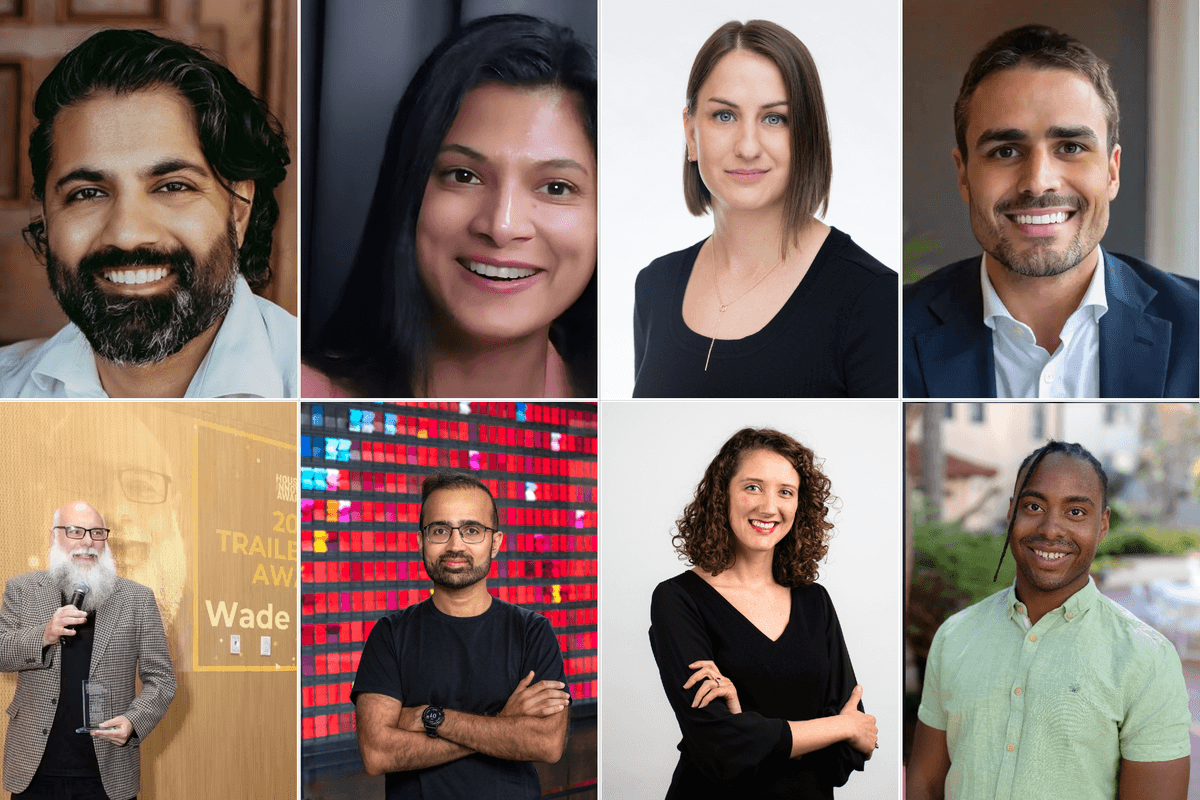
Calling all sports tech startups founded by Black or Hispanic innovators. Photo via Getty Images

A global organization has announced it's opening applications to its equity-focused sports tech accelerator to Houston founders for the first time.

Thanks to a collaboration with Impact Hub and Black Ambition, the adidas Community Lab has expanded its footprint and is now accepting applicants from new markets, including Houston, Toronto, Los Angeles, Atlanta, and New York, for its 2024-2025 cohort.

The initiative, which has been running for three years, has a goal of supporting Black and Latino/a/e founders with mentorship, pitch training, event programming, and networking. The eight-month program also has $75,000 in grant funding to dole out to participants as well.

“As Community Lab enters its third year, we are thrilled to cultivate a larger cohort of social entrepreneurs who share our vision of removing barriers to accessing sport for the communities we collectively serve,” Ayesha Martin, senior director of adidas Purpose, says in a news release.

Both the global organization of Impact Hub and the local group, Impact Hub Houston, are involved in the collaboration.

“Impact Hub is thrilled to partner and support this third iteration of adidas Community Lab, empowering visionary leaders who are advancing SDG3 —Good Health and Wellbeing — and SDG10 — Reduced Inequalities," Michelle Avalos, co-founder of Impact Hub Houston, adds. Together, we’re helping entrepreneurs create equitable access to sports and foster healthier, more inclusive communities for all."

Applications are open online now until September 23.

Founded by Pharrell Williams, Black Ambition will also collaborate with the program this year on key programing sessions. The organization invests funding and resources into Black and Hispanic entrepreneur-founded startups.

"Black Ambition was founded to create the space, bespoke opportunities and relationships needed for underrepresented founders to excel, uninterrupted. We are excited to partner with adidas Purpose to extend elements of our renowned, global founder support model to social impact entrepreneurs positively transforming their communities through sports and wellness," says Jermeen Sherman, managing director at Black Ambition.

Ad Placement 300x100
Ad Placement 300x600

CultureMap Emails are Awesome

Austin company to bring AI-powered school to The Woodlands

AI education

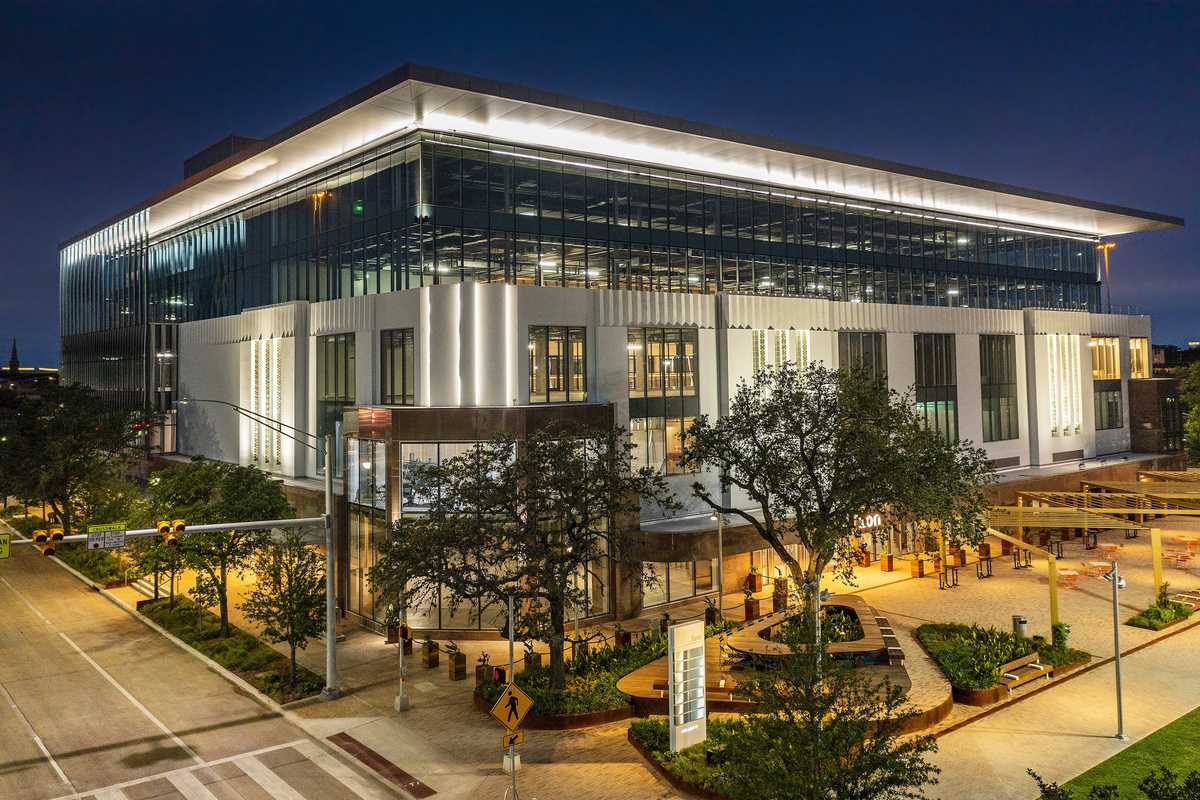
Austin-based Alpha School, which operates AI-powered private schools, is opening its first Houston-area location in The Woodlands.

The 8,000-square-foot school, scheduled to be ready for the 2026-27 academic year, initially will serve students in kindergarten through eighth grade. Alpha says the school will offer “open workshop spaces and innovative classrooms that support personalized instruction, core academics, leadership development, and real-world life skills.”

Alpha sets aside two hours each school day for the AI-driven, self-paced study of core subjects like math, reading and science. The rest of each school day consists of life-skills workshops focusing on topics such as leadership and financial literacy.

Alpha’s school in The Woodlands has begun accepting applications for the 2026-27 school year. Annual tuition costs $40,000.

“The Woodlands is one of the most dynamic, forward-thinking communities in Texas, and Alpha is proud to bring

an innovative educational model that complements its strong academic foundation,” says Rachel Goodlad, head

of expansion for Alpha.

Founded in 2014, Alpha School combines adaptive technology-driven instruction with immersive life-skills workshops. Its model emphasizes mastery-based learning in core subjects alongside development of communication, critical thinking, financial literacy and leadership skills. It operates more than 15 schools across the country.

Elsewhere in Texas, Alpha operates schools in Austin, Brownsville, Fort Worth and Plano. Alpha also operates 12 Texas Sports Academy campuses in Texas, including locations in Houston, Pearland and Richmond, along with a NextGen Academy esports school in Austin, a school for gifted students in Georgetown, and lower-cost Nova Academy campuses in Austin and Bastrop.

Alpha has fans and critics. While supporters tout students’ high achievement rates, detractors complain about the high tuition and the AI-influenced depersonalization of education.

“Students and our country need to be in relationship with other human beings,” Randi Weingarten, president of the American Federation of Teachers, a teachers union, tells The New York Times. “When you have a school that is strictly AI, it is violating that core precept of the human endeavor and of education.”

Alpha co-founder MacKenzie Price, a podcaster and social media influencer, doesn’t share Weingarten’s views.

“Parents and teachers: We need to embrace this change,” Price wrote after President Trump signed an executive order promoting AI in schools.

The Times notes that Alpha doesn’t employ AI as a tutor or a supplement. Rather, the newspaper says, AI is “the school’s primary educational driver to move students through academic content.”

Houston researcher secures $1.7M to develop drug for aggressive form of breast cancer

cancer research

A University of Houston researcher has joined a $3.2 million effort to develop a new drug designed to attack a cancer-driving protein commonly found in triple-negative breast cancer.

Triple-negative breast cancer (TNBC) is one of the most difficult-to-treat forms of cancer and accounts for 10 percent to 15 percent of all breast cancer cases. The disease gets its name because tumors associated with it test negative for estrogen receptors, progesterone receptors and excess HER2 protein, making it difficult to target. Due to this, TNBC is often treated with general chemotherapy, which can come with negative side effects and drug resistance, according to UH.

UH College of Pharmacy research associate professor Wei Wang is developing a drug that can target the disease more specifically. The drug will target MDM2, a protein often overproduced in TNBC that also contributes to faster tumor growth.

Wang is working on a team led by Wei Li, director of the University of Tennessee Health Science Center College of Pharmacy’s Drug Discovery Center. She has received $1.7 million to support the research.

Wang and UH professor of pharmacology and toxicology Ruiwen Zhang have discovered a compound that can break down MDM2. In early laboratory models, the compound has shown the ability to shrink tumors.

Wang and Zhang will focus on understanding how the treatment works and monitoring its effectiveness in models that closely mirror human disease.

“We will study how the drug targets MDM2 and evaluate the most promising drug candidates to determine effective dosing, understand how the drug behaves in the body, compare it with existing treatments and assess early safety,” Wang said in a news release.

Li’s team at the University of Tennessee will be working on the chemistry and drug design end of the project.

“This work could lead to an entirely new class of therapies for triple-negative breast cancer,” Li added in the release. “We’re hopeful that by directly removing the MDM2 protein from cancer cells, we can help more patients respond to treatment regardless of their tumor type.”